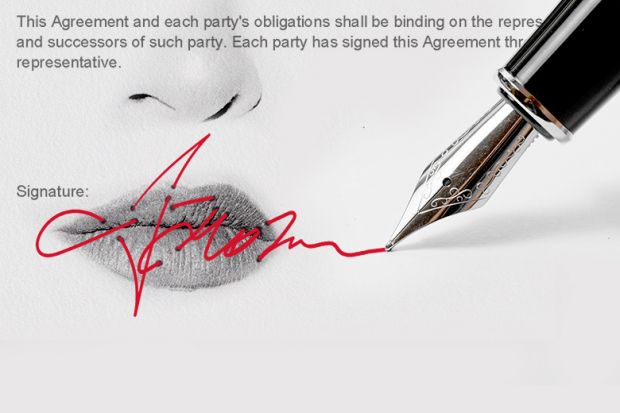
The first rule of Fight Club, famously, is you do not talk about Fight Club. But when it comes to fights within universities, the imperative for secrecy kicks in most insistently once peace has been re-established.
Higher education certainly has no shortage of fights – or arbitration agreements. The Victorian branch of the National Tertiary Education Union (NTEU), for instance, says it successfully intervened in 50 employment disputes across seven of the state’s public universities between January and October 2025, obtaining settlements on behalf of its members. Of the 50, 28 were subject to deeds of release: legal documents restricting employee behaviour post-severance. All but two of those contained non-disparagement clauses – and all of them contained confidentiality clauses.
It is a snapshot of how things are done in a sector that purports to prize transparency and advancement of knowledge. Sometimes, the cases involve staff misconduct, vexatious complaints or performance management issues. Often, the institution is accused of bullying, underpayment, disability discrimination, unfair dismissal or imposition of unreasonable workloads or unlawful fixed-term contracts – and staff are typically offered payments above their entitlements in exchange for their silence.
Standard deeds of release at Deakin and Swinburne universities require both parties “not to make any negative, derogatory, disparaging or defamatory comments whatsoever about each other”, according to redacted copies obtained by Times Higher Education. RMIT University’s deed bans “any statement or publication” likely to bring the university or its subsidiaries “into disrepute or ridicule or otherwise adversely affect their reputations”.
Victoria’s public universities also require the settlements themselves to be kept secret. “Each party must keep the existence and terms of this agreement confidential,” says Monash University’s deed. “The parties…must not disclose...the terms or substance of this deed,” warns La Trobe University. “The terms and contents of this deed and all other information exchanged between the parties in respect of this deed is confidential,” insists Victoria University.
Of the 28 secret deeds cited by the NTEU, 14 came from the University of Melbourne, whose “release and settlement agreement” runs to 12 pages. “Each party must keep the existence and terms of this agreement confidential,” it says. “This obligation extends to disclosures on social media including, but not limited to, Facebook, X and Instagram.”
Melbourne’s chief operating officer, Katerina Kapobassis, said confidentiality provisions were inserted into settlement agreements “where appropriate or requested”, providing “certainty for all parties” and ensuring that “matters are resolved fully and finally”.
Monash said mutual confidentiality obligations were often included in voluntary separation and settlement agreements stemming from employment disputes. La Trobe said non-disclosure or non-disparagement clauses were included on a “case-by-case basis” depending on the specifics. “[They] are intended to resolve matters by mutual agreement and to protect the privacy of all parties, especially where the matter may involve a third party or allegations of a sensitive nature.”
Deakin said confidentiality provisions were intended “to protect the interests and privacy of all parties. Deakin’s approach is consistent with standard practice in settling employment disputes.” Victoria University said employment matters were “addressed in accordance with our policies and procedures”. RMIT, Swinburne and Federation universities declined to comment or did not respond to enquiries.

Josh Bornstein, head of employment law at legal firm Maurice Blackburn, said universities “almost always” seek confidentiality clauses in settlements of employment disputes. “I struggle to think of any exceptions,” he said. “It’s about corporate brand management. Universities…have been transformed into acting like commercial corporations. [They] are intensely brand conscious and censor criticism in a range of different ways, including through NDAs [non-disclosure agreements].”
Bornstein devoted a section of his 2024 book, Working for the brand: How corporations are destroying free speech, to universities. He argues that NDAs have been imported into the sector by professional staff recruited from the corporate world, with little reflection about their appropriateness in a higher education environment.
Constitutional lawyer George Williams, vice-chancellor of Western Sydney University (WSU), agreed. He said the sector’s use of NDAs had become a matter of course. “It reflects a misalignment of values. You expect to see it in the corporate world but…not really in public sector institutions which have to account for public expenditure in their decision-making,” he said. “We should be more accessible and transparent. NDAs should be used sparingly and only where clearly justified, not as a matter of course.”
Much of the criticism of university NDAs in a university context concerns their supposed chilling effect on academic freedom – but university managers typically contest that point. Deakin said confidentiality provisions in the settlement of employment disputes are “entirely separate” from academic freedom policies that protect staff’s right to engage in academic enquiry and public commentary as part of their work, while La Trobe said its academic freedom policy protected scholarly expression only for “current” employees. “Confidentiality provisions relate to legal settlements and personal information and do not undermine our commitment to academic freedom,” a spokesperson said.
While gag clauses in separation agreements may not contravene the right to academic freedom for current employees, however, University of Melbourne law professor Joo-Cheong Tham, assistant secretary of the NTEU’s Victorian branch, said the habitual use of confidentiality clauses undermines a culture of academic freedom by suppressing criticism of universities. “Academic freedom should be seen as a matter of individual right and institutional culture,” he said.
And Bornstein said that while disparagement clauses do not impinge on academics’ rights to enquire and commentate on their areas of expertise, they are incompatible with any concept of academic freedom that includes the right of academics to criticise their own institutions.

In principle, signing NDAs is voluntary. But Tham said universities need to ensure that this is really true. “They should act as exemplary employers by auditing these practices, publishing policies explaining how the use of such clauses is justified in specific kinds of situations and ensuring employees are not subject to undue pressure to agree.” In his experience, non-disclosure and non-disparagement clauses are “habitually” inserted into settlement agreements negotiated by the state’s universities, “arguably at the instigation of law firms they have hired”.
But WSU is not the only university to deny that it uses NDAs by default. The Australian National University (ANU) says it does not use confidentiality clauses in “code of conduct matters, workplace complaint processes or cultural issues such as bullying, discrimination or academic misconduct”. Its spokeswoman said the university was “conscious of the need to apply confidentiality and non-disparagement provisions carefully and appropriately”, and its policies and practices reflect this.
However, “that clearly isn’t true given how many staff I’ve had contact me about [NDAs],” Canberra-based senator David Pocock said. “There’s governance issues across the country, but the ANU seems a pretty acute case. [It reflects] a tragic lack…of leadership which has spiralled into this culture of secrecy and fear.”
Pocock is a member of the Senate’s Education and Employment Committee, which recently conducted a year-long inquiry into university governance. He said “multiple” former ANU staff had contacted his office wanting to share “information of concern” but had been prevented from doing so by NDAs they had signed, often after accepting voluntary redundancies.
NDAs in university deeds of settlement generally include caveats allowing staff to disclose confidential information to their legal representatives or to sector regulators. But this proved no help to former Victorian police commissioner Christine Nixon after she was enlisted by the ANU to examine what she found to be a dysfunctional culture at the university’s College of Health and Medicine.
“During the course of this review, I requested information in relation to two academics that the university declined to provide because it had entered deeds prohibiting it from disclosing the information,” Nixon reported.
The ANU’s spokeswoman said the university had not been able to “disclose individual employment matters” to Nixon because her review “was not a legal or regulatory process”.
For his part, Pocock can see no “good reason” for universities to use NDAs, describing it as “an insidious anti-transparency practice [that has] crept in across the board”. In a lengthy addendum to the Senate committee’s final report on university governance, published in December, he recommended that universities update their practices and procedures to “prohibit or severely limit the circumstances in which non-disclosure or non-disparagement clauses or agreements can be used”. They should also establish a “mechanism to oversee and challenge any such use”.
He told THE that public institutions should not have “carte blanche” to use NDAs: “There should be, I think, some real guard rails around them – particularly in relation to separation and settlement arrangements.”
One question is who should erect and police those guard rails. The remits of three key statutory bodies with responsibility for universities – the Tertiary Education Quality and Standards Agency (Teqsa), the National Student Ombudsman (NSU) and the Fair Work Ombudsman (FWO) – include monitoring for and advising about systemic problems. Pocock said that as instruments of concealment, NDAs would be logical things for them to monitor.
But Teqsa chief commissioner Kerri-Lee Krause said NDAs were “not a specific theme” that the agency was “formally” examining. “Having worked in the sector, I’m certainly familiar with the practice,” she said. “The principle of corporate governance, transparency and accountability is really where I would elevate this.”
Both ombudsman’s offices declined interview requests and refused to say whether they were proactively monitoring NDAs for evidence of malpractice. “Non-disclosure clauses in deeds of settlement are primarily governed by state and territory laws,” an FWO spokeswoman said. “The FWO…does not have a specific regulatory role in this space.”
The NSO also said its remit did not include employment issues. However, “we will raise concerns if we think that NDAs are being used to prevent issues with respect to student experience being raised with the NSO”, a spokesperson said.
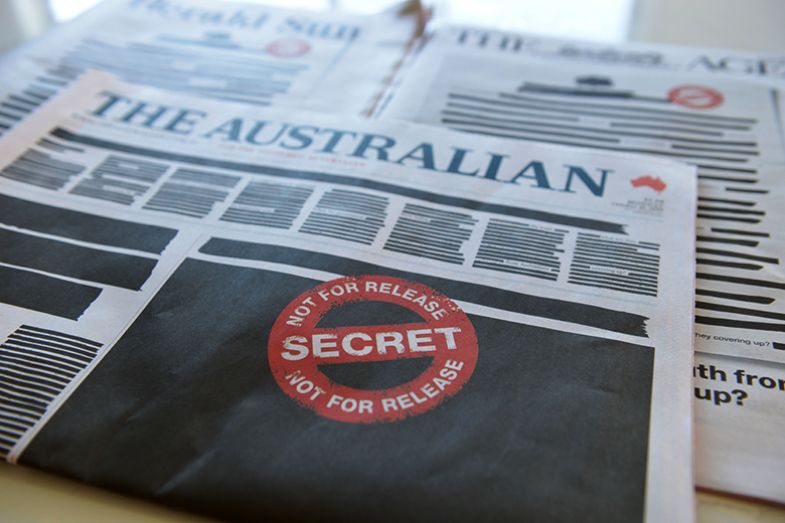
Many critics are sceptical that NDAs serve universities even on their own terms. WSU’s Williams said that while NDAs arouse natural suspicion about the information being guarded, they most likely contain “a lot of fairly mundane things that should have never had a non-disclosure clause in the first place. It’s habitual, but it begs the question…what’s going on?”
A source from a Queensland university said NDAs often serve no purpose since the matters that universities have legitimate reasons to keep secret, usually for commercial reasons, are typically already covered by confidentiality clauses in employment contracts anyway. The source said NDAs were often inserted not to keep wronged staff quiet in exchange for a large payoff but to protect the reputations – at their request – of staff who had performed poorly or who stood accused of misconduct that their employers had insufficient evidence to prove. “I suspect that there’s a lot less money underneath the hood of this stuff than is generally assumed,” he said. “A lot of the time, the trade-off is about embarrassment.”
But others suggest that NDAs are being used to mask shady practice. For instance, a Victorian university source said confidentiality deeds are increasingly being used as part of efforts to “move on” senior staff from departments – particularly chancelleries – that have fallen under new management. “You get a new regime coming into place…and major people in those offices get NDAs. The new boss wants to get rid of the acolytes of the old boss and bring in a new crowd,” the source said – and the new boss fears that without the NDA, the ousted staff might speak out.
In addition, the source highlighted a “correlation” between the use of NDAs and the “bucketloads of shit in the newspapers” about things like pro-Palestinian protest encampments and vice-chancellors’ pay. Bad publicity, coupled with universities’ sheer size, had cultivated risk aversion and “particularly unimaginative” responses from administrators.
“They show up to Senate inquiries and claim they’ve got robust, transparent governance processes, while you’re watching everything get slapped ‘confidential’ and people being moved on with NDAs,” the source said. “This stuff is just eroding [our] purpose. How do you engender trust with the public when your trust levels are dropping? You share with them.”
Non-disclosure clauses aroused so much resentment at the University of Melbourne, particularly among female staff, that they became a bargaining chip in the most recent round of negotiations around pay and conditions. The NTEU’s 2022 log of claims included a demand for “limitations on the use of non-disclosure agreements in relation to sexual harassment or sexual assault complaints/claims at the university”.
Victoria has since introduced legislation to restrict the use of NDAs in workplace sexual harassment cases. English higher education institutions have also been prohibited from using NDAs in relation to complaints about harassment or bullying under the Higher Education (Freedom of Speech) Act, passed in 2023. And the National Higher Education Code to Prevent and Respond to Gender-based Violence, which has applied to universities since the beginning of this month, prohibits non-disclosure agreements that have not specifically been requested by complainants.
Bornstein, the employment lawyer, said other jurisdictions should consider mimicking the Victorian legislation, which permits complainants to take steps to terminate an NDA at any time from 12 months after the date on which the agreement was entered into. “It’s sensitive to victims who seek confidentiality for a time but makes sure that that’s not a permanent state of affairs,” he said.
Bornstein said that in sexual harassment cases, NDAs were often in the interests of an individual claimant “because she is very fragile at the time…and doesn’t want any public exposure. Years later, she may have a very different view.” And while he is “conscious of the mental health of my clients”, he recognises that a permanent NDA can be in “tension with the broader societal need for systemic bad behaviour to be exposed and remedied”.

Some critics believe non-disparagement clauses are even more insidious than NDAs because they have rarely been tested in court so no one knows what kinds of statements they do and don’t cover. “There’s no case law, and non-disparagement is extremely broad,” Bornstein said, so people who have signed non-disparagement clauses tend to err on the side of caution and avoid any kind of criticism of their former institutions.
The ANU said the “standard non-disparagement clause” in its deed of release template is “not a non-disclosure agreement”, but staff appearing before the Senate committee disagreed. “It’s a way of muzzling people who are retiring or have left in tense and difficult circumstances,” said political economist Jessie Moritz.
Peter Tregear, who was driven out of his job as head of ANU’s music school, said the non-disparagement clause in his 2015 deed of release would be enough to “scare off” any current or former employee from saying anything. “Its very lack of legal clarity means the prospect of expensive litigation – and in such a scenario the institution always has the upper hand…by virtue of their deep pockets.”
The Senate committee’s report cites criticism of universities’ use of NDAs and highlights the Australian Catholic University’s treatment of its recently recruited law dean, Kate Galloway, over her previous publications on abortion. Galloway’s 2024 removal and A$1.1 million (£544,000) payout was covered by an NDA.
However, Pocock was the only committee member to make any recommendation about gag clauses. He said this “potentially” reflected a blind spot in political circles, where concealment had become so habitual that it rarely raised eyebrows – even in a committee convened to look for signs of dodgy behaviour.
“I’ve been critical of…both sides of politics…when it comes to a lack of transparency,” Pocock said. “We’ve seen this government use NDAs with stakeholders during consultation on legislation. Secrecy is sometimes bizarrely seen as a necessity to get things done.”
Consultant Claire Field, a former regulator, said Australian governments were markedly less transparent than their trans-Tasman cousins. Documents such as incoming ministerial briefs are routinely published in New Zealand, often with only minor redactions. “We just don’t have that ethos,” Field said.
As for universities, she said their similarly defensive approach to transparency could reflect the predominance of governing council members with business or consulting backgrounds: “If you had more staff and student representatives, you’d probably have more transparency.”
Ultimately, excessive secrecy – particularly in discrimination cases – can be a barrier to social progress, according to University of Queensland law professor Paul Harpur, a disability rights expert. For instance, his 2017 book Discrimination, Copyright and Equality cites a 2009 lawsuit against Arizona State University for introducing an e-book reader that visually impaired students were unable to use. ASU did not offer to pay damages but it did publicly agree not to buy or promote devices that were not fully accessible to the blind. News of that agreement spawned a string of similar lawsuits against other universities, all of which made similar settlements – and the e-book reader’s manufacturer, Amazon, subsequently introduced a ream of disability access features.
More generally, non-disclosure is not in universities’ interests, Harpur told THE, because it prevents problems from being addressed before they become larger problems, such as underpayment and, until the new law, gender-based violence.
“If there’s a problem that just simmers…eventually it blows up. Then you get government regulation. You lose trust. Better to have people see these problems,” he said.
“We have a habit in Australia to have everything non-disclosured. [But] it’s public money. We shouldn’t do it. We’re essentially hiding problems from the shareholders – the citizens of the country.”
Register to continue
Why register?
- Registration is free and only takes a moment
- Once registered, you can read 3 articles a month
- Sign up for our newsletter
Subscribe
Or subscribe for unlimited access to:
- Unlimited access to news, views, insights & reviews
- Digital editions
- Digital access to THE’s university and college rankings analysis
Already registered or a current subscriber?