
Why universities should be turned upside down


You may also like
Popular resources
The goal of education at a research university is hotly debated right now, provoked by a growing concern that students are not learning what is most needed for the future. Learning the logic of enquiry should be at the centre of university education – for the rigour and the creativity it brings to discern new knowledge, invention and shaping what does not yet exist. By focusing on new ideas, we can change how we think about research universities and help guide changes now under way. Enquiry is the central idea, contrasting with the ideas of knowledge as settled and of critique, which unsettles that established knowledge.
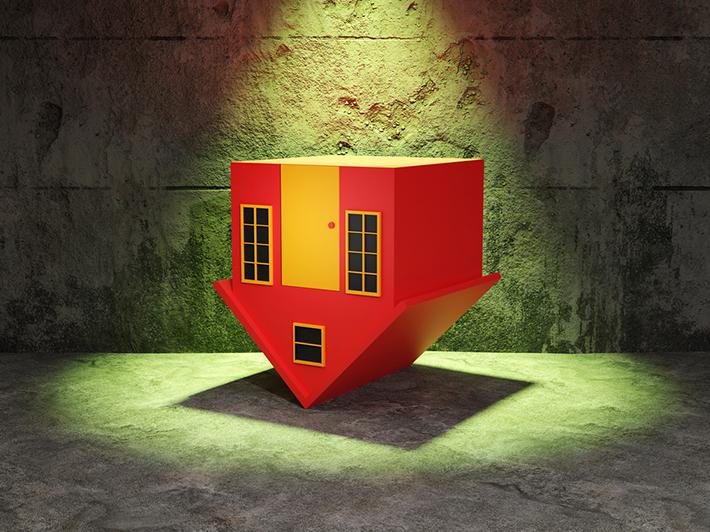
Traditionally, the research enterprise flows downward, directed by senior faculty through postgraduates to undergraduates. I propose turning the university upside down, allowing enquiry to arise from the next generation – from students who bring passion and interest in the future. To do this, we must cultivate their curiosity, attend to the questions they bring to campus and teach them different ways of seeking new knowledge. Given the tens of thousands of undergraduates at major research universities, we must shift from replicating a small-scale research professoriate to multiplying the cohort of people who will engage in research in many contexts.
As inaugural director of the Jackman Humanities Institute at the University of Toronto, I was strongly encouraged by the dean of the Faculty of Arts and Science (a physicist) and the university’s president (a public health doctor) to include undergraduates in our programmes. We created four stages of fellows: professors, postdoctoral fellows, PhD students and undergraduate students. Each undergraduate was supervised by a professor, often across disciplines. Unlike PhD students and postdocs, undergraduates had not yet been trained to ignore extra-disciplinary issues or research methods. Their flexibility and openness led to the greatest insight and creativity in research.
- What established academics can learn from ECRs
- How teachers can learn to lead
- Two ways to teach undergraduate students research skills
“I’ve had a real education,” one undergraduate told me at the end of her first year. At first, she said, she felt intimidated and unprepared to comment on other fellows’ presentations; she could only listen. But the mixed-generation environment showed her how to engage in discussion and raise questions based on her own perspective and research. She later learned how to make the best kind of comments, to ask questions that would help the presenter develop their work. In one year, she progressed from listening and absorbing information to critical questioning and genuinely collaborative enquiry.
But such research environments raise a serious question about how best to leverage the scale of large research universities. Instead of following an idea of replication where only a few promising undergraduates go on to become PhD students and perhaps professors, we must focus on the vast number of undergraduates who also can learn to do research, a skill they will bring into many sectors, such as medicine, IT, museums, government, NGOs, finance and politics.
To do this, PhD students should learn to conduct research by teaching the skills to undergraduate students. Instead of the professor presiding over a research team – as the only one who can truly create new knowledge – the professor should teach others how to teach and how to enquire into new knowledge. This idea of multiplication meets the needs of a society with questions – because it educates people to explore, innovate and create the future on a much greater scale.
In the lab, PhD students can teach undergraduates not only how to follow “cookbook” experiments but to develop their own questions, hypotheses, methods, data collection, analysis and ability to cope with failed results. In tutorials for large classes, graduate students can teach undergraduates how to generate their own questions and conduct research. This system cultivates the undergraduate’s research capacity and the PhD student’s ability to teach how to do research. Professors can do their own research while learning from undergraduate and PhD students. Questions for research come from all sides, and professors have multiple goals: to publish important work and to graduate two groups of researchers – those who have learned to enquire (undergraduates) and those who have learned to conduct, guide and teach research (PhD students).
Many courses and universities are already scaling up this process. In fact, teaching-stream faculty are most likely to design pedagogical practices for research skills. Our problem is twofold: we underestimate both the capacity of our students to conduct research and the benefits to society that could result from this practice. And we have not determined how to communicate the rewards of this “reverse flow” structure to government leaders, potential donors, colleagues, parents and, most importantly, our students.
Higher education has many goals reflecting different ideas: mastery of technical skills, formation, critical thinking and the logic of enquiry – but this last idea is the key to the future of our universities and for their role in society. We should educate the next generation to create the future knowledge we all will need.
Robert Gibbs is professor of philosophy and religion and was inaugural director of the Jackman Humanities Institute at the University of Toronto. His latest book is What Could a University Be? (University of British Columbia Press, 2025).
If you would like advice and insight from academics and university staff delivered direct to your inbox each week, sign up for the Campus newsletter.
