
One campus, many cultures: inside Beijing Institute of Technology’s International Summer Programme
International faculty, interdisciplinary courses and immersive learning are shaping a truly global summer experience at Beijing Institute of Technology
Beijing Institute of Technology

Sponsored by
Sponsored by
More than 800 Chinese and international students are spending their summer immersed in a global learning experience at Beijing Institute of Technology (BIT), where classrooms, laboratories and creative studios have become meeting points for ideas and cultures from around the world.
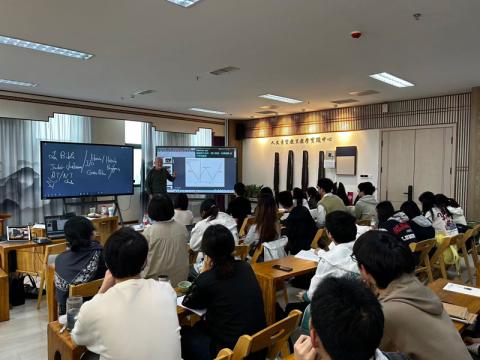
The 2026 International Summer Programme, which opened on 6 July 2026, brings together more than 60 international professors from 25 countries and regions to teach 43 courses alongside BIT faculty. For participating students, the programme offers an opportunity to engage with an international academic community without leaving campus.
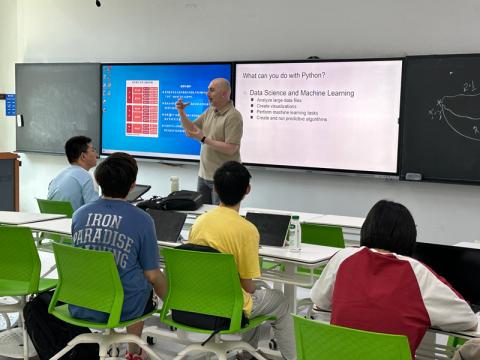
Covering disciplines ranging from AI and integrated circuits to biomedicine, design, law and contemporary art, the programme draws on expertise from leading universities and institutions including the National University of Singapore, the University of Edinburgh in Scotland, the University of Auckland in New Zealand, the University of Illinois Urbana-Champaign and Karlsruhe Institute of Technology in Germany. The result is an interdisciplinary learning environment that combines academic expertise with diverse cultural and intellectual perspectives.
For Ramly Karyn Elmira, a student of international economics and trade, the experience extended beyond the classroom. Taking part in the Creative Practice of Modern Ceramic Art course introduced her not only to the process of creating ceramics, but also to the techniques, styles and cultural traditions behind the art form.
“We weren’t only given the chance to create but were also taught the different techniques and styles, as well as the cultural backgrounds,” she says. “I would like to thank BIT for offering this internationally orientated course and valuable programme platform, which has enriched my summer break.”
Elmira joined the programme hoping to make productive use of her summer before beginning a student exchange at BINUS University in Indonesia. “The experience was beyond my expectations. I have gained so much precious knowledge from this activity,” she says.
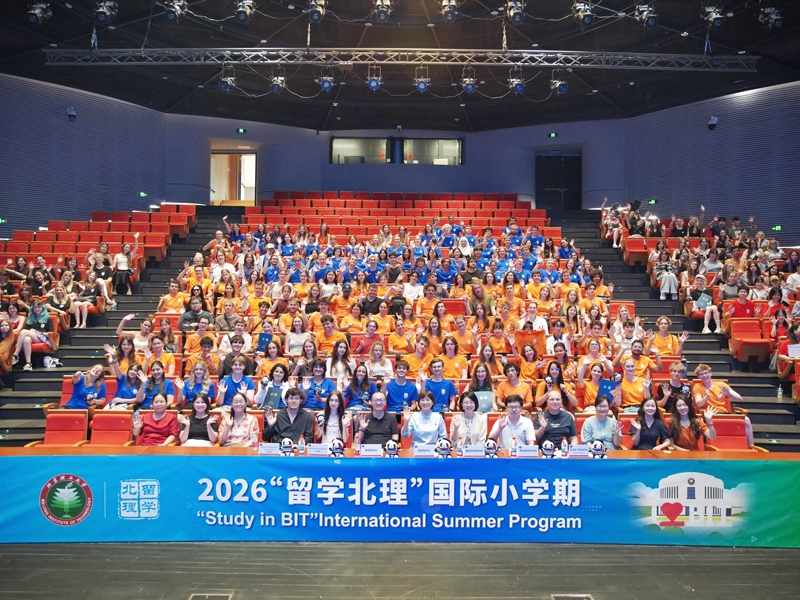
The international dimension of BIT’s summer programme extends across both its Beijing and Zhuhai campuses. On 9 July, the 2026 Study Abroad at BIT International Summer School opened simultaneously at the two locations, welcoming more than 600 international students from over 30 countries and regions.
Representing more than 60 leading partner universities worldwide – including Boston University in the United States, Queen’s University Belfast in the United Kingdom, the Technical University of Madrid in Spain, Grenoble INP in France, the University of Pisa in Italy and Bauman Moscow State Technical University – the students came together for a three-week programme combining specialised study, academic development and cultural exchange.
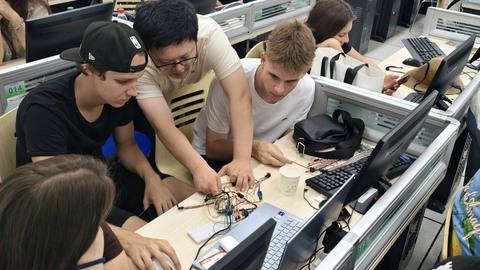
Drawing on the distinctive educational resources of BIT’s Beijing and Zhuhai campuses, participants are deepening their knowledge of cutting-edge disciplines, taking part in scientific and technological innovation and practical training, and experiencing the diversity of Chinese culture. The programme is designed to develop academic and professional skills, as well as creating opportunities for young people from different backgrounds to learn from one another and build lasting networks.
In Beijing, the programme focuses on the integration of advanced science and technology with language and cultural education. Five core programmes are offered: frontiers in renewable energy materials science, practical training in advanced technologies for electronic information engineering, computer science, smart Chinese, and the international Chinese language teacher scholarship. They follow a teaching model that combines theoretical instruction, advanced laboratory work and academic seminars.
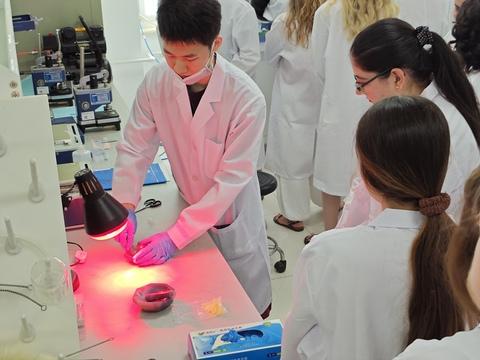
For Juan Raggio, a student at the Instituto Tecnológico de Buenos Aires, the practical dimension of the programme was one of its defining features. Participating in the Hands-on Learning for Emerging Technologies in Electronics Engineering programme, Raggio found himself moving beyond theory and into collaborative, project-based engineering.
“I expected theory, but BIT gave us something far better: hands-on experience, working on projects with people from different countries and backgrounds,” he says.
The programme gave students the opportunity to explore Internet of Things (IoT) technologies not simply as abstract concepts, but as working systems they could build and test themselves. “We didn't just study IoT concepts – we applied them, wired them and watched them come to life on our benches,” Raggio says. “It was a window into the real-world engineering that happens behind the screens we use every day.”
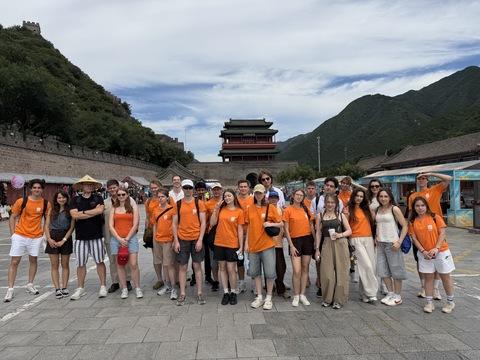
For Raggio, the experience was also a lesson in international collaboration. “A huge thank you to BIT and to my fellow international students. You taught me more about the world than any textbook ever could.”
At the Zhuhai campus, the programme is shaped by the innovation and industrial ecosystem of the Guangdong-Hong Kong-Macao Greater Bay Area. Interdisciplinary programmes explore AI, intelligent robotics engineering and global leadership, supported by a curriculum built around core disciplinary theory. Students can also take Chinese-language courses at different proficiency levels and participate in immersive experiences of traditional Chinese culture.
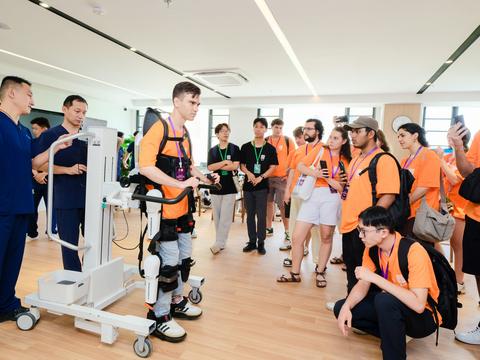
The programmes illustrate BIT’s approach to international education: combining academic study with practical experience, and disciplinary expertise with opportunities for cultural exchange. Students may arrive to study AI, electronics, ceramics or another specialist subject, but the summer experience allows them to work alongside people with different perspectives, discover new ways of thinking and experience an international community in the heart of China.
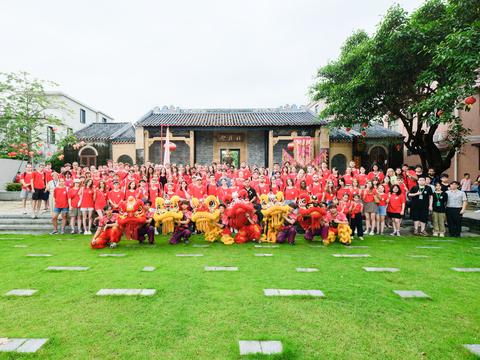
For the hundreds of students spending their summer at BIT, the university has become a meeting place for many cultures, disciplines and ambitions. Whether shaping clay in a studio, wiring an IoT device in a laboratory or exchanging ideas with classmates from around the world, they are discovering that the value of an international education extends beyond academic study, creating opportunities for collaboration, cultural understanding and lasting connections.