It was 3am in Dhaka, Bangladesh, but my body was still on New York time. As I lay awake in that city of 35 million, far from Bard College’s pastoral Hudson Valley campus, my phone lit up with a text from the chairman of the board of trustees: “Let’s go.” Even in my tired state I knew what it meant: I was to become Bard College’s acting president.
Although I had known for a few days that I was being nominated for the position by a “transition committee”, I had remained cautious: I had witnessed more than a few surprises over the previous few months. Now for the hard part.
Soon enough I would turn to Bard’s particular challenges and, to be honest, to figuring out what exactly college presidents do in the US. But I was in Dhaka to speak about the strongest through lines of my professional life – higher education, international education, and civic purpose – to an audience of students and staff from the Global Higher Education Alliance for the 21st Century, of which Bard is a founding member.
A few hours and very little sleep after receiving that text, therefore, I was introduced – with my new title – to deliver the keynote at the Get Engaged Student Action and Youth Leadership Conference at BRAC University.
“There is nowhere I would rather be at this moment than right here,” I began. And I meant it.
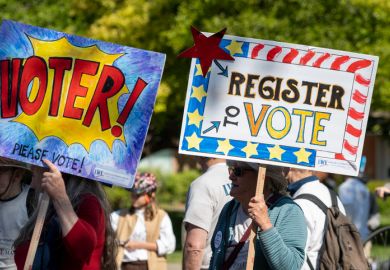
Of the many current attacks on US higher education, the most damaging might be the assault on the civic mission of universities – their commitment to putting their intellectual and institutional resources in service of the common good, whether local, national, or global. The current US administration and its allies in state governments are targeting educational outreach initiatives that foster diverse communities, university-led health programmes abroad, and efforts to register student voters. Many colleges and universities have internalised this retreat, professing institutional neutrality and rejecting any mission beyond the production and dissemination of knowledge.
The late Yale University president Bart Giamatti once said that the “formation of a basis for how we choose to believe and speak and treat others – how, in short, we choose a civic role for ourselves – is the basic purpose of an education in a democracy”. Giamatti shaped me early, as Yale is where I first taught in the US. So it stung to learn this spring that Yale stripped its mission statement of references to “improving the world today”, educating “aspiring leaders worldwide”, and to “an ethical, interdependent, and diverse community”. Dropping “diverse community” looks like a retreat from diversity, equity and inclusion in the face of government threats. This points to a deeper problem: “excellence”, as universities have long deployed it, has too often been a gate – open to those who already hold the social and cultural capital, closed to those who do not.
Last month, I went to the Orlando Convention Center for the annual conference of Nafsa: Association of International Educators. Attendance was thin, particularly among non-American contingents. Indeed, the hall felt as empty as the Stalinist buildings I used to visit in Russia – a fitting emptiness, given the political landscape. Public discussions focused on how to navigate new rules that have gutted funding for intercultural exchange. In private, administrators from schools big and small, public and private, red state and blue, traded news of reduced or collapsed international enrolments. At the ceremony celebrating the 80th anniversary of the Fulbright programme, America’s flagship international exchange programme, a State Department official gushed over the Trump administration’s contributions, while ignoring that the administration had actually tried to crush the very programme she was toasting.
For decades, the US has been a world leader in higher education, in part because of American institutions’ commitment to civic purpose. Universities internalised the view expressed in the 1947 Truman Commission report that higher education “shall be the carrier of democratic values, ideals, and process”. One fears that by the time US academic leaders understand the implications of our current retreat, the country’s leadership in higher education, like in so many other fields, will be lost.
But my time in Bangladesh, among institutional leaders, faculty, and students from 15 countries, including many that participate in Bard’s extensive global degree programmes, reminded me why I have taken on the fraught work of a US college presidency. At BRAC, leaders feel no need to hedge. They are impelled by the fierce urgency of their plainly stated mission to form “future leaders who not only achieve academic excellence but also have the know-how and confidence to apply it in the real world; who go on to lead with empathy and ethics, and realise meaningful progress for society”. As Yale strips such language away, those of us who still believe in it – students, faculty, staff and administrators alike – must fight to preserve the soul of American higher education.
Giamatti’s link between education and civic life lives in the students with whom I crossed paths on my trip. One, from Ashesi University in Ghana, runs a book club that has put donated books in the hands of more than a thousand young readers in Kenya. Another, from the American University of Afghanistan, teaches English and computing online to girls and women. A third, from Myanmar and studying at Parami University, which operates in exile, runs workshops that show other displaced students how to find their way into university. A fourth, from the University of the Witwatersrand in South Africa, has built a mentorship programme for young women in STEM fields.
But the most stirring encounter of all was with four Rohingya students, granted special dispensation to leave the world’s largest refugee camp to join the conference. Their projects range from digital literacy to human rights education to conflict resolution, each aimed at widening educational access. They grasp, with urgency and ambition, that a university’s civic mission and the production and dissemination of knowledge are not at odds. Indeed, two of my own students from Bard are building a platform to allow students from any campus to share academic research more effectively with their surrounding communities.
Being around all these young people is part of what sustains me in this new role. Today’s students are often dismissed as underprepared, distracted, and slothful, but those I met in Dhaka and those I teach at Bard are something else. They are curious, empathetic and, in an age that keeps trying to automate away quality, unmistakably and humanly intelligent. They are building a global community. And they understand, as my colleague Erin Cannan often says, that friendship can itself constitute a form of resistance.
I flew home unsure of what the presidency would hold for me. But underneath that uncertainty was something steadier: purpose, and a stubborn optimism. I had caught a glimpse of the future that higher education can and must defend: one that remains global, diverse and committed to the common good – and to the conviction that this is precisely what it means to be excellent.
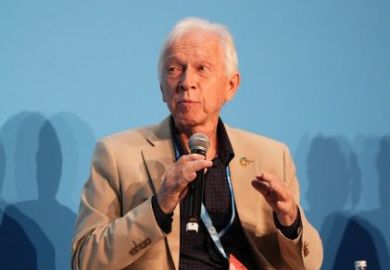
Jonathan Becker is acting president of Bard College and executive director of the Bard Center for Civic Engagement.
Register to continue
Why register?
- Registration is free and only takes a moment
- Once registered, you can read 3 articles a month
- Sign up for our newsletter
Subscribe
Or subscribe for unlimited access to:
- Unlimited access to news, views, insights & reviews
- Digital editions
- Digital access to THE’s university and college rankings analysis
Already registered or a current subscriber?