Disruption caused by the rise of artificial intelligence has forced universities to think more productively about their role in society, according to the vice-president of a Singaporean university.
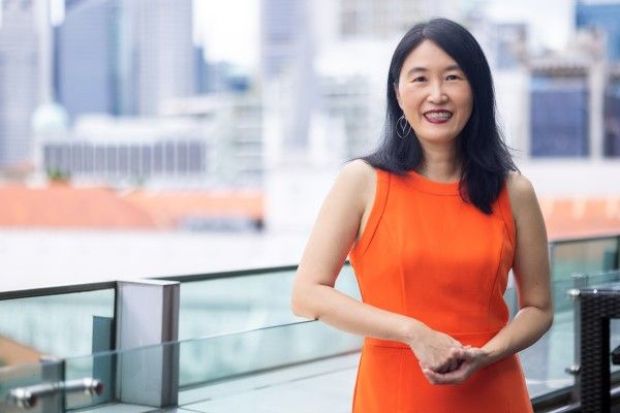
Lim Sun Sun, vice-president (partnerships and engagement) of Singapore Management University (SMU) told Times Higher Education that the emergence of new technologies has been “a good thing” for the sector because it has forced institutions to think more intentionally about their offering instead of operating as usual.
“We have what could be conceived of as an existential crisis where people are going to say: if knowledge is so democratised…why would I have to go to university and pay tens of thousands of dollars to get that kind of education?” said Lim, who spoke to THE at this week’s Innovation and Impact summit in South Korea.
As a result, universities can no longer rely on student flows and must do more to justify their existence – a development the professor said was “an interesting challenge”.
Lim urged institutions to prioritise interdisciplinary learning and cultural literacy as opposed to microlearning. Students should be taught “how different areas of expertise are linked together” as well as the “kinds of knowledge” that lie beyond the confines of a textbook.
Although equipping students with digital skills is important, the vice-president argued that universities should also instil “human-centred competencies” in graduates.
“Communication, creative problem-solving, criticality and also cross-cultural literacy: these are the very human skills that will become even more important when everyone’s knowledge is equalised by AI access,” she said.
Singapore’s SkillsFuture agency found that these core skills have remained in demand across job adverts for over 10 years, despite technical tools shifting rapidly.
According to Lim, the “impact agenda” will also help Asian universities differentiate in a competitive market by the end of the decade.
“The impact agenda is our North Star,” said Lim. “We really wanted to get a grasp over how much of a difference we’re making to society…impact is really more than just about [where] you are ranked because of your research output.”
Social impact has guided the university’s choice of partners and research topics, including ageing and demographic decline, she added.
“We’ve found university partners across Asia are very, very keen to be solutioning for some of the challenges around ageing,” said Lim. “It could be anything from physical health to mental well-being, to urban mobility to financial planning.”
SMU most recently partnered with Dementia Singapore to examine perceptions of people with dementia as part of a nationwide study called “Remember for Me”.
The 26-year-old institution has partnerships throughout South-east Asia, including Vietnam, Thailand, Indonesia and China, where it operates overseas centres, as well as Malaysia.
Lim believes Singaporean universities can play “an interesting sort of bridging role between China and South-east Asia”.
“When I speak to, for example, companies in China…they want to go overseas but not necessarily to just Europe or North America. They’re increasingly curious about the Asean market, but they don’t necessarily understand it.
“That’s why they’ve been keen on Chinese students who have done their degree in Singapore…and then they can help to bridge.”
Register to continue
Why register?
- Registration is free and only takes a moment
- Once registered, you can read 3 articles a month
- Sign up for our newsletter
Subscribe
Or subscribe for unlimited access to:
- Unlimited access to news, views, insights & reviews
- Digital editions
- Digital access to THE’s university and college rankings analysis
Already registered or a current subscriber?