The Philippines is set to eschew its South-east Asian neighbours’ taste for international branch campuses, favouring joint degree programmes instead.
A new transnational education strategy produced by the country’s Commission on Higher Education puts significant emphasis on co-designing academic courses in partnership with overseas institutions, and also includes a planned framework for the mutual recognition of qualifications between the Philippines and the UK.
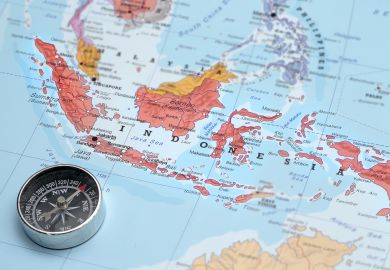
Although branch campuses have not been ruled out completely, the Philippines’ indifference to these stands in contrast to neighbouring nations such as Malaysia and Indonesia, which have ambitions to become international education hubs.
Rosalyn Eder, lecturer in globalisation and education at Austria’s Paracelsus Medical University, said that the new strategy should be understood in the historical context of the Philippines. Three centuries of successive occupations by the Spanish, Americans and Japanese means that higher education policy is “very protective”, especially when it comes to safeguarding spots for domestic learners.
The country’s constitution does not allow for foreign ownership of higher education institutions and stipulates that international students cannot comprise more than one-third of enrolments at any provider. This complicates efforts to establish branch campuses and makes it “very difficult to implement TNE”, explained Eder, who is also head of her institution’s international office.
“There is really a lot of interest in internationalisation,” she continued, “but it is just a different kind of internationalisation, not similar to what we know here in Europe or what’s happening right now in Malaysia, Indonesia, India.”
Eder said the Philippines was more interested in joint degree programmes because the country wants to increase “the quality of higher education” and “its capacity to innovate”. Offering disciplines that might not be available locally in partnership with UK universities was “really more for institutional benefits”, she said.
Jay de los Reyes, associate professor in the Southampton Education School at the University of Southampton, endorsed Eder’s view that the Philippines was taking a more “protectionist stance”.
“I also like the idea that the Philippines is a little bit more aggressive now in occupying a space in the international higher education arena,” he continued.
However, de los Reyes expressed some concern that joint degree programmes could “widen existing gaps” among students and universities in the Philippines, leaving smaller, state-funded institutions behind.
Several joint degree programmes are already in operation across the Philippines, usually featuring prominent names such as De La Salle University and Ateneo de Manila University.
The tuition fees associated with dual programmes are priced up to three times higher than single-discipline degrees at private universities in the Philippines, and local students can incur additional costs if the degree involves a semester abroad.
“Think about what kind of universities are able to venture into joint programmes…it’s a question of how inclusive transnationalisation is,” de los Reyes said.
One core element of the new TNE strategy is also the fast-tracking of visas for students and academics under a “green lane” policy to accelerate the processing timeline.
Currently, most students enter the Philippines on a tourist visa and convert it to a student visa through the Bureau of Immigration with the help of their university on enrolment.
“It really takes time and it’s actually quite expensive,” said Eder. The new strategy, which proposes using an online platform where students can upload documents, aims to “make it a little bit easier”.
Register to continue
Why register?
- Registration is free and only takes a moment
- Once registered, you can read 3 articles a month
- Sign up for our newsletter
Subscribe
Or subscribe for unlimited access to:
- Unlimited access to news, views, insights & reviews
- Digital editions
- Digital access to THE’s university and college rankings analysis
Already registered or a current subscriber?