More companies have confirmed they are interested in investing in the UK sector, potentially providing another source of capital for struggling universities, but experts warn that bringing traditional institutions under private control will be difficult and require close regulatory scrutiny.
Last week Global University Systems confirmed that Lincoln Bishop University is joining its group in what is being billed as a “new model” that will help the university “scale up”.
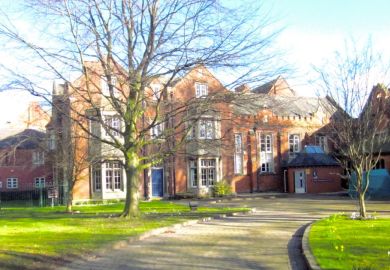
A European for-profit higher education group Galileo, which already owns Regent’s University London, had already confirmed it was also interested in further expansion in the UK. A spokesman told Times Higher Education it would rule out “no category” of institution in principle. It said it had backed Regent’s University London, Istituto Marangoni London, LMA, Corndel and the London Interdisciplinary School since 2020 and was “open to doing more”.
Most universities in the UK are not-for-profit institutions that are often structured as charities or statutory corporations, so a change would be “a regulatory process, not a purchase”, it acknowledged.
“Where we can be useful is where capital and management change what an institution is able to do, which is what happened at Regent’s,” the spokesperson said. “We do not go looking for institutions in difficulty; we keep channels open and listen when one approaches us.”
Michael Shattock, visiting professor at UCL’s Institute of Education, said taking control of a traditional university would be much more difficult than acquiring an existing private provider, adding that it was unrealistic to imagine private groups easily “buying up chunks of British higher education”, with smaller existing private institutions representing much more straightforward acquisition targets.
Huw Morris, honorary professor of tertiary education at UCL, said private capital should not necessarily be viewed negatively as it offered another option to institutions facing serious financial problems. “It’s helpful to have somebody come in and be prepared to take on institutions that might be in difficulty,” he said.
Morris pointed out that mergers were frequently seen as a solution for universities facing financial difficulties but they were often disruptive. “They just consume management time, and they’re incredibly expensive,” he added.
But private investment would also bring its own issues. For-profit operators can run institutions at lower costs compared with traditional universities but investors expect a return on their capital, he added. “The problem with [companies] like Galileo is [if] they squeeze their margins to the point where the quality is jeopardised,” Morris said.
He stressed that his bigger concern was whether England’s regulatory architecture had kept up with increasingly complex higher education groups. Different parts of a large education company can fall under different regulatory regimes, while some organisations delivering university courses through franchise arrangements have historically escaped direct OfS registration. “These emergent corporate forms of higher education and what I call tertiary education provision require a rethink of the regulatory environment,” Morris said.
Galileo has faced significant media scrutiny in France. Galileo and College de Paris, another major private education group, were the subject of an in-depth inspection carried out by the French government looking into the country’s fast-growing for-profit higher education sector.
The 100-page report commissioned by the Ministry of Higher Education and published in June raised concerns about financial opacity, student protection and cost-cutting measures affecting teaching quality in the sector, although it often does not identify which group specific criticisms applied to. It also made more than 30 recommendations for regulation of the sector.
Inspectors said public funding made up 40 per cent of Galileo’s French turnover in 2023-24, mostly through funding for apprenticeships in the country. It described the group as highly centralised and said some schools had limited autonomy.
Julien Jacqmin, associate professor of economics at NEOMA Business School whose research has examined France’s for-profit education sector, said the prospect of tighter regulation in France and changes to public funding made further international expansion logical for a growth-focused company like Galileo.
“They’re likely interested in investing in the UK because of two reasons. They want to spread the risk and not be too reliant on just one higher education system and one type of regulation. Also, the UK [higher education sector] is very attractive because of its international reputation,” he said.
Galileo rejected the suggestion that its international growth was about reducing its exposure to France. “France is our home market, where our group was founded, and by far our largest market with almost 77,000 of our 300,000 students,” its spokesperson said. “Expanding abroad adds to our presence in France; it does not replace it.”
The company pointed out that many of the recommendations in the government report concerned the sector as a whole. It said inspectors described its own regulatory framework as “almost complete and capable of meeting the main legislative and regulatory requirements”.
“On quality we recognise that there is room for improvement and treat the recommendations as a roadmap for France,” the spokesperson said. “We have been calling for tighter regulation across the entire sector in France for several years now.”
Register to continue
Why register?
- Registration is free and only takes a moment
- Once registered, you can read 3 articles a month
- Sign up for our newsletter
Subscribe
Or subscribe for unlimited access to:
- Unlimited access to news, views, insights & reviews
- Digital editions
- Digital access to THE’s university and college rankings analysis
Already registered or a current subscriber?