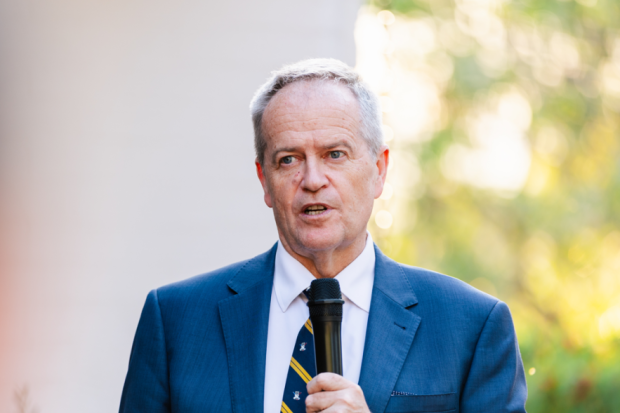
University of Canberra (UC) vice-chancellor Bill Shorten is pushing for a merger with the city’s troubled vocational education institute, in a move that could produce Australia’s seventh dual-sector university.
Shorten said an amalgamation with the century-old Canberra Institute of Technology (CIT) was “unfinished business”, with the idea having circulated “in different forms” for about 15 years.
“There have been calls from a range of voices across the…Canberra community that perhaps it’s now time for CIT and UC to talk about a joined-up future together,” said Shorten, a former federal opposition leader. “I’m pleased to say [UC] welcomes this discussion.”
His intervention follows a week of horror headlines for CIT, whose CEO Margot McNeill resigned on 11 August after spending months on leave amid a legal joust over her mid-2025 appointment.
McNeill had failed to tell her recruiters that she was under investigation by her then employer, the public vocational education provider in New South Wales, over allegations of serious misconduct. Australian Capital Territory (ACT) parliamentarians have recommended that she be investigated by the territory’s public sector standards commissioner, while the ACT government has committed to review CIT’s governance.
McNeil’s predecessor at CIT, Leanne Cover, herself left the institution under a corruption cloud. Cover resigned a month before the ACT Integrity Commission found she had engaged in serious corrupt conduct by failing to consult the board over A$8.5 million (£4.5 million) in consultancy contracts with a mountaineer and motivational speaker.
Meanwhile, CIT has invited staff to apply for voluntary redundancy after it posted a A$30.7 million deficit last year. “Clearly there have been problems with the stability of CIT,” Shorten told journalists.
He dismissed suggestions of “empire building” as “complete rubbish”, describing the proposal as a “merger of boards” rather than a takeover. “I haven’t invented the problems [at CIT] but I do see a solution,” he said. “If you’ve got ongoing financial problems, something’s got to give. The taxpayer can’t be a tap that you just leave on constantly. The world doesn’t owe the ACT a living. Let’s lean into where the future is rather than being mugged by the future.”
Shorten said a merger could save money through “synergies” in enrolments and marketing, while allowing land – particularly in the Canberra suburb of Bruce, where both institutions have campuses – to be used more efficiently.
Last year, the two institutions launched a pathway programme whereby CIT diploma graduates in seven disciplines receive automatic credit towards UC degrees. Shorten said a merger could spawn more cooperation while improving educational delivery, particularly in southern Canberra, where CIT has a new campus in Woden. “Together we could be an even better proposition,” he said.
His former cabinet colleague, federal education minister Jason Clare, said the idea should be explored. “Closer collaboration could make it easier for students to get the qualifications they need and help build the workforce Canberra needs,” Clare said.
Shorten said he had raised the proposal with the ACT government. The territory’s skills minister, Michael Pettersson, said his government was focused on completing the governance review of CIT but was “open” to “alternative models” that “may arise” from this inquiry.
“There is merit in continuing to explore opportunities for closer collaboration where they can deliver better outcomes for students,” Pettersson said. “Any proposal for more significant structural change or mergers…would need to demonstrate clear benefits for students and the ACT, secure broad support from both institutions, and be subject to thorough consultation.”
Australia already has six dual-sector universities with both higher education and vocational training arms, including four in Victoria and one each in Queensland and the Northern Territory. “This is not a radical idea,” Shorten said. “It’s already working successfully.”
He said 50 per cent of trade students at dual-sector RMIT University, in Melbourne, went on to degree-level studies.
Register to continue
Why register?
- Registration is free and only takes a moment
- Once registered, you can read 3 articles a month
- Sign up for our newsletter
Subscribe
Or subscribe for unlimited access to:
- Unlimited access to news, views, insights & reviews
- Digital editions
- Digital access to THE’s university and college rankings analysis
Already registered or a current subscriber?