A British Nobel laureate has branded plans by the University of Sheffield to cut jobs at his old chemistry school “completely insane”.
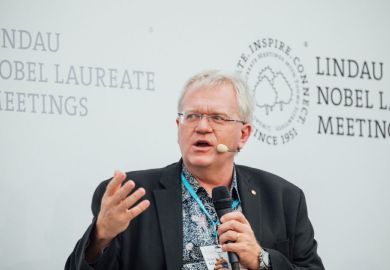
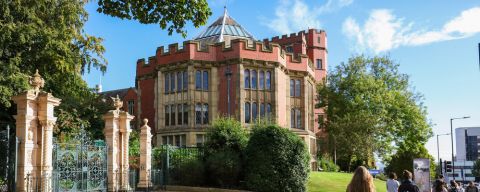
“I couldn’t believe it when I heard the news,” said Richard J. Roberts, who won the Nobel Prize in Medicine in 1993, on recently announced proposals to cut about 20 per cent of posts at Sheffield’s renowned chemistry department where he took his undergraduate degree and PhD prior to moving to Harvard University and then Cold Spring Harbor Laboratory in New York.
“Chemistry is one of the most fundamentally important subjects in science so cutting jobs at one of the UK’s best chemistry departments is totally crazy, completely insane,” said Roberts, who is one of four Nobel laureates to come from Sheffield’s chemistry department, where a building is named after him.
“There are no excuses for it,” he continued, adding: “If this is about a fall in student numbers then things can be done to make it more attractive. You shouldn’t resort to cutting hard at a place which is still recognised internationally for its research excellence.”
Speaking to Times Higher Education at the Lindau Nobel Laureate Meeting, a week-long scientific meeting in southern Germany which brings together Nobelists and young scientists, Roberts said he owed his scientific career to Sheffield, which was the only university willing to take him after he failed his physics A level.
“The first year of my sixth-form in Bath was really interesting but the second year wasn’t great – they just repeated the same content so I bunked off to play snooker. I was west of England junior champion and invited to become a practice partner for Joe Davis,” explained Roberts on his association with the pre-eminent player of the 1950s and 1960s, who was the first player to score a 147 break in a tournament.
“I couldn’t get into Oxford or Cambridge and Southampton turned me down. But Sheffield took a chance on me, and that was a stroke of luck as David Ollis was a brilliant organic chemist and easily the best science teacher I’ve ever known,” said Roberts on the late former chair of organic chemistry from 1963 to 1990.
“He taught chemistry as if it was a puzzle that needed to be solved and I was madly keen on puzzles. You couldn’t swot for his exams – you had to solve the puzzle and that approach really suited me,” said Roberts, who was knighted in 2008 for his services to science.
“I’m not sure I’d have got that if I’d have gone to Oxbridge so my degree was really valuable – it was a different way of teaching. It has stayed really good over the years so it seems foolish to cut back at a place that has proved itself so often,” he added.
“I was delighted to stay on at Sheffield for my PhD and had a great time,” he said, reflecting that he missed out on meeting one of the department’s other recent laureates Harry Kroto – who also took a PhD there in the 1960s – until both were Nobel winners.
“We later became good friends and I used to joke that I taught him everything he knew because I got mine first,” said Roberts, who won his Nobel for the discovery of split genes.
Reflecting on wider funding pressures in the UK and US, Roberts said it was vital for science departments in both countries to be adequately funded. “If you want to produce important science and pharmaceuticals, then higher education needs to be properly funded,” he said.
“Chemistry research isn’t that expensive to do well. If you work hard and do the experiments then you can be very productive so it shouldn’t cost too much to keep these places running, particularly when you consider what is at stake,” said Roberts.
A spokesperson from the University of Sheffield, said the university, “like many”, was “adapting to changing sector demands and shifting student enrolment. Doing nothing is not an option if we want to shape our own future and protect the high-quality student experience Sheffield is known for”.
“To ensure long-term sustainability, we are carefully reviewing structures in specific areas - including chemistry - in line with current and future teaching, research, and support needs.
“We know this is an unsettling time for colleagues; however our focus is on using voluntary measures – as we have successfully done in other restructures. Compulsory redundancies are always an absolute last resort, if any need to be made we expect the number to be very small. No schools or disciplines are closing, courses will continue to be delivered to the same high academic standards, and these proactive steps will help sustain the discipline and ensure the university remains well positioned to thrive for future generations.”
Register to continue
Why register?
- Registration is free and only takes a moment
- Once registered, you can read 3 articles a month
- Sign up for our newsletter
Subscribe
Or subscribe for unlimited access to:
- Unlimited access to news, views, insights & reviews
- Digital editions
- Digital access to THE’s university and college rankings analysis
Already registered or a current subscriber?