South Korean universities are creating degree programmes exclusively for international students in subjects such as K-pop, but academics warn the trend could deepen divisions on campus and prove unsustainable in the long term.
As universities intensify efforts to attract overseas students amid demographic decline, several institutions, including Sookmyung Women’s University, Dong-eui University and Soonchunhyang University, have launched new international colleges, local media reported.
Hannah June Kim, professor at the Graduate School of International Studies at Sogang University, said the move reflects longstanding pressures but carries risks.
“The push for multiculturalism and increasing the number of foreigners living in South Korea has been ongoing for decades, and factors such as population decline have accelerated this trend,” she said.
While programmes taught in English have long been open to both domestic and international students, she warned that while creating separate degree structures may help students adjust, it could have “unintended consequences”.
“For example, such initiatives may lead Korean students to feel excluded within their own country, potentially increasing perceptions of group threat and reinforcing ‘us versus them’ narratives.”
Such dynamics, she added, could make “meaningful integration more difficult, even though integration is ultimately the goal”.
However, the picture is uneven across the country, with some academics cautioning that such programmes remain concentrated in Seoul and are far less common in regional cities.
Rushan Ziatdinov, a professor based in Daegu with experience working across multiple universities, said he had “never heard of such departments” in the city, where “even fully English programmes are relatively rare compared to programmes mostly taught in Korean”.
He added that universities may struggle to sustain such initiatives, noting that “in order to run such departments, universities would need more experienced foreign faculty”, while in practice “the number of regular teaching professors is not increasing”.
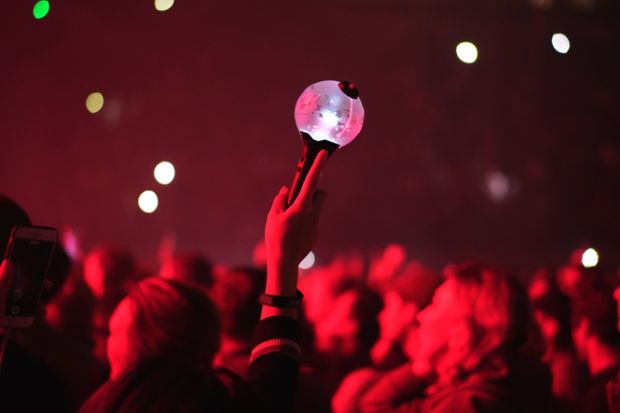
At Sookmyung, programmes are focused on Hallyu, or the Korean Wave, which refers to the rise in popularity of Korean culture around the world. It will offer courses in business and Korean culture.
It has also signed a partnership agreement with SM Universe, a subsidiary of K-pop company SM Entertainment, linking the programme to South Korea’s music industry.
Ziatdinov suggested that separating international students may not be the most effective approach. “Separating foreign students can lead to inclusiveness in terms of the language of instruction, but also to their isolation from the local population,” he said.
Instead, he proposed the creation of fully international universities in regional areas that would bring together domestic and overseas students, arguing that this could support both integration and local economic development.
However, Kim cautioned that such models may not be viable over time, particularly for students seeking to remain in the country after graduation.
“International students who wish to remain in Korea will eventually need to integrate into Korean society to live and work there,” she said.
Register to continue
Why register?
- Registration is free and only takes a moment
- Once registered, you can read 3 articles a month
- Sign up for our newsletter
Subscribe
Or subscribe for unlimited access to:
- Unlimited access to news, views, insights & reviews
- Digital editions
- Digital access to THE’s university and college rankings analysis
Already registered or a current subscriber?