Learners are being given a chance to take “stackable” postgraduate modules from member institutions of the University of London as it prepares for the introduction of England’s new Lifelong Learning Entitlement (LLE).
The federation billed the move as the first step towards people being able to study across several of its 17 institutions and build up “portfolio” degrees over time.
Using its new online learning system, the first courses devised from degree content from City St George’s, University of London will go live this week, focused on product development and supply chains.
Students from around the world will be able to start the self-guided modules whenever they wish at a cost of £495 each, taking assessments when they feel ready, with no application processes.
Modules will each be worth 15 credits at postgraduate level and students can take one or several to build up to achieving a recognised postgraduate award or, eventually, a full 180-credit master’s degree.
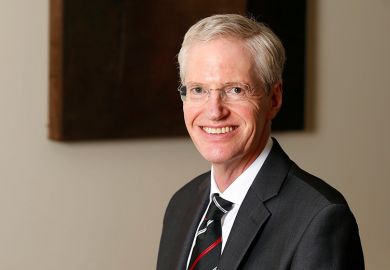
David Latchman, deputy vice-chancellor at the university, said while the launch focused on postgraduate courses, it would feed into planning for the LLE, which will offer four years’ worth of loan funding that can be spread out over time to facilitate more flexible undergraduate study.
He said the university was well placed to overcome a common “bugbear” associated with the new system – difficulties with transferring credit between institutions.
Other institutions were having to “invent” a way of doing this, but members of the federation had ready-made processes to share students because all graduate with a University of London degree anyway, said Latchman, a former vice-chancellor of Birkbeck, University of London.
He added that it was going to be “increasingly difficult for any university, whether in our federation or not, to simply ignore the LLE and say ‘we’re just carrying on doing three-year degrees’ because the whole thing requires you to cooperate with other universities”.
“You’ve got to be prepared that your student leaves after the first year and goes somewhere else, or your student is received into your institution, bringing their credit with them.”
Latchman said another member university was close to agreeing for some of its courses to be offered as microcredentials on the new system, with these likely to focus on accountancy and business management.
While the first offerings were focused on meeting skills needs, with a view to encouraging employers to sign up their staff, future courses could have more of a “leisure focus”, according to Latchman, who said universities will also be encouraged to develop modules specifically for the programme, rather than just repurposing degree content.
He said pricing may change over time, with the possibility of modules costing different amounts depending on content.
Register to continue
Why register?
- Registration is free and only takes a moment
- Once registered, you can read 3 articles a month
- Sign up for our newsletter
Subscribe
Or subscribe for unlimited access to:
- Unlimited access to news, views, insights & reviews
- Digital editions
- Digital access to THE’s university and college rankings analysis
Already registered or a current subscriber?