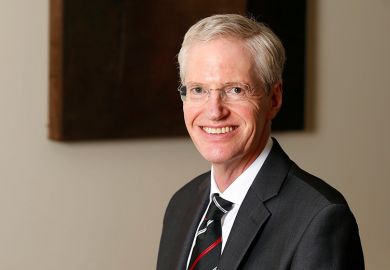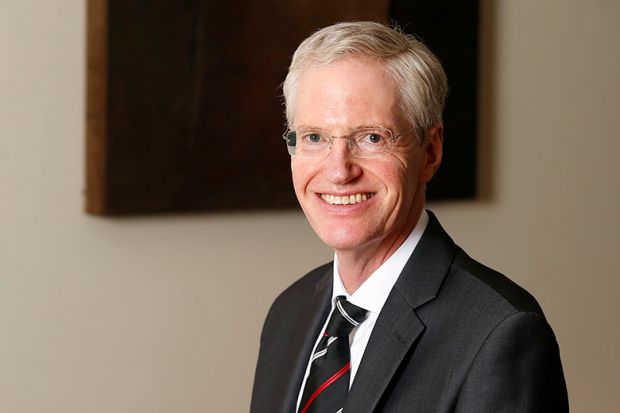
English universities need “radical” reform if they are to make the most out of policy changes, including the Lifelong Learning Entitlement, the former Open University vice-chancellor has claimed.
Tim Blackman argued that universities are currently “over-consuming” and should be prioritising creating a more sustainable and environmentally focused economy, and tackling misinformation.
To achieve this, he said, “radical reform” is needed to refocus the role of higher education in England. English
The “residential model” where students leave home and move into university halls or local private housing is “unusual by international standards”, “adds to government debt, and has disrupted housing markets across the country”, Blackman told a webinar hosted by the Centre for Global Higher Education.
He added that there has been a “fleshing out of both academic subjects and professional qualifications to fill 360 credits”.
“I think it is possible to be an engineer or a historian with less credits than that in your initial qualifications, especially if that leaves headroom for later updating to remain a competent engineer or historian.”
The Lifelong Learning Entitlement (LLE) – which will launch later this year and provide the equivalent of four years’ worth of tuition fee loans which can be spread out over a longer period for modular study rather than just a traditional undergraduate degree – is the “right framework” for change, Blackman said, but is “likely to be underpowered in terms of policy levers in terms of the extent of change it can achieve”.
He said there needed to be “much stronger policy incentives” to get the most out of the LLE, “because a full-time honours degree is good business for a university, and it has a significant signalling power for employers over and beyond its value as a practical qualification”.
He noted there have been several attempts to challenge the traditional three-year model of university, including higher education diplomas introduced in 1973, foundation degrees, and higher technical qualifications, but most have “failed” and “withered on the vine”.
The removal of student number controls in 2012, as well as the reforms to student loans, “cooled off” such qualifications, as it meant “why would you do a higher national diploma or a higher national certificate if you could get a place to study for a degree, the system has no student number controls, and the cost is no higher”.
“There’s constantly been academic drift back to this dominant qualification, which, of course, developed in an elite system, but was rolled into, with not a lot of thought, a mass participation system, which explains a lot of the financial tensions we’ve got in the sector at the moment.”
Standardising the curriculum – which Blackman conceded was a “controversial” topic in higher education – would help ease the transition to the LLE, as it would make it easier for students to transfer between universities.
“Reforms across the UK are moving in this direction but are not learning from past policy failures and are not radical enough given the scale of the challenges we face, which are very serious indeed.”
Register to continue
Why register?
- Registration is free and only takes a moment
- Once registered, you can read 3 articles a month
- Sign up for our newsletter
Subscribe
Or subscribe for unlimited access to:
- Unlimited access to news, views, insights & reviews
- Digital editions
- Digital access to THE’s university and college rankings analysis
Already registered or a current subscriber?