Australia’s most remote university has cancelled its audacious plan to set up a UK branch campus following a “detailed risk analysis”.
Charles Darwin University (CDU) said preparatory work to establish operations in London had been “valuable”, but its focus “must now shift to priorities closer to home”.
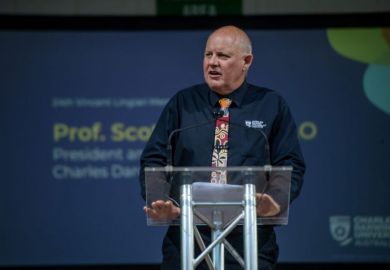
The decision was announced four days after vice-chancellor Scott Bowman stepped down over accreditation issues in the dual sector university’s training division, and three months after social scientist Jodie Duignan-George had been appointed to run the London operation.
The original plan, revealed last October, was to deliver master’s qualifications – starting with offerings in cybersecurity and educational and health management – in “hyperflexible” mode.
The degrees, tailored for busy professionals, would be delivered largely online. Students would be able to enrol 365 days a year and study at their own pace. Face-to-face “masterclasses” would take place in a study centre scheduled to open this year in east London.
In a 27 February statement, the university said the initiative would now remain in a “pre-operational” phase. “CDU’s priority is to focus on its core operations in the Northern Territory and ensure institutional stability and resilience,” it said.
“No students have commenced, teaching has not begun, and long-term delivery obligations including a lease have not been entered into.”
The university said it had spent A$1.9 million (£1 million) on establishment costs including professional services, marketing, curriculum development, staffing and market entry planning. It said the work to develop the hyperflexible degrees and “delivery frameworks” would “strengthen” the university’s local offerings.
In November, when CDU announced Duignan-George’s appointment as its inaugural associate vice-chancellor for the UK, it said applications for its London-based degrees had begun rolling in.
Duignan-George, who had previously worked with Bowman at Central Queensland and James Cook universities, had been enlisted with a brief of “building CDU’s presence and partnerships, identifying unique business opportunities and building a connection between the UK base and campuses across Australia”.
Bowman had been involved in the establishment of branch campuses in Singapore and Indonesia during his time at the two Queensland universities. He first revealed his UK aspirations a year ago, saying Canberra’s policies to curtail onshore international education had forced CDU to look further afield.
“The bottom line is that to deliver world-class degree courses and training to people in the Northern Territory, we have to grow the revenue base by exporting our unique higher education experience,” he said at the time.
Since then, former Northern Territory chief justice Trevor Riley has taken over as the university’s chancellor. More recently, Bowman drew criticism from Northern Territory education minister Jo Hersey for failing to notify her directly of the university’s accreditation problems, even though the issues had apparently been raised eight weeks previously with the territory’s vocational training agency.
The territory’s chief minister, Lia Finocchiaro, criticised the UK plan following Bowman’s departure. “I don’t know why they decided to go to London,” she told ABC Radio Darwin. “If it does provide a revenue measure…I’m as surprised as anyone.
“We need to be providing pathways for territory kids into…jobs in the territory. The vast majority of CDU students are territory-based. When you try and do too many things, you can’t necessarily do them all well.”
Finocchiaro said she wanted the university to “align very strongly” with the government’s economic priority areas of agriculture, defence, energy, mining and tourism.
john.ross@timeshighereducation.com
Register to continue
Why register?
- Registration is free and only takes a moment
- Once registered, you can read 3 articles a month
- Sign up for our newsletter
Subscribe
Or subscribe for unlimited access to:
- Unlimited access to news, views, insights & reviews
- Digital editions
- Digital access to THE’s university and college rankings analysis
Already registered or a current subscriber?