Mark Carney made headlines around the world when he called for “middle powers” such as Canada to work together to stand up to the rise of hard power in a speech at Davos.
The president of the country’s largest university has said it is fully supportive of this mission, emphasising that it can play a leading role.
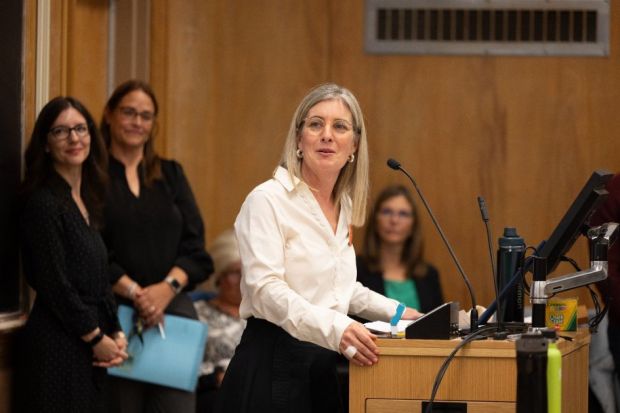
Neuroscientist Melanie Woodin took over the leadership of the University of Toronto in July from Meric Gertler, who stepped down after 12 years in charge.
Speaking to Times Higher Education, Woodin admitted her predecessor was a “hard act to follow” but that his success had given her an incredible platform to lead the “research powerhouse”.
She agreed with Gertler that university leaders must brace for more unpredictability, and has sought to make changes to stop university processes becoming “derailed” by overlapping crises and to “maintain mission focus”.
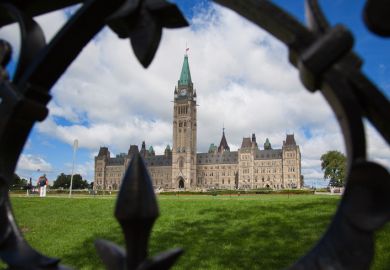
Woodin has taken over at a time of great flux globally but at least has the benefit of a relatively stable government in Ottawa. Carney’s Liberal Party won a surprise victory in last April’s election but has quickly used the trade war with Trump’s administration to its advantage.
And after his remarks at the World Economic Forum last week in which he boldly criticised “US hegemony” and said the old world order wasn’t coming back, Carney’s approval rating has jumped to a high of 60 per cent.
It mirrored a separate speech that Carney gave in June, when he announced a rise in defence spending and the end of an era of US dominance – from the Munk School of Global Affairs and Public Policy at Toronto.
After a lot of “consternation” around whether or not Carney would choose to prioritise universities, Woodin said he has proved himself a leader that cares deeply about higher education and research-intensive universities.
“He intentionally chose to come to a university because of the importance that universities are going to play in a wide range of things.
“Our prime minister has really turned heads on the world stage as he’s talking about the importance of middle powers coming together and…my leadership right now is very much about leaning into what we need to do for Canada on the world stage, to achieve this ambition.”
Wars of words with Trump, including references to Canada as the “51st state”, have helped the country undergo something of a nationalist revival. With Toronto just 100 kilometres from the US border, this is clearly having an impact on campus as well.
“Canada is having a moment right now and Canadians have a renewed sense of national pride and purpose,” said Woodin. “We [have always been] proud, but we’re wearing that a little bit more openly now, and I think Canadians and certainly the university community broadly is leaning into that.”
The federal government recently launched a C$1.7 billion (£920,000) initiative to attract international researchers to Canada – but Toronto has already been poaching top researchers from the US.
As dean of the Faculty of Arts and Science, Woodin was heavily involved in the recruitment of three prominent academics from Yale University early last year – and the institution recently announced further recruitment of “academic stars” from the US.
Overall, Woodin, who became the first female leader in Toronto’s 200-year history, said the net impact on the institution from the Trump presidency has been undoubtedly positive.
“Certainly, the federal funding that’s in place and the stability of our country is outstanding, and also I’d say what we’re experiencing is a bit of a flywheel effect,” she added, citing the concept of consistent, small actions generating momentum.
Unlike other sectors, polling suggests that the Canadian public are increasingly confident in their universities. A new survey from Universities Canada and Abacus Data shows that 61 per cent of Canadians say they trust universities to act in the public interest.
Despite the damage to the “Canadian brand” through the federal caps on international students, Toronto has only suffered a small dip in overseas recruitment and expects to rebound in the year ahead.
And while financial concerns are affecting some of the sector, Toronto has made no job cuts and has swollen its student population to over 100,000 across its three campuses as it approaches its bicentennial year.
“Maybe it’s because I’m an optimist, but I think I look at 200 years and I couldn’t be more certain about [reaching] 300 years,” said Woodin.
Register to continue
Why register?
- Registration is free and only takes a moment
- Once registered, you can read 3 articles a month
- Sign up for our newsletter
Subscribe
Or subscribe for unlimited access to:
- Unlimited access to news, views, insights & reviews
- Digital editions
- Digital access to THE’s university and college rankings analysis
Already registered or a current subscriber?