The idea that the UK government will come up with a blueprint for increased specialisation and collaboration in the higher education sector is “for the birds”, according to a research leader, who warned a breakdown in relations made such a task even more difficult.
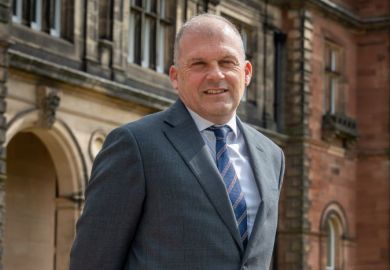
David Sweeney, a former executive chair of Research England who oversaw the last Research Excellence Framework, said universities taking ministers to task over a lack of funding had harmed relationships in recent years and it was now time to “sue for peace”.
“We’ve lambasted the government in many ways over the gap in research funding and over the lack of increase in the student fees. We’ve hit our head against the brick wall…the bricks have not moved,” Sweeney, now deputy chair of the Welsh tertiary regulator Medr, told a parliamentary event organised by the Higher Education Policy Institute (Hepi).
“We have wasted our time, and we’ve contributed to a breakdown in relations with government. I regret it bitterly.”
Amid greater funding pressures, universities have been encouraged to embrace both greater specialisation and collaboration in their teaching and research.
Deborah Prentice, vice-chancellor of the University of Cambridge, highlighted how her institution’s partnerships with the universities of Oxford, Manchester and Anglia Ruskin demonstrated how to “combine forces”.
“We collaborate a lot across the sector, and are opportunistic in developing these collaborations. [But] it’s not that easy to find partners with whom you share these kinds of synergies, and it takes resources to put them together,” she said.
Prentice said no single university – even her own – can collaborate at the required level without help from the government.
But Sweeney said the gulf between government and universities made it very difficult for there to be a blueprint for what’s required.
“That is for the birds. And it’s a change because when we went through research changes post global financial crisis, there was a blueprint, and also during the 2010s and the industrial strategy, there was a blueprint.”
Sweeney urged universities to accept that many of the financial problems come from giving staff unaffordable research time, and from trying to teach fewer students with the same number of academics.
“The numbers just don’t add up, and the only way to achieve financial solvency is to structure our major cost, our workforce, to be of a size that can be met by the income that we have.
“Achieving that’s difficult, collaboration and specialisation may be part of that.”
With no access to the “magic wand” that Oxford and Cambridge have, Sweeney, who is professor of research policy at the University of Birmingham, said the rest of the pack will not be able to achieve this at scale.
“We have got to find our own futures, and that cannot be achieved by me telling you what to do because our futures will be different for different kinds of institutions.”
He also warned that the sector may be forced to accept the loss of some “shibboleths”, such as tackling cold spots, and language provision.
“We cannot assume that all the things we’ve treasured as we headed to our current position and as we expanded and could afford to cover the costs…will continue, and if that means that some of our softer and more cuddly approaches have got to be abandoned, so be it.”
Register to continue
Why register?
- Registration is free and only takes a moment
- Once registered, you can read 3 articles a month
- Sign up for our newsletter
Subscribe
Or subscribe for unlimited access to:
- Unlimited access to news, views, insights & reviews
- Digital editions
- Digital access to THE’s university and college rankings analysis
Already registered or a current subscriber?