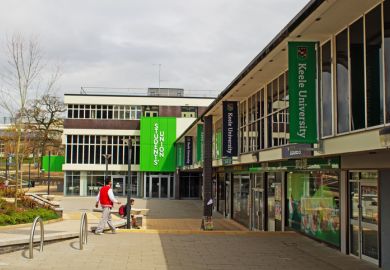
A course portfolio review that has seen Britain’s first post-war university expand into new subject areas while closing low-enrolment programmes has helped exceed student recruitment targets, according to its new vice-chancellor.
Keele University has reduced its undergraduate course options from more than 200 five years ago to about 180 now but says it has still seen increased student demand.
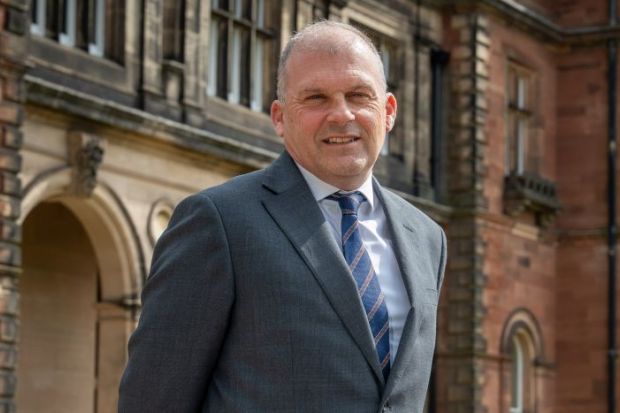
Kevin Shakesheff, who took over at the university in September, said he is now keen to return the institution to its roots, by offering more interdisciplinary education and “late specialisation”.
Universities have come under pressure to rationalise course offerings and specialise in areas of strength as a way of overcoming financial challenges.
Keele launched an array of new sports and exercise science courses in June 2024, followed by a suite of business management degrees later in the year.
“There’s been some very good work done before I got here on improving and updating our portfolio,” said Shakesheff. “It feels to me that the strategy around new portfolios worked really well.”
Next year, students will also be able to enrol in a range of new engineering degrees for the first time.
“Student choices are clearly changing. People are looking for different types of courses, so we’ve got to keep going on that.
“We will be exceeding recruitment targets this year, which is good, but I’m not complacent on that because the market for students is so volatile,” Shakesheff said.
Alongside the new launches, Keele has also shut courses that attracted few enrolments although it stressed no subject areas have been closed entirely.
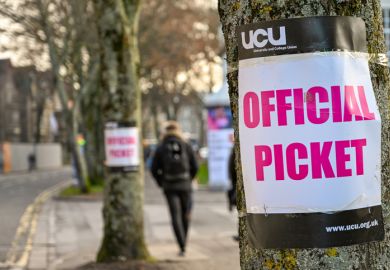
Earlier this year, Shakesheff’s predecessor, longstanding vice-chancellor Trevor McMillan, planned cuts amounting to 150 jobs to help plug the university’s £5 million deficit. The university had already announced a previous savings target of £6 million.
The move led staff to walk out for five days and the institution’s University and College Union called the plan an “ill-conceived solution” to the funding crisis.
Six months on, Shakesheff said the university was about “two-thirds” of the way through its cost-saving and growth plans.
“I think the most important thing is to be open and transparent and to talk early to staff about the situation that we’re in.”
Longer term, Shakesheff said his priority will be consulting with students, staff and the local community on a new strategy for the university.
“I’m deliberately giving ourselves quite a bit of time to do that,” he said.
“I don’t want to be over-prescriptive, but my feeling is really making sure Keele plays a unique role in higher education. It was set up to be different to other universities, and I’d really like to build on that and my particular passions around late specialisation.”
Founded in 1949 by a former University of Oxford vice-chancellor, Keele was the first of the “new universities” formed after the Second World War, at a time when there were fewer than 20 universities in England.
Interdisciplinary education was key to the university’s offering from its inception, with all students originally required to complete a foundation year that spanned multiple disciplines, followed by degree programmes that involved two or more subjects.
While undergraduates today can take more typical degree programmes, the university continues to offer a range of joint degrees including music production with business management, neuroscience with artificial intelligence, and philosophy and education.
While he is reluctant to pre-empt the consultation, Shakesheff said that he wants to ensure the future strategy ensures students have “a really rounded experience” that enables them “to find their own way towards the career or whatever they want to do later on in life”.
“That’s been really important in my career, working across disciplines,” said Shakesheff, a pharmacist who previously worked at the University of Nottingham and the Open University in pro vice-chancellor roles.
Asked whether he would explore an American-style major and minor system, he said: “That might not quite be right for the future, but I think, even if you’re coming to do a specific specialism like chemistry, making sure that at Keele you get exposed to a whole range of different subject areas – that’s really important to me.
“The world’s obviously changing really fast. Careers are changing quickly, and I really feel that that’s important for the future. And given where Keele came from, it feels to me that we should be doing that in the future.”
Register to continue
Why register?
- Registration is free and only takes a moment
- Once registered, you can read 3 articles a month
- Sign up for our newsletter
Subscribe
Or subscribe for unlimited access to:
- Unlimited access to news, views, insights & reviews
- Digital editions
- Digital access to THE’s university and college rankings analysis
Already registered or a current subscriber?