The University of Sussex’s successful reversal of a record £585,000 fine for alleged free speech breaches should prompt both a reset of how the Office for Students (OfS) approaches its watchdog duties and a rethink of England’s regulatory system, sector figures have argued.
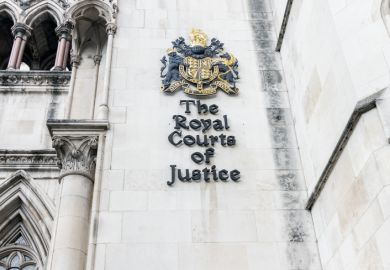
While attention has focused on the mistakes made by the OfS in prosecuting Sussex – with a High Court judge finding the investigation was approached with a “closed mind” that led to “predetermination” – there is growing attention on whether the landmark legal ruling exposed deficiencies in the regulator’s abilities to undertake its work.
“The Sussex verdict is a formal signal to us all that the regulator has grown beyond the powers vested in it by the Higher Education and Research Act 2017 [HERA], and beyond the intentions of that legislation,” said Brooke Storer-Church, chief executive of Guild HE, which represents about 70 higher education institutions.
“Like the House of Lords inquiry before it, this decision is a loud and clear signal that the regulatory framework and OfS’ approach to regulation are not fit for purpose and are actually exacerbating some of the current pressures university leaders are twisting themselves in knots to navigate successfully,” said Storer-Church, former head of skills at the OfS.
“We need nothing short of comprehensive regulatory reform alongside a funding settlement that reflects the deep public good delivered by higher education institutions across England,” she added.
Similar sentiments were voiced by Iain Mansfield, previously a special adviser to ex-higher education minister Michelle Donelan, and now head of education at the right-leaning thinktank Policy Exchange.
Noting the judge’s finding that the OfS could not, under HERA, consider internal policy documents because they were not “governing documents”, Mansfield said on X that enforcement mechanisms should be strengthened to ensure the OfS could “consider the full facts of the case, rather than being bound by abstruse rules such as ‘what is a governing document’”.
“This may mean moving away from the flawed and cumbersome ‘conditions of registration’ approach, which has persistently failed – not just here, but on quality and standards case,” he added.
Others have argued that the key lesson of the Sussex case is that the OfS needs to engage in a less adversarial way with universities.
Helen Tringham, partner at Mills and Reeve, the legal firm that represented Sussex, said the three-and-a-half year investigation, centred on a single transgender and non-binary inclusion document, could have been avoided if the OfS had sought a less hostile approach.
“The OfS could have looked at the policy in question and said we have some concerns, and entered into a dialogue about it. There were a number of universities that adopted similar documents but it was decided to hone in on Sussex and, as the court said, it approached the case with a closed mind,” said Tringham.
“It made its decision in advance to make an example of the university to the rest of the sector,” added Tringham, noting the regulator “simply did not enter into a dialogue with Sussex. The only scenario it would engage [with] is if Sussex admitted all the charges against it”.
With Sussex “receiving the largest fine ever brought by a higher education regulator”, the university felt it had little option but to take legal action, continued Tringham. “When it felt so strongly what had happened was unfair, the only route to challenge was the judicial review. It is pleasing the university has been vindicated in its decision to do this.”
Sam Rose, principal associate at Mills and Reeve who specialises in higher education law, said the implications of the Sussex ruling went “beyond how the sector grapples with issue of free speech”.
“It’s also about how universities engage with a regulator to whom they pay subscriptions to fund – they need to have confidence that they will be treated fairly,” said Rose.
In her judgment, Mrs Justice Lieven found the OfS had attempted to make a “test case” of Sussex that would “send a strong signal about the importance of free speech” – an approach that led the regulator to act with a “closed mind”.
“There is some way to go from here if the OfS is to rebuild trust with the sector,” said Rose, reflecting on the OfS’ approach. “Institutions are grappling with difficult issues on campus in relation to freedom of speech and they need confidence that their regulator is supporting them with these issues and stands ready to help.”
The OfS' chief executive of four years, Susan Lapworth, stepped down in April, before the judgment was released, and will be replaced by civil servants Ruth Hannant and Polly Payne in June.
Responding to the judgment, Josh Fleming, interim chief executive of the OfS, said the regulator would “carefully consider the consequences of the judgement before deciding on next steps”.
“We will reflect on the judge’s findings and use them to help inform our future approach,” he said.
Restoring trust will be especially important in light of the start of the OfS’ free speech complaints scheme in the autumn, said Diana Beech, professor of higher education at City St George’s, University of London, where she is director of the Finsbury Institute, a public policy research centre.
“Trust in regulation depends heavily on transparent and well‑understood processes. As the OfS rolls out its free speech complaints scheme, clarity on how investigations will be conducted, how institutions will be engaged, and what indicative timelines look like would help manage expectations and build confidence in its decision‑making,” said Beech.
“Constructive engagement with institutions is not the same as being deferential to them. As the regulator, the OfS must be able to listen carefully, test evidence robustly and take decisions that are clearly independent, even when these are uncomfortable,” she continued.
“If the free speech complaints scheme is to command confidence from students, staff and providers alike, it will need to demonstrate openness, proportionality and consistency from the outset. Done well, that can reinforce the OfS’ role as an effective regulator rather than undermine it.”
Register to continue
Why register?
- Registration is free and only takes a moment
- Once registered, you can read 3 articles a month
- Sign up for our newsletter
Subscribe
Or subscribe for unlimited access to:
- Unlimited access to news, views, insights & reviews
- Digital editions
- Digital access to THE’s university and college rankings analysis
Already registered or a current subscriber?