University leaders should accept their own poor decision-making contributed to mass job losses in UK academia rather than simply blaming government policy, education secretary Lucy Powell has said.
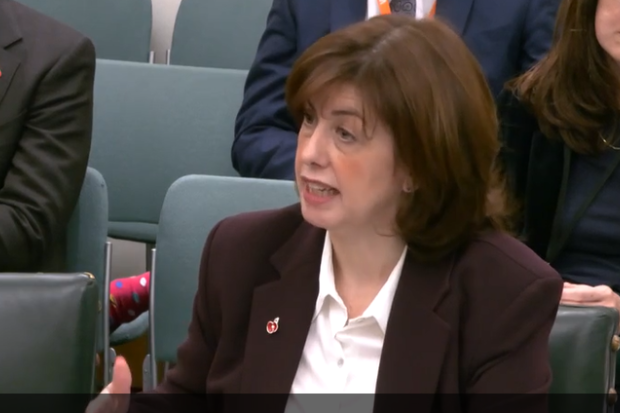
In her first appearance before the House of Commons’ Education Select Committee since her appointment in July, Powell told MPs that vice-chancellors at many universities should accept some responsibility for the thousands of redundancies seen in recent years.
Explaining how she “kept a close eye on the financial situation of every single university”, Powell said not all institutions had been plunged into financial difficulty with the large deficits experienced by some representing “certainly not a uniform picture” across the sector.
“It is not always the institutions that you expect who in a more precarious position than others,” she explained.
“Part of that has to come down to how institutions have been led and managed over a long period of time, not just in relation to government policies,” continued Powell, who replaced Bridget Phillipson as education secretary when Andy Burnham became prime minister this summer.
Powell, who is MP for Manchester Central where two of the UK’s largest universities are based, acknowledged the “recent pressure caused by a sharp decline in international students is not helping” with the sector’s financial situation, although measures had been taken to address this, she argued.
“We announced the graduate visa would be extended to two years for most of our universities and that will help in that regard,” she told MPs on 4 November, referring to the recent Budget announcement by chancellor John Healey which will restore the two-year visa for “high-compliance” universities.
“We are working with universities to make sure their fees keep in line with inflation,” she added on plans to introduce legislation to ensure an automatic fee escalator when tuition fees increase above £10,000 in 2027-28.
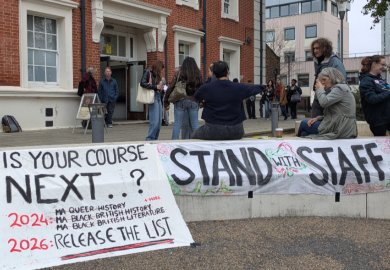
On the recent job cuts in UK universities, which shed around 13,000 jobs in 2024-25 with a further 15,000 announced or proposed in 2025-26, Powell said it was “very distressing for students and staff when universities, including high-profile ones, go through the closing of departments and big restructuring”.
“It is not something I want to see and I will be speaking to trade unions about this but we are playing our part in making sure that we have a framework and policies that affects universities that means they are more viable,” said Powell.
While universities are “autonomous institutions”, Powell said it was important for them to play a part in the government’s place-based agenda to “create growth in every postcode”. “So we do not want to see institutions closing, of course,” she insisted.
Asked about concerns raised by vice-chancellors that the Home Office is rejecting many more student visa applications from certain countries, Powell said recent actions had targeted “high numbers of international students with low attainment and low English [levels] coming in through the franchise model”.
“Collectively we have to make sure the Home Office and everyone else has confidence in the student visa route in this country so we can do what we are great at,” said Powell on the UK’s ability to attract fee-paying international students.
“We have fantastic universities that people across the world want to come to and study – it’s one of the things we are best known for around the world – it brings great benefits to this country and people who come here [to study],” she said.
“We have a job to do as a government [which is] given the Home Office confidence in the wider system – the Home Office has their agenda and we have our agenda. I think they meet in the middle,” argued Powell on why measures had been taken to “give confidence that the student visa route is not being used in a way it should not be”.
“The vast majority of brilliant universities – known around the world – meet their requirements and we are making sure that is the case,” she said.
Register to continue
Why register?
- Registration is free and only takes a moment
- Once registered, you can read 3 articles a month
- Sign up for our newsletter
Subscribe
Or subscribe for unlimited access to:
- Unlimited access to news, views, insights & reviews
- Digital editions
- Digital access to THE’s university and college rankings analysis
Already registered or a current subscriber?