Universities should face tougher penalties in national and international rankings if researchers lose papers due to suspected misconduct, the founder of an influential research integrity watchdog has argued.
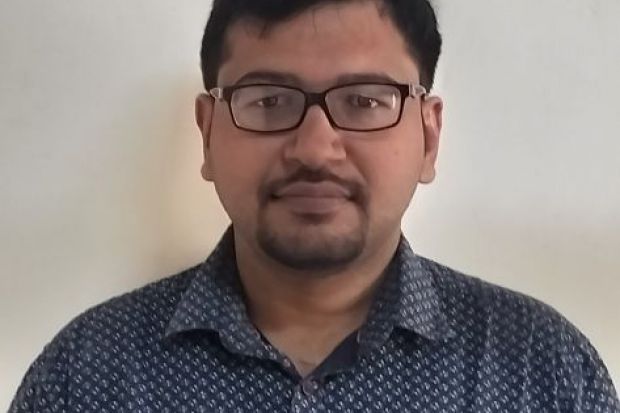
Achal Agrawal was recently named by Nature as one of the 10 people who shaped science in 2025 for his efforts to tackle plagiarism and other types of publication misconduct in India. Aside from China, India had the most retraction notices of any country last year (almost 900, according to Retraction Watch’s latest count for 2025), with plagiarism-related retractions skyrocketing since 2020.
Agrawal’s recognition by Nature followed India’s landmark decision in August to reform its government-run National Institutional Ranking Framework by introducing penalties for institutions if a substantial number of papers published by their researchers are retracted.
That move has been widely hailed as a victory for India Research Watch, an online group of academics and students highlighting research integrity infractions and issues run by Agrawal since 2022.
Agrawal, who holds a PhD in applied mathematics at Paris-Saclay University, quit his university post to establish the non-profit group after observing how colleagues were employing dubious methods to chase publication targets.
“This problem became impossible to ignore,” Agrawal told Times Higher Education, recalling how one undergraduate approached him after a lecture to explain how he intended to plagiarise others’ work for a forthcoming paper.
“He told me how he wanted to paraphrase articles for this paper and thought this wasn’t a problem, even though I warned him it was clearly plagiarism,” said Agrawal, whose organisation has highlighted how unethical practices are now being adopted by students, partly on the encouragement of academics.
“We’ve heard how professors will give five papers to a student to remix into a single paper. If they manage to do this successfully and the paper is published, the student will get good grades,” he said.
“It wasn’t just a few isolated incidents – this misconduct was much more calculated and widespread; it was corrupting science but also affecting education.”
Pressure to publish an unrealistic number of papers was usually driving this behaviour, continued Agrawal.
“Academics behind this misconduct were expected to produce five single-authored articles a year while also teaching about 16 hours a week, which required another 30 hours of preparation,” he said.
“Having done my PhD in France I know it’s difficult to publish two decent papers a year but five papers annually is considered average. Some are exceeding this, publishing 40 or 50 papers a year,” reflected Agrawal.
To combat the problem Agrawal has urged Indian policymakers to toughen their approach to penalising retraction hotspots in their rankings.
International rankings could also impose sanctions for institutions whose researchers have been hit by multiple retractions. Times Higher Education has said it will explore “potential punitive measures” for its 2027 rankings with the aim of “reduc[ing] perverse incentives”. At present, retracted papers are filtered out of institutional scores but do not incur a penalty.
“While retractions are an imperfect measure of research integrity breaches, they’re the only signal that we have about when this activity is happening,” said Agrawal on why retraction-based penalties are needed.
Asked if this type of sanction might make Indian universities less willing to cooperate with journal investigations, he replied: “They’re already not cooperating – most retractions happen entirely from the journal’s end.”
“Many universities in India don’t even have a research integrity office where you can raise concerns. Institutions are often quite surprised when we tell them we’ve discovered so many cases [of suspected plagiarism],” continued Agrawal, whose team receive about 10 tip-offs regarding suspected malpractice every day.
In the absence of a national research integrity watchdog in India, Agrawal’s outfit has become the main port of call for those keen to raise concerns about suspected breaches of research integrity. With this volume of emails India Research Watch has increasingly sought to provide advice and raise awareness about the structural problems driving this behaviour rather than investigate cases itself.
“We used to get papers retracted but following up these reports is slow and frustrating work,” said Agrawal, whose organisation receives “zero revenue” from state or institutional sources.
While his work has been hailed by the scientific community, he has also faced considerable hostility from Indian universities and researchers, with a private medical university in Chennai recently seeking an injunction on India Research Watch’s allegedly “biased” reporting of its activities. The legal bid was denied by a judge, though the site must give the institution 72 hours to provide a comment on any allegations.
“We are often accused of being unpatriotic because we only target Indian universities – we haven’t received death threats but the comments are not pleasant. I’m sometimes called a failed researcher who couldn’t make it at a top university,” said Agrawal on the pushback.
“But when you’re fighting for change you expect resistance – it shows we’re doing something right.”
Register to continue
Why register?
- Registration is free and only takes a moment
- Once registered, you can read 3 articles a month
- Sign up for our newsletter
Subscribe
Or subscribe for unlimited access to:
- Unlimited access to news, views, insights & reviews
- Digital editions
- Digital access to THE’s university and college rankings analysis
Already registered or a current subscriber?