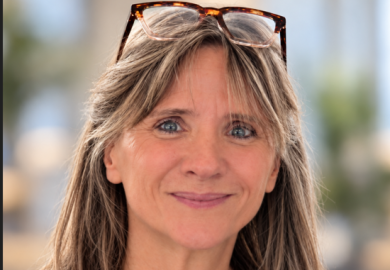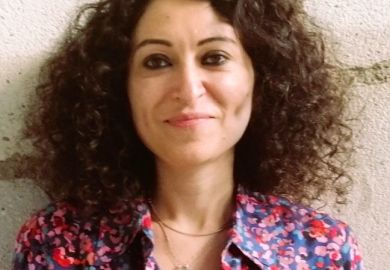
Documentary maker Ric Esther Bienstock has made films about the Ebola crisis, human trafficking in Eastern Europe and black-market organ trafficking, but at the start of her new documentary about free speech on university campuses, she declares: “This might be the most dangerous film of my career.”
Speechless, a two-part Storyville documentary airing on the BBC, explores the increasingly tense debates about free speech on university campuses. Filmed over a seven-year period between 2017 and 2024, it tracks cases in both the US and UK and exposes the consequences faced by those who land on the wrong side of cancel culture.
It documents the extreme side of student protests on race, transphobia and the Israel-Palestine conflict, and the rise of the American far right which, the documentary claims, is looking to “abolish DEI [diversity, equity and inclusion], reshape the curriculum and use higher education as a political weapon”.
In one example, a black academic at York College in Pennsylvania, Erec Smith, is branded a “white supremacist” for challenging critical social justice academia.
The documentary also features Kathleen Stock, the UK academic who resigned from the University of Sussex after being targeted for her views on gender – a case that resulted in the institution being fined £585,000 for failing to uphold free speech.
Bienstock said when she first started exploring the idea in 2015, she was told it was “a career killer just to touch the topic”.
“There was so much sensitivity and so much walking on eggshells, I just felt that I was potentially walking through minefields,” she told Times Higher Education. “How am I going to tell this story and not be a target myself?”
Although making the film wasn’t physically dangerous, the fear of being on the receiving end of cancel culture herself hung over her. “There were many times where I said, ‘oh my God, Ebola was easier than this’.”
This wasn’t just an abstract concern for Bienstock; it presented material challenges unparalleled in her award-winning career. “I have never had so many people not want to talk to us,” she said, adding that people were “petrified”.
“I had an easier time getting an organ trafficker – an Interpol-wanted, illegal, black-market organ surgeon – to talk to me than some of the students and some of the professors. That I really did not anticipate.”
The fear and emotion behind the stories she documented was palpable and she explained that she often felt like a therapist because sources would “end up in tears” recounting how their lives had been torn apart by people looking to silence their views – many of whom she says “were not extreme people, but normal people”. One interviewee was “so emotional they fainted”.
Although Bienstock conceded that she had been concerned about fanning the flames of the far right by going near the topic, she argued the right has come to dominate the story of free speech challenges on campus because the left has not engaged with it.
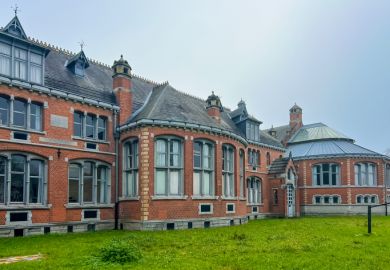
In one of the documentary’s most powerful examples, Bienstock explores how relations at Evergreen State College in the US broke down following protests over racial tensions.
Students began protesting after academic Bret Weinstein vocalised his objection to proposals made by ethnic minority students that white students and staff not attend campus for a day, in solidarity with ethnic minority struggles in higher education and beyond.
His criticisms sparked mass protests that eventually forced the campus to close. Local police were seen questioning whether students had created a “hostage situation” after they barricaded the university’s president in his office.
When Bienstock first began researching the topic, she said “so many people told me that these were right-wing, conservative dog whistles”, and her aim was to see if this was true.
But after hundreds of interviews and years of seeing the story evolve through social media and events such as the death of George Floyd, she concluded: “There’s a real story here. The right sensationalises it – or the extreme right – but there is a real story and that story matters.”
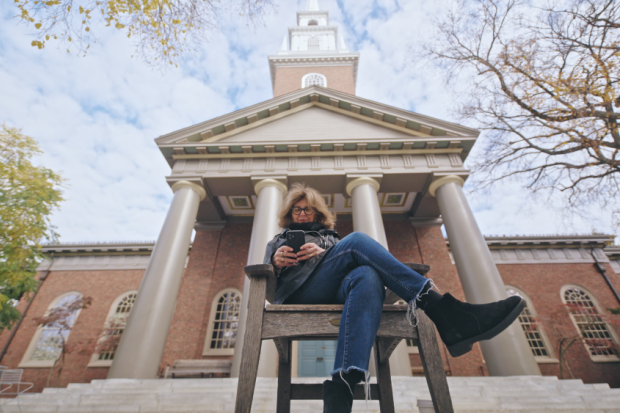
She added that examples of students and academics being forced out of their institutions because of battles over free speech were everywhere – not just at “progressive” campuses but at Ivy League institutions like Harvard University, too.
“What starts on campus, doesn’t stay on campus,” she said, adding that she feared people are losing the ability to have conversations with one another.
“The world is on fire now, and we need to be speaking to each other,” she said.
“I’m not suggesting we all be like, ‘oh, kumbaya, let’s sing and sit around a campfire’. But I do think that our ability to speak across differences, have conversations and constructively disagree is a foundational issue. It’s not a right or left issue.”
juliette.rowsell@timeshighereducation.com
The second episode of Speechless will air on Tuesday 21 April at 10pm on BBC Four. Both episodes are available on BBC iPlayer.
Register to continue
Why register?
- Registration is free and only takes a moment
- Once registered, you can read 3 articles a month
- Sign up for our newsletter
Subscribe
Or subscribe for unlimited access to:
- Unlimited access to news, views, insights & reviews
- Digital editions
- Digital access to THE’s university and college rankings analysis
Already registered or a current subscriber?