The Young Atatürk: From Ottoman Soldier to Statesman of Turkey, by George W. Gawrych Erik Jan Zürcher salutes a study showing how the military shaped the founder of the Republic of Turkey 1 August
Contested Spaces: Abortion Clinics, Women’s Shelters and Hospitals, by Lori A. Brown Annmarie Adams on the architecture of buildings with ‘controversial’ uses 1 August
Fluid New York: Cosmopolitan Urbanism and the Green Imagination, by May Joseph Laurence Coupe celebrates efforts to rethink urban spaces to give them an ecological dimension 1 August
Liberty’s Dawn: A People’s History of the Industrial Revolution, by Emma Griffin Pat Hudson on a treasure trove of accounts of working-class individuals enjoying new opportunities and choices amid change 1 August
How to Read Literature, by Terry Eagleton Felicity James toasts an ideal introduction to critical analysis 25 July
Novel Science: Fiction and the Invention of Nineteenth Century Geology, by Adelene Buckland Euan Clarkson discusses a scientific discipline’s literary foundations 25 July
Intuition Pumps and Other Tools for Thinking, by Daniel C. Dennett Constantine Sandis on Darwin’s dangerous ideas man 25 July
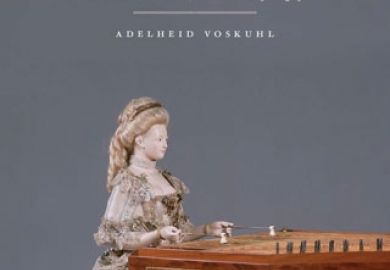
Androids in the Enlightenment: Mechanics, Artisans, and Cultures of the Self, by Adelheid Voskuhl Angela Vanhaelen on the fascination and fear aroused by 18th-century mechanical figures 25 July
Crowdsourcing, by Daren C. Brabham John Gilbey on a stimulating discussion of the definition of a widely used term 25 July
Roman Fever: Influence, Infection, and the Image of Rome, 1700-1870, by Richard Wrigley Richard Bosworth on the ‘bad air’ of Rome and how it influenced artists and travellers 25 July
The Problem with Pleasure: Modernism and its Discontents, by Laura Frost Gary Day delights in a critique that sweeps aside the perceived gulf between ‘high’ and ‘low’ culture 25 July
Paralysed with Fear: The Story of Polio by Gareth Williams A rogue’s gallery stopped the ‘crippler’, but for how long? asks Helen Bynum 11 July
The Serpent’s Promise: The Bible Retold as Science by Steve Jones Alec Ryrie on an intriguing book that doesn’t do what it says on the tin 11 July
Memorylands: Heritage and Identity in Europe Today by Sharon Macdonald Ulrike Zitzlsperger on the changing nature of heritage and the consequent effects on national identities in European nations 11 July
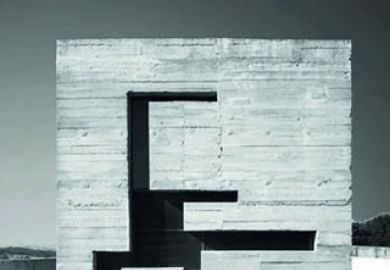
Sacred Concrete: The Churches of Le Corbusier by Flora Samuel and Inge Linder-Gaillard Benson P. H. Lau on a study of Modern architect Le Corbusier’s religious thinking and architecture 11 July
A Child of One’s Own: Parental Stories by Rachel Bowlby Bryony Randall lauds an insightful and overdue study of literary representations of parenting 11 July
Memoirs of a Leavisite: The Decline and Fall of Cambridge English by David Ellis Gary Day on a sympathetic study of influential literary critic F. R. Leavis and how the teaching of literature has changed 11 July
Christians, Muslims, and Jesus by Mona Siddiqui Ursula King hails a committed effort to advance interfaith relations 11 July
Ubiquitous Listening: Affect, Attention, and Distributed Subjectivity by Anahid Kassabian We can’t hear ourselves think over all this music, warns David Revill 4 July
Word by Word: Emancipation and the Act of Writing by Christopher Hager Richard Follett on slavery and the power of literacy 4 July
Trying Biology: The Scopes Trial, Textbooks, and the Antievolution Movement in American Schools by Adam R. Shapiro Simon Underdown on a key battle between science and religion 4 July
Across the Pond: An Englishman’s View of America by Terry Eagleton Marxist intellectual is no Bill Bryson, Peter J. Smith discovers 27 June
Cruel Modernity by Jean Franco Joanna Bourke on a harrowing look at the darkness in human hearts 27 June
Women and the Bible in Early Modern England by Femke Molekamp Lucy Wooding on how women’s reading of the Bible was central to their lives and inspired a wealth of literature 27 June
Anywhere or Not at All: Philosophy of Contemporary Art by Peter Osborne K. E. Gover finds an explanation of modern art fails to enlighten 27 June
The Lius of Shanghai by Sherman Cochran and Andrew Hsieh Jennifer Altehenger on a family who lived through interesting times 27 June
The Bourgeois: Between History and Literature by Franco Moretti Valerie Sanders relishes this considered study of a quietly worthy class of men 27 June
Killer Tapes and Shattered Screens: Video Spectatorship from VHS to File Sharing by Caetlin Benson-Allott Linnie Blake discusses a new theory of the spectator in the post-cinema age 27 June
Byron’s War: Romantic Rebellion, Greek Revolution by Roderick Beaton Jane Stabler on how the great poet proved to be a great administrator 20 June
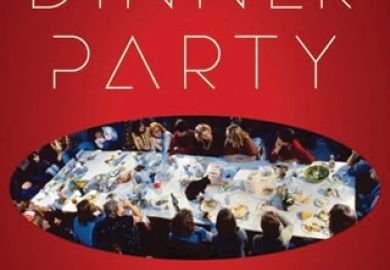
The Dinner Party: Judy Chicago and the Power of Popular Feminism, 1970-2007 by Jane F. Gerhard Mary Evans relishes this re-evaluation of an installation artwork that depicts a collection of famous women 20 June
Europe: The Struggle for Supremacy, 1453 to the Present by Brendan Simms Roger Morgan on the interwoven histories of European nations over six centuries 20 June
Roman Palmyra: Identity, Community, and State Formation by Andrew M. Smith II Judith Weingarten on an island emporium in the midst of a sea of sand 13 June
Picasso and Truth: From Cubism to Guernica by T. J. Clark Alex Danchev applauds a study of one of the 20th century’s greatest thinker-painters 13 June
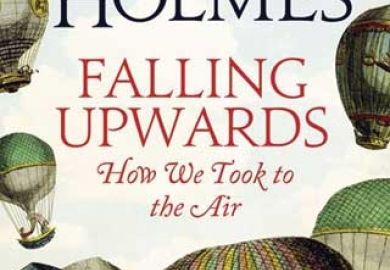
Falling Upwards: How We Took to the Air by Richard Holmes Robert J. Mayhew lifts off with a true balloon enthusiast 13 June
The Invention of Craft by Glenn Adamson Nithikul Nimkulrat discusses an ‘indispensable means of working’ 13 June
The Democracy Project by David Graeber Rationality yields to sentimentality in an Occupy Wall Street-inspired call for direct action, Fred Inglis finds 6 June
Paging God: Religion in the Halls of Medicine by Wendy Cadge Pamela Klassen measures hospitals’ sacred dimensions 6 June
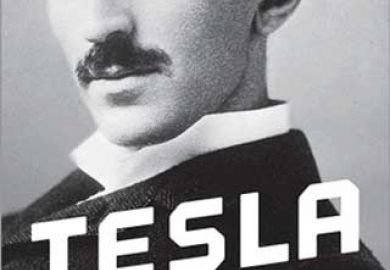
Tesla: Inventor of the Electrical Age by W. Bernard Carlson Jon Turney on the generator of the AC power grid 6 June
The Scramble for the Amazon and the Lost Paradise of Euclides da Cunha by Susanna B. Hecht The interwoven tale of the fight over rubber and a visionary surveyor captivates Robert Mayhew 6 June
Prague, Capital of the Twentieth Century: A Surrealist History by Derek Sayer Marta Filipová on compelling tales of a city’s artistic, intellectual and political cultures 30 May
Northern Ireland: The Reluctant Peace by Feargal Cochrane Cheryl Lawther on a history of the conflict and peace process and how the past continues to affect current attitudes 30 May
Ambient Commons: Attention in the Age of Embodied Information by Malcolm McCullough Tara Brabazon on a rare and evocative exploration of how to cope with digital overload 30 May
Johnson and Boswell: A Biography of Friendship by John B. Radner Willy Maley finds men behaving badly in this compelling account of a literary coupling 30 May
Evil Men by James Dawes Joanna Bourke reflects on torturers, murderers and the paradoxes of portraying suffering and trauma 30 May
The Hermit in the Garden: From Imperial Rome to Ornamental Gnome by Gordon Campbell Timothy Mowl enjoys an accessible study that wears its learning lightly 23 May
Lu Xun’s Revolution: Writing in a Time of Violence by Gloria Davies Eva Shan Chou on a groundbreaking attempt to assess the later work of one of China’s literary greats 23 May
What Soldiers Do: Sex and the American GI in World War II France by Mary Louise Roberts Fiona Reid on the military life’s inherent brutality 23 May
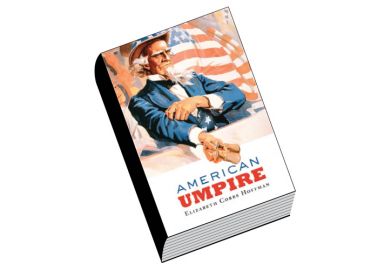
American Umpire, by Elizabeth Cobbs Hoffman A critique of the US-as-empire is a good call, says J. Simon Rofe 23 May
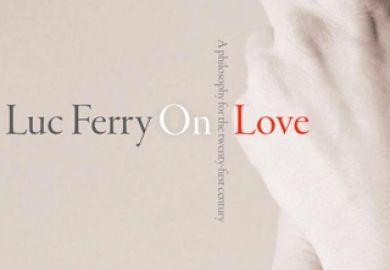
On Love: A Philosophy for the Twenty-first Century by Luc Ferry, translated by Andrew Brown Jane O’Grady on how the rise of love as a central value of modern society is leading us to the brink of second humanism 16 May
Hollywood and Hitler 1933-1939 by Thomas Doherty Philip Kemp on how the American film industry reacted variously to the rise of fascism in Germany 16 May
Tocqueville: The Aristocratic Sources of Liberty by Lucien Jaume, translated by Arthur Goldhammer Biancamaria Fontana on the influences that shaped a French aristocrat’s ambiguous view of democracy from his studies of the American model 16 May
Egyptian Oedipus: Athanasius Kircher and the Secrets of Antiquity by Daniel Stolzenberg James Stevens Curl on a summary of Kircher’s hieroglyphic studies in the context of 17th-century scholarship on paganism and oriental languages 16 May
Confronting the Classics: Traditions, Adventures and Innovations by Mary Beard Barbara Graziosi on a renowned reviewer’s disciplinary skirmishes 9 May
Banker, Traitor, Scapegoat, Spy? The Troublesome Case of Sir Edgar Speyer by Antony Lentin Stephen Halliday on a forgotten tragedy of the First World War 9 May
Curious Subjects: Women and the Trials of Realism by Hilary M. Schor Shelley King on asking questions, realist fiction and female subjectivity in Victorian novels 9 May
Boy 30529: A Memoir by Felix Weinberg Robert Eaglestone on the experiences of a Holocaust survivor and how he rebuilt his life afterwards 9 May
The Politics of Exile by Elizabeth Dauphinee Jelena Obradovic-Wochnik on a study of the process of researching the Bosnian wars 9 May
Return from the Natives: How Margaret Mead Won the Second World War and Lost the Cold War by Peter Mandler Chris Knight on an anthropologist whose theories were embraced then shunned by the US military 2 May
The Political Worlds of Women: Gender and Politics in Nineteenth Century Britain by Sarah Richardson Susan Hogan on a challenge to analyses of 19th-century politics that marginalise the role of women 2 May
The Devil Within: Possession and Exorcism in the Christian West by Brian P. Levack Alec Ryrie on a persuasive account of demoniacs and how society perceived and dealt with them 2 May