What might it mean for academics to give peasant farmers and their families – who make up about a quarter of the human race – the kind of attention they deserve?
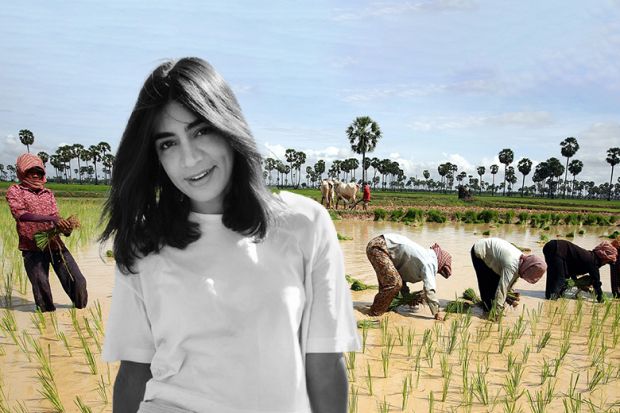
That is one of the questions raised by Maryam Aslany’s ambitious new book, Peasants: Makers of the Modern World, published by Bloomsbury this week and already acclaimed by celebrated economist Thomas Piketty as “a must-read” and by historian William Dalrymple as “an out-and-out masterpiece”.
As a Marie Skłodowska-Curie fellow (attached to both Yale University and Ca’ Foscari University of Venice) who completed her doctorate less than a decade ago, Aslany is strikingly junior to be taking on such a huge topic for a major publisher – and drawing such accolades for doing so. And her achievement is all the more striking given the long geographical and disciplinary journey she had to take to get to that place, having started her university life as a physics student in Iran.
Nor did she benefit, in writing the book, from any personal experience of peasant farming, having grown up in a middle-class family in Tehran. That said, one of her grandfathers had a sideline in pomegranate farming, while the other had “a deep interest in ecology”, she told Times Higher Education; the latter “used to take me to his ancestral village and teach me about trees and landscapes. So I had an early interest, but peasant farming was never a source of livelihood for my family.”
After abandoning her physics degree at Tehran Azad University, Aslany moved to the University of Pune and switched to social sciences at the age of 21. She spent seven years in India and got a chance to explore the countryside, where she began to reflect on issues that “have occupied a big part of my brain and my career” ever since. In 2013, after a master’s on contemporary India at the University of Oxford, she embarked on a PhD in economic sociology at King’s College London.
This was at a time, she told THE, “when India was going through extraordinary progress. Everybody was talking about the emergence of megacities, the urban middle class, shopping malls, slum clearance – and I started wondering: where is the countryside in this narrative? Around three-quarters of the Indian population were still living in the countryside.” So she bucked the trend and embarked on a doctorate whose findings were later published in her first book, Contested Capital: Rural Middle Classes in India (2020).
After gaining her PhD in 2018, Aslany joined Wolfson College, Oxford, as a junior research fellow, where she “broadened the geographical and thematic interests of my work”. She participated in a comparative study of climate change adaptation in India and Fiji and then in a European Union-funded research project looking at youth and future migration from West Africa at the Peace Research Institute Oslo.
Yet even while she was working on her doctorate, Aslany realised she also wanted to write a different sort of book. Her research had focused on the farmers producing two different crops: sugarcane for industry and rice as a local staple. Such crops, she noticed, “have changed societies, shaped national economies and the social lives of the people who cultivate them”. Just after her viva, therefore, she told one of her supervisors that she “wanted to write a book telling the story of farmers in the 21st century through various crops”, which are still mainly cultivated on family smallholdings and then absorbed into commercial networks. This idea has now borne fruit.
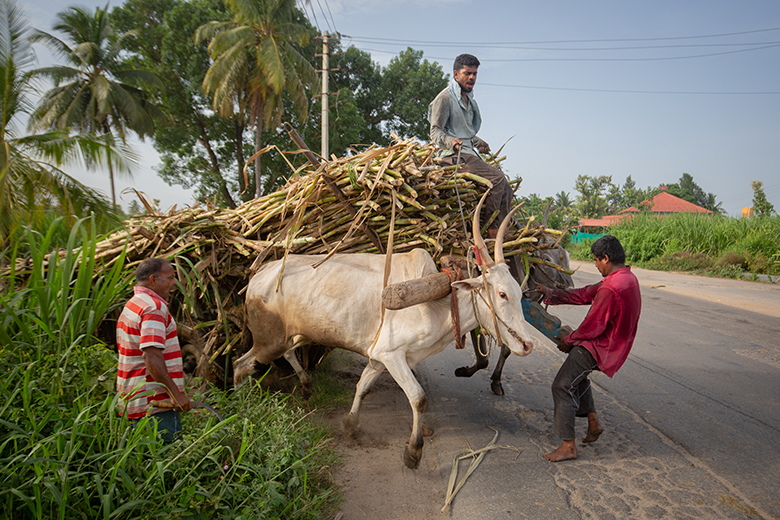
Peasants defines its subject, very straightforwardly, as “a smallholder farmer who lives off the land – either owned or rented – relies mainly on family labour, and farms both for subsistence and for the market”. On that basis, Aslany calculates that “about 2 billion people live in what might be described as peasant households” and that “this quarter of humanity administers the vast majority of the world’s 600 million farms and produces one-third of all food”.
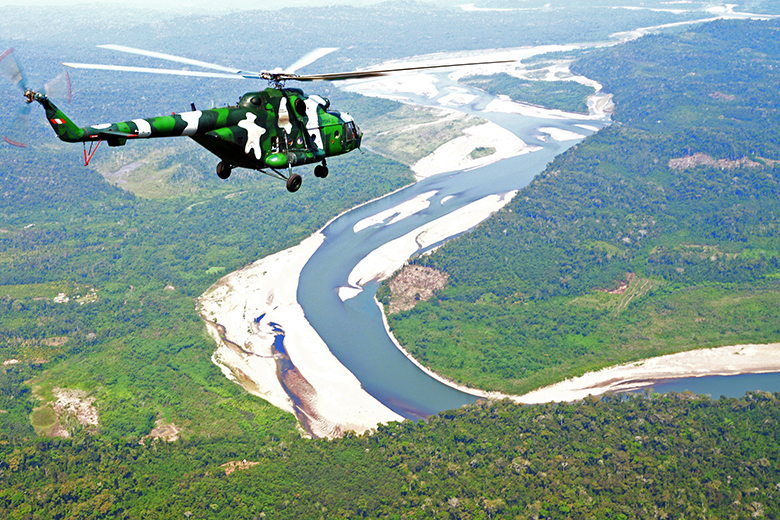
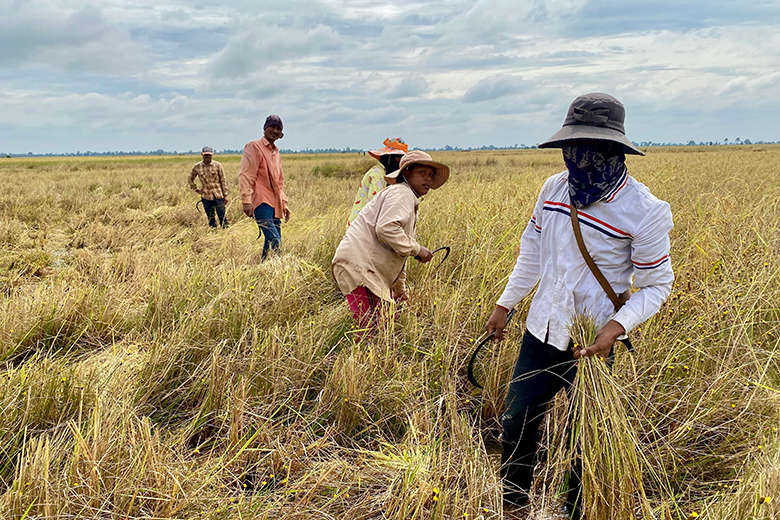
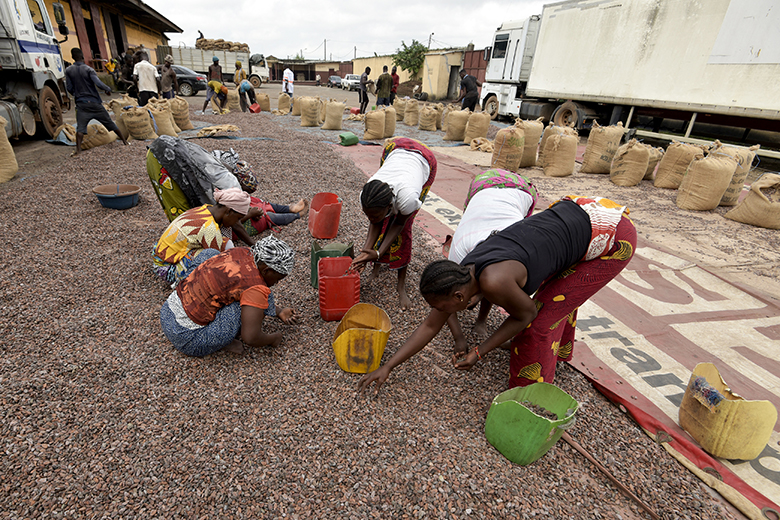
Despite that vast importance to global supply chains, however, the book vividly captures the “vast, composite crisis” facing smallholder agriculture as a result of its exploitation by those commercial networks. It immerses readers in the world of Indian sugarcane fields, Cambodian rice plains and the Ghanaian cocoa belt, where peasants often find it more lucrative to smuggle their crop across the border into Ivory Coast than sell it through the monopoly state cocoa board. It even includes a hair-raising journey into the remote and very dangerous Valle de los Ríos Apurímac, Ene y Mantaro river valley region of Peru to “witness a peasantry subjected by the state to surveillance, militarisation, corruption and crop eradication”, which has turned to coca – the basis of cocaine – as “a source of economic security, a mechanism of survival and a symbol of autonomy and resistance”.
The so-called cocaleros have thereby “created not only a parallel economy but also a parallel moral system, informed by subsistence survival and obligations to family”. Yet despite the fact that cocaine is mostly consumed by the very rich, “they are unable to capture significant revenues from the crop” and so “share a predicament with peasants all over the world – producing much-demanded commodities while remaining shut out from most of the profits they generate”.
The key problem for peasants, whether operating in legal or illegal markets, noted Aslany, is that although they are “very resilient, a class of survivors”, they are “politically very unorganised. That makes them very attractive prey to both government and big capital. They are easy targets for exploitation.”
It is crucial to such “resilience”, according to her book, that “the corporate plantation can exhaust the soil and then leave; the peasant cannot. She must deploy her knowledge of natural systems to ensure her farm will still be productive for her children, and for their children”. Furthermore, because “peasant agriculture is designed for survival and security”, it is “structured to withstand external shocks, both natural and economic”.
Aslany obviously accepts that peasants are a diverse group with many different religions and cultures and that it is simplistic to speak of a single “peasant consciousness” across the globe. Nonetheless, it is not unusual to find similar rituals and belief systems in very different places – that land is a nurturing mother or somehow sacred, for example – which might strike urban sophisticates as superstitious or sentimental.
Yet this is missing something important. The chapter on rice in Peasants includes a discussion with a Cambodian farmer who was modern enough to be “deeply aware of scientific realities” and to “use advanced inputs on his own farm”. At the same time, he and his fellows “must constantly reassert…the cosmological order on which their activity depends. The idea that forests and rivers are sacred is not just a quaint premodern relic. It is essential to the sustainability of the agrarian enterprise...over prolonged periods, the sacred offers a much stronger form of environmental protection than the law.”
And this in turn means that we all need peasants to “function as a kind of buffer, holding in check an industrial system which has none of their reverence for nature”. Should they disappear, “our last protection against environmental collapse might be lost”.
The book raises some major questions about how peasant farmers, who tend not to get much sustained sympathetic treatment from politicians and the media, are studied in universities. They do, of course, attract a good deal of academic research. Yet considering their sheer numbers and what Aslany sees as their importance to our survival in an age of climate catastrophe, she doubts whether it is enough.
It was not always thus. Mao’s 1949 revolution in China and then Castro’s 1959 revolution in Cuba, she believes, “led people to think: ‘Peasants have not disappeared! They are capable of making revolutions and changing the balance of world power.’ That gave rise to a new curiosity about this group.” At the time of the Vietnam War, the CIA and US State Department more or less openly commissioned a good deal of university-based research on peasant economies on the principle of “knowing your enemies”.
This era, during which “some extraordinary work on peasant economies” was produced, came to an end as “China entered the global market and other countries became dependent on foreign investment, which changed their attitudes towards their own peasants. Systems were organised not around the farmers but around the market. India liberalised its economy in 1991. That meant that peasants were seen not just as producers of agricultural commodities but as customers of agribusiness, consumers of fertiliser, and in relation to markets, banks and credits. They are no longer considered a coherent class.”
The fall of the Soviet Union in the same year also contributed to a sharp decline in the kind of political economy and class analysis associated with Marxism, while development studies turned away from issues such as land reform and became much more urban-focused, she added.
Peasants itself draws deeply on Aslany’s research and the work of others, with a total of 50 pages of notes and bibliography. Nevertheless, the book is no disciplinary monograph. It ranges widely, incorporating the colonial and postcolonial history of several countries, some amusing social history about the impact of what were once luxury products in the West, and even chocolate-based sexual innuendos in one of Mozart’s operas. So its author is very clear that it is not really an academic book but a “trade” title, which sets out to radically transform the way a general readership thinks about its subject.
There is no question, writes Aslany, that “the most industrialised countries destroyed most or all of their peasantry” in the process of embracing modernity. Unfortunately, this has often been taken as a general truth or “a law of nature, as if modern air were too oxygenated for the peasant’s primitive biology”. Yet it is simply not true in much of the world.
As often in the academy, Aslany worries that sharp disciplinary borders – between sociology and environmental studies, for example – stand in the way of “a much more coherent and comprehensive understanding” of her subject. But in taking on such a big, multifaceted topic (also afflicted by rather sterile debates about who exactly counts as a “peasant”) so early in her career, has she any worries that academic peers might look at her askance and deny her academic advancement for not having put in a sufficiently disciplined academic apprenticeship?
She conceded that Peasants represents “a form of temporary escape from academic formats” but was keen to stress that she has been equally committed to more standard academic outputs, such as her monograph, Contested Capital, as well as several peer-reviewed articles, with more to come: “So I don’t think I have neglected that side of my career.”
Moreover, she is “very committed to academia and see myself first and foremost as an academic. I have no interest in becoming a ‘public intellectual’ – quite the reverse. But I do think scholars have a responsibility to engage beyond academia. Academic knowledge should not remain confined to universities and specialist audiences – especially when it concerns such crucial subjects as food, inequality and our terrestrial heritage.”
She has “always been struck by the inadequate attention the countryside receives in public discussion, and I wrote this book to correct that imbalance…I also fell in love with these places: their vitality, their beauty, their complexity, their humour. Those things are not easily captured in academic papers.”
Part of the role of academics, she went on, is to “help define what knowledge should be taken seriously. They should recognise farmers as producers of knowledge too: about soil, water systems, crops, weather and biodiversity, which is handed down the generations”, even if often not formalised or widely shared in the way that scientific knowledge is. But despite some progress and good intentions in this area, she believed there remained many barriers for universities trying to attempt “a genuine exchange between different forms of knowledge”.
Even today, Aslany notes in her book, peasants still suffer from “technocrats’ continuing contempt” and are sometimes seen as “the primitive residue which must be sacrificed in order for an economy to become modern”.
Others must assess whether she is right that their distinctive view of the world instead makes them vital to us all, “our last protection against environmental collapse”. There is surely room for universities to do far more in adjudicating such claims.
Register to continue
Why register?
- Registration is free and only takes a moment
- Once registered, you can read 3 articles a month
- Sign up for our newsletter
Subscribe
Or subscribe for unlimited access to:
- Unlimited access to news, views, insights & reviews
- Digital editions
- Digital access to THE’s university and college rankings analysis
Already registered or a current subscriber?