The language around the Scottish government’s stance on tuition fees is an area of contention. It is often described as “free” by the unassuming general public but both critics and supporters are generally quick to point out that this is not quite accurate – someone always has to bear the cost.
Speaking to the media recently, the University of Edinburgh’s vice-chancellor Peter Mathieson suggested that Scotland could consider adopting a salary-based graduate repayment system instead of introducing tuition fees.
Such verbal gymnastics could give the government of the day an out, with the Scottish National Party (SNP) having somewhat backed itself into a corner on the issue of university funding by repeatedly promising not to introduce fees. But this opportunity is not one that politicians are looking to take.
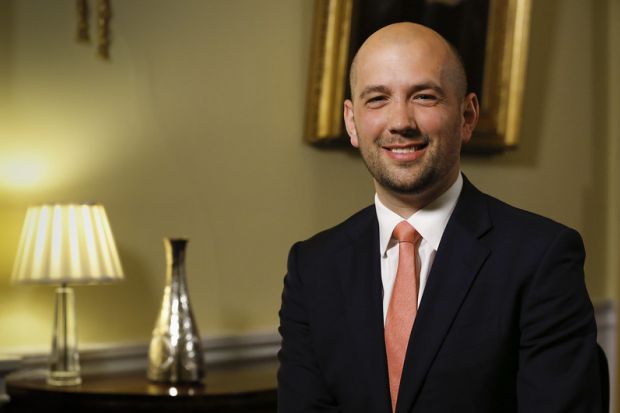
“If you pay it afterwards, that’s a tuition fee, so no,” Ben Macpherson, Scotland’s further and higher education minister, told Times Higher Education when the idea was put to him.
For the SNP politician, the ethos behind “free” tuition fees remains crucial. “I appreciate that some people believe they should be introduced, but our strong view is that they are wrong in principle. And also that they burden a generation with debt. It’s not right and not helpful for enabling our workforce to fulfil what they can bring and deliver.”
Across the border, he points out, tuition fees have hardly saved universities from financial problems, with half of English providers projected to face a financial deficit this academic year.
But many argue that the situation is worse in Scotland, with higher education institutions receiving approximately 23 per cent less funding per student than their English counterparts, according to London Economics, and a collective £12.9 million deficit forecast for 2025-26.
If politicians refuse to ask students to contribute to the cost of university, it appears inevitable that more money will have to come from the public purse. But that purse is growing emptier by the day, with the Scottish government already facing a public spending deficit.
So where will the money come from? Rather than offering any specific answers on the policy areas he is willing to explore if re-elected in May’s Holyrood election – where the SNP is currently leading in the polls – Macpherson suggested it will be down to contributors to a newly announced review of university sustainability to put forward ideas.
“Other sources of funding will be considered by the framework, but I have deliberately put the framework in a place where it is not being directed by ministers so that it can come forward in the autumn with positions that have been constructed to recommend to ministers,” he said. “I want to let it do its work.”
The Scottish university sector is “very successful at the moment, but we realise that there’s pressure, there’s challenge, there’s competition, there’s technical innovation, there’s changes in the economy, geopolitics”, he continued.
“The only issue that we have deliberately extracted from that consideration is undergraduate tuition fees for Scottish domiciled students.”
With tuition fees and graduate repayments ruled out, Westminster’s immigration rules hampering international student growth and little excess cash to draw on from the public purse, it seems there are few remaining avenues for members of the framework’s task force to explore.
And, while Westminster is encouraging the downsizing of England’s higher education system, this does not seem as feasible in Scotland. Not only is Macpherson enthusiastic about the importance of universities to the nation’s future, events at the University of Dundee have left the impression that the government will not allow a university to go bust.
But the former lawyer was keen to point out that Dundee, where a cash crisis in 2024 forced the government to invoke Section 25 of the nation’s Further and Higher Education Act and subsequently make more than £60 million available for support for the institution, is an “outlier”.
“It's really important to emphasise that there have been these problems with governance and finance,” said Macpherson, who became higher education minister in September 2025 after a cabinet reshuffle.
“That’s been dealt with and sorted out but, at the same time, the university has persevered and…has pushed forward with doing what it does, which is delivering high quality education and being an important source of innovation and creativity in our country.”
He said the Scottish Funding Council continues to monitor the financial health of Scotland’s 19 universities and that the government had provided “a fair and helpful budget” to support universities, referring to the £55 million uplift pledged by the SNP in its last budget before the election.
Asked if the government would intervene again if another university found itself in a similar crisis, MacPherson said: “I don’t think it’s helpful to get into that because it’s a specific circumstance that required the Section 25.
“The university sector across the UK is feeling financial pressure. Many of the issues that are causal factors in that are actually UK government-related.
“There’s quite a difference though between financial challenge and pressure and the situation in Dundee, where the circumstances were specific.”
The SNP’s ability to save Scottish universities does depend, in part, on the policies of the wider UK government – some of which have not been well received by the sector. For example, the uplift to employer national insurance payments, introduced last year, is costing the Scottish sector upwards of £45 million each year, according to Universities Scotland.
“You can’t look away from how much of a sudden cost that put upon all of our universities,” said Macpherson, adding that the Scottish government had to intervene to support them with this.
The minister also ruled out introducing the international student levy being imposed on English universities in Scotland, saying the government is keen to encourage more foreign students to study in the nation.
“International students not only come here and contribute through their financial commitment to universities when they decide to study here, they also create businesses,” he said.
“They work in our society, they fulfil vacancies. If they stay, they’re huge contributors and Brexit’s already made that more difficult.
“I just feel that our university sector economically is one of the greatest assets the UK has. And whether it’s the National Insurance hike, the immigration rule changes, it doesn’t feel like our UK government is full square behind the university sector, seeing them as a key area of growth and economic development,” he continued.
If the polls are accurate, Macpherson’s party could well form another government after the Holyrood election in May. With the sustainability framework set to report in the autumn, the party has committed to a tight timeline for coming up with answers to the sector’s problems.
“We’re not standing still; we’re thinking about what’s coming at us,” Macpherson said.
“We have a strong vision here in Scotland of [the university sector’s] importance. We’re backing it through our budget. We’re doing this joint piece of work on sustainability.
“We’re trying to be internationally competitive by not applying the levy and I just don’t see that ambition or vision from the UK government.”
Register to continue
Why register?
- Registration is free and only takes a moment
- Once registered, you can read 3 articles a month
- Sign up for our newsletter
Subscribe
Or subscribe for unlimited access to:
- Unlimited access to news, views, insights & reviews
- Digital editions
- Digital access to THE’s university and college rankings analysis
Already registered or a current subscriber?