Trans scholars being ‘pushed out of academia’, researchers warn

Universities ‘afraid to be trans inclusive’ after Supreme Court ruling and OfS Sussex fine, leaving staff fearing ‘hostile environment’

Published on
December 15, 2025
Last updated
December 15, 2025
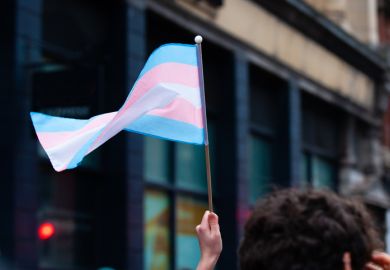
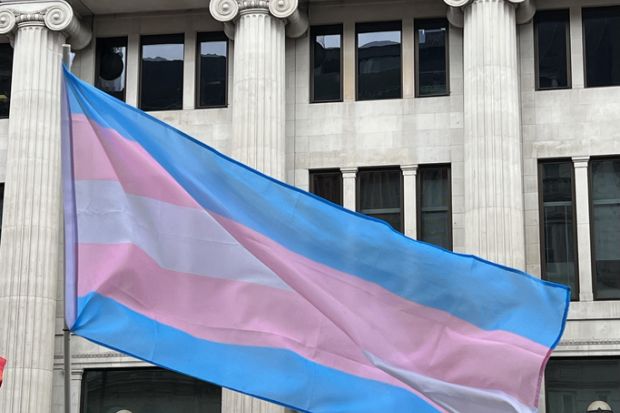
Trans flag held up in air
Source: iStock/Darko Mlinarevic

Trans academics in the UK have described a climate of fear and uncertainty in the wake of two high-profile rulings, saying that the effects could push them out of the university sector.

April’s Supreme Court ruling concerning the definition of “sex” in the Equality Act 2010, as well as the record fine issued to the University of Sussex in March over its trans and non-binary equality policy, “didn’t invent transphobia, but they have really shifted the landscape”, said Kit Heyam, a historian and trans awareness trainer.

Chris Parkes, a senior lecturer in history education at King’s College London, told Times Higher Education that “to be a trans person in the UK right now is to be exhausted and terrified”.

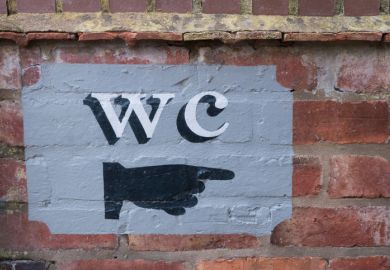
After the Supreme Court ruled that mentions of “sex” in the Equality Act refer to a person’s sex assigned at birth rather than their lived gender, the Equality and Human Rights Commission (EHRC) issued interim guidance on access to “single-sex facilities”, stating that trans women should be blocked from using women-only facilities and trans men blocked from men-only facilities.

ADVERTISEMENT

In “some circumstances”, the EHRC said, trans people could be denied access to gendered spaces altogether. While the interim guidance was subsequently withdrawn – and is currently being challenged in the High Court – the official guidance, now under consideration by the government, is expected to make similar instructions.

According to a leaked copy of the official guidance seen by The Times, service providers “will be able to question transgender women over whether they should be using single-sex services based on how they look, their behaviour or concerns raised by others”. 

ADVERTISEMENT

In the wake of the Supreme Court ruling and interim EHRC guidance, trans and gender non-conforming people have already faced an uptick in harassment and abuse when using toilets and other gendered spaces, according to an October report by the researchers Jack López and Florence Corvi. Some respondents said they now avoided using public toilets altogether because they feared for their safety.  

If the expected EHRC guidance is adopted, “this is going to be a safeguarding issue,” Parkes said. “People are going to get hurt.”

Heyam told THE that trans academics “are going to have to choose between being open about their transness and being safe at work”.


‘We need to be united, confident and proud of who we are’: thoughts on the Supreme Court ruling


“Future trans academics, those of us who aren’t already out, are going to be making judgement calls about whether they research trans-related topics or not, thereby potentially outing themselves and making it impossible for them to safely use the toilet that is right for them,” they said.

In March, the Office for Students (OfS) issued a record £585,000 fine to the University of Sussex, stating that the university’s trans and non-binary equality policy created a “chilling effect” and “placed constraints on freedom of speech and academic freedom”.

The OfS objected to four statements in particular: that university curricula should not “rely on or reinforce stereotypical assumptions about trans people”; that “transphobic abuse, harassment or bullying” would result in disciplinary action; that course materials should “positively represent trans people and trans lives”; and that “transphobic propaganda [would] not be tolerated”. The regulator said at the time that the policy had the potential for “staff and students to self-censor and not speak about or express certain lawful views”.

Sussex is challenging the ruling with a judicial review and the regulator said it couldn’t comment while these proceedings were active.

“The message that the censure of Sussex by the OfS sends to universities is they should allow transphobic abuse, they should allow stereotypical portrayals and they should allow negative portrayals,” Heyam said. “That is a hostile work environment.”

ADVERTISEMENT

The fine, said Parkes, “enhanced this utterly false notion that there is a zero-sum game between treating trans people with respect and having freedom of speech or academic freedom”.

ADVERTISEMENT

Natacha Kennedy, a lecturer in education at Goldsmiths, University of London, said that in the wake of the OfS action, “universities are going to be afraid to be trans inclusive”.

“Universities are scared because they don’t know where the line is. The potential fines are huge, so they’re going to err on the side of caution,” she said. “Gender-critical researchers talk about a chilling effect on their research – but [the OfS ruling] is having a very big chilling effect on universities.”

As a trans awareness trainer, Heyam said, they frequently encounter “tension” between an institution’s desire to “make it clear that the university is trans inclusive” and its efforts to avoid censure. “It is not possible for them to allow all views to be voiced without consequence and provide a safe and affirming experience for trans students,” they said. “But they’re still trying.”

This tension, they expect, will only intensify when the EHRC guidelines are released. “People are going to want me to give them a magic answer about how they follow the law while keeping their trans staff safe, and I’m not going to be able to do that,” they said.

If the expected guidance on single-sex facilities is implemented, trans researchers will find themselves “having to make judgements about whether it’s safe to go to conferences; whether it’s safe to work on campus”, said Heyam. “Maybe you should work at home so you can go to the toilet, which deprives you of academic community and the chance to develop new ideas in collaboration with others.”

The well-documented overwork crisis in UK higher education is compounded for trans academics, they added: “Imagine that your workload now includes trying to work out when you can go to the toilet safely, explaining to your colleagues what the law says, advocating for why they should treat trans people in a particular way and providing pastoral care to trans students.

“This is an environment where trans academics are not able to produce anything like their best work in research and teaching.”

Kennedy, too, said she took on additional pastoral duties alongside her academic work. “I constantly keep an eye out and watch out for the trans students at my institution, just so they know they’ve got someone to talk to if they need to.

“I think that’s important – there’s a lot of ambient transphobia around.”

Calling on institutions to “stand up for their trans employees and students”, Parkes said institutions “gain a great deal from being places where trans people can work in peace and with respect from their colleagues and their administration. It feels preposterous to have to say this, but that includes being able to use the facilities that are appropriate to them.”

“Trans people are part of the great diversity of humanity. They’re not an objection, they’re not a problem, they’re not a provocation. They’re just human beings,” they said. “Universities can teach whole generations the truth of that.”

ADVERTISEMENT

Register to continue

Why register?

  • Registration is free and only takes a moment
  • Once registered, you can read 3 articles a month
  • Sign up for our newsletter
Please
or
to read this article.

Related articles

Reader's comments (20)

About time. Do not ‘bring your whole self to work’ keep your sexual fetishises at home.
"a climate of fear and uncertainty:", Methinks the lady doth protest too much. It was that lobby which brought "fear and uncertainty" into a tolerant and open profession with ther masked protestors and their demands for the sacking of colleagues, as well as their highly coercive and violent rhetoric "the only good ..." etc.
The struggle for the rights of Trans people and that of the Palestinian people are inextricably linked.
Nonsense. The treatment of DrStock says it all. My friend was one of her students. He is still in shock over what happened to her. I have a friend/colleague who is trans and she is a very valued member of staff and loved by students. Nobody will force her out. It is the activism that has created the problem.
Exactly!!! Well said.
I am concerned that anyone should object to the idea 'that “transphobic abuse, harassment or bullying” would result in disciplinary action'. ANY abuse, harassment, or bullying should result in disciplinary action irrespective of cause. It's not OK to abuse, harass, or bully anybody no matter what differences you have with them.
Well yes of course but what constitutes "transphobic" abuse etc. If you do not accept the notion of gender on which trans identity is premised, is that transphobic and thus a form of bullying or harassment? Obviously there should be zero tolerance of any form of abuse, harassment and bullying, including that which was meted out to Prof Stock so blatantly. In my view intolerance of the opinions of others is a form of abuse and harassment, even when these views may offend us. My own university's guidance suggested that toleration of Trans thinking is not enough and that we should declare ourselves to be "allies" and anything that falls short of active support for Trans ideologies as articulated by activists was a form of Transphobia. I hope this has all gone now. Of course, even President Putin has got in on the act and roundly denounces critics of his actions as examples of "Russophobia".
One thing I would like to add to this excellent article is that you cannot attack trans rights without catching the vast majority of your cis LGBQ+ staff and students in the crossfire. I say this not to draw attention away from trans people, who are the primary targets of these campaigns, because the British transphobic campaigns rely heavily on the fiction that you can be "pro-LGB" and anti-trans, and many people outside the LGBTQ+ communities have been deceived into thinking that there is a groundswell of support amongst cis LGB for "separating the T", or even that opposing trans rights is a progressive or pro-LGB position. In reality, the overwhelmingly majority of cis LGB people stand in solidarity with trans folk: a YouGov poll found that 84% of cis lesbians and bisexual women said they had a "positive" or "very positive" view of trans people, and 65% of cis gay and bisexual men. This is absolutely my experience in LGBT spaces and networks. We stand with trans people both because they are our friends and colleagues, and also because we are *not daft*: we know our history, and we hear exactly the same language and abuse being turned against trans folk that has been used against us. We know that even when they have a lesbian or a gay man as a public face, these campaigns do not represent us, are not in our interest and are not our friends. When we see journalists and politicians advancing transphobic viewpoints and guidance, and our own employers implementing them, we know that they are not listening to us and we absolutely question the organisation's commitment to a safe and inclusive workplace. Far from being a "conflict" between trans rights and cis-LGB rights, the normalisation of harmful transphobic rhetoric and practices makes all of us less safe.
Don't think that's true to be honest. I don't think most gay men or most men, for that matter, accept the Trans activist designation of "cis" which derives from a highly contested ideological perspective and anything which contradicts this narrowly constructed ideology is "transphobic".
In rejecting the validity of using the "cis" designation, you are showing your true transphobic colors.
OK, cite your sources? I've refered to a poll which says fewer than 10% of gay and bi men describe themselves as having a negative view of trans people. My personal experience is that the large majority of gay men that I have worked with or know as friends are vehemently pro-trans rights. I respect that you may have a different experience or are aware of research that comes to a different conclusion but if your source is just "trust me bro", then no, I don't! I haven't said anything about "most men" -- all the research I know of finds the highest levels of support for transphobic positions amongst straight and older men. That doesn't surprise me at all because they're also the least likely to be supportive of LGB and women's rights and support conservative and far-right politics, so like, of course they are the most supportive of transphobia.
I referred to the acceptance of the "cis" male designation not to "having a negative view of trans people". Is it possible not to have a negative view and still not accept the "cis" designation and the accompanying theories of gender identity and still be oppose abuse, bullying and harassment (all of which are unlawful) in all their forms? as as for you comment "the least likely to be supportive of LGB and women's rights and support conservative and far-right politics" please cite your sources or should we "trust you bro" on that?
Hahahahaha. Excellent comeback!! Note the way that "far right politics" is subtly introduced into the comment as a way of slurring those who disagree with the activist's point. Also the way in which a "positive view of trans people" is not so subtly opposed to Transphobia. Now I would say that I have neither a negative or positive view of Trans people. I don't subscribe to Trans ideology as far as I understand it, but I have no difficulty with Trans people and do not consider myself transphobic. Was usual it's the activist who wish to sow division and discord.
new
Sure, here are the links: YouGov 2025 "Where does the British public stand on trans rights?" https://yougov.co.uk/politics/articles/51545-where-does-the-british-public-stand-on-transgender-rights-in-202425 As you can see, the red lines (showing less supportive attitudes) are consistently higher for men than for women, and for older groups, and the purple lines (showing greater support for trans rights) are consistently higher in women than men and in younger cohorts. On older men being more likely to vote Conservative and Reform: https://yougov.co.uk/politics/articles/49978-how-britain-voted-in-the-2024-general-election The survey I cited in my first comment broke down attitudes of lesbian, gay and bi cis people, which is here: https://yougov.co.uk/society/articles/45983-what-do-lesbian-gay-bisexual-and-transgender-brito >> Is it possible not to have a negative view and still not accept the "cis" designation and the accompanying theories of gender identity and still be oppose abuse, bullying and harassment (all of which are unlawful) in all their forms Yes, technically possible, although that would still mean that gay and bisexual men are *significantly* more likely to describe themselves as positive about trans people than the wider population. So whether you think that is a direct measure of “support for trans rights” or some more general sense of positivity which doesn’t translate into support for trans rights, it’s something that is much more common and more strongly felt among gay and bi men than amongst straight people, and massively more common amongst lesbians and bi women. And that's my bigger point: one of the main ways that anti-trans positions have gained ground in the UK is by being presented as "progressive" - a "conflict" between women's rights and trans rights, or between LGB rights and trans rights, with a lot of prominence and visibility given to lesbians like Kathleen Stock, Alison Bailey and Julie Bindel, and the public exhorted to side with “women” or “lesbians and gay men” against “the trans activists”. And, regrettably, I think a lot of people buy into that: they believe that they are doing a positive, progressive thing and supporting lesbians and gays. Of course, Stock, Bailey and Bindel are entitled to their opinions and to discuss them publicly, but when their views are presented as if they are typical of the lesbian community or widely share, or they are the only lesbian voices which are given such a platform, I think that’s misleading. I think people who genuinely want to support lesbians, gay men and bisexual people are entitled to know that there is much more evidence for LGBTQ+ solidarity than there is of cis LGB people wanting to organise without the T.
"One thing I would like to add to this excellent article is that you cannot attack trans rights without catching the vast majority of your cis LGBQ+ staff and students in the crossfire." That's really just rubbish.
Males use male, mixed-sex or single occupancy toilets so that females have safety & dignity. Why would the criteria for access to communal confined spaces be by regressive stereotypical gender display or subjective feelings? Do dresses need to be with dresses in rooms with only one form of egress? Gender Identity Ideology collapses under the slightest critical analysis.
This article is a one-sided rant which is not worthy of THES. You can condemn what happened at Sussex without being transphobic. The article says "The message that the censure of Sussex by the OfS sends to universities is they should allow transphobic abuse". It amazes me how the contributors to this article see purported abuse from the other side but don't see any abuse from their own side. What happened at Sussex was an attempt to silence Kathleen Stock not with reasoned argument but with abuse and fear. It is right that OfS prevents that ever happening again. That does not mean tolerating transphobic abuse. As a general point, for an utterance to be morally wrong in virtue of expressing transphobic abuse, the speaker needs to be knowingly causing distress *in order to discourage trans people from living how they want*. When Kathleen Stock expressed the view that traditional gender terms should be used with their traditional physiology-based meanings, this did not qualify. It expressed a view as to what language we should use, but Kathleen Stock did not express this view *in order to* cause distress so as to discourage trans people from living how they want. So this statement does not qualify as abuse, even if you disagree with it. (I realise trans people will say that such statements harm them by causing distress, but distress alone is not enough. If we allow distress as a reason to stop people saying things, we immediately have to prohibit a lot of ordinary free speech. This is unacceptable because academia depends on wide-ranging free speech - but not abuse as ordinarily understood) It is one-sided rants like this that fan the flames of political polarisation in the UK and elsewhere. If THES cannot publish balanced articles on trans rights/free speech rights, it should not be publishing on those questions.
Agree with this excellent and informed comment. The way that "transphobic" is defined here is the problematic issue. Abuse, harassment, bullying of anyone should never be tolerated but one should be able to express a lawfully held opinion verbally or in print without accusation of any form of "phobia". As a humanist and an atheist, for example, I hold views which to many are blasphemous.
It seems extraordinary that after the Stock case in which an academic was bullied and harassed out of academia for holding and expressing entirely lawful opinions (and all that rhetoric about the only good TERF being a dead TERF), we have an essay about trans scholars being "pushed out" of academia. You could not make this up!! No-one should be ever be abused bullied or harassed for their opinions provided these are lawful in Universities or anywhere else.
It is a fact that the bullies always seek to depict themselves as the true victims! This really is a terrible, one-sided, unquestioning article. It seems that only the most enthusiastic, pro Trans stance is to allowed as the norm and any form of dissent or questioning of that agenda is to be defined as bullying, abuse or transphobia. I think many academics feels exhausted and terrified these days, terrified of being made redundant and exhausted by the work load they are faced with.

Sponsored

Featured jobs

See all jobs
ADVERTISEMENT