
Designing a new model of higher education
The Eastern Institute of Technology, Ningbo is bridging academic excellence, cutting-edge research and scientific innovation to set a new trajectory for higher education

Sponsored by the Eastern Institute of Technology, Ningbo

Sponsored by

Sponsored by
Technological change is transforming society at a rapid pace. Advances in AI, green energy, biotechnology, semiconductors and advanced manufacturing are reshaping industries, labour markets and national innovation systems. In this environment, universities’ competitiveness increasingly hinges on the ability to generate innovative research, translate discoveries into new applications and prepare graduates to work across disciplinary boundaries.
As centres of knowledge, universities are uniquely placed to spearhead national and global development by cultivating talent, advancing research breakthroughs and connecting discovery with real-world needs. However, higher education models built for a different era may struggle to meet the future needs of students, industry and society.
The Eastern Institute of Technology, Ningbo (EIT) in China is a research-intensive university designed to explore a new model of higher education, says Shiyi Chen, the university’s founding president and a member of the Chinese Academy of Sciences.
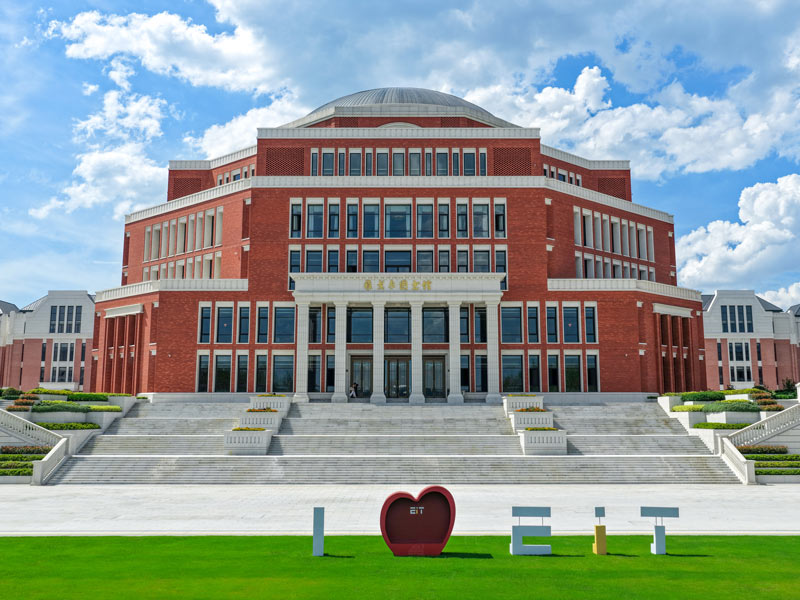
Formally established in 2025, the university is located in Ningbo, a major port city and advanced manufacturing hub in the Yangtze River Delta. Founded with the support of the Yu Renrong Education Foundation and backing from national, provincial and municipal governments, the university was built with high academic standards, a compact structure and an international outlook.
EIT operates on an open and flexible education system that integrates research and teaching with global needs. It is designed to explore new ways to shape the future of universities, says Chen. “With a mission to support China’s national development and promote societal progress, EIT emphasises research excellence, particularly in interdisciplinary fields that are at the forefront of innovation.” These include intelligent manufacturing, advanced materials, sustainable energy, integrated circuits, autonomous systems, AI and health-related technologies.
While the university focuses on disciplines such as science, engineering, IT and business management, it also integrates strategic humanities and social sciences to ensure that technological education remains connected to society, ethics and human values. “This design aligns with future trends in science and technology,” says Chen, an engineer and physicist with experience in higher education and innovation ecosystems worldwide. “The most important breakthroughs of the future will emerge from interdisciplinary integration and open collaboration.” As a scientist and educator, Chen’s leadership philosophy is rooted in scientific spirit, international vision and enduring pedagogical ideals to shape a holistic institutional culture.
EIT is not simply a new university but a platform for exploring an innovative framework for the future of higher education, says Chen. This model brings together research innovation, skills development and societal needs to address global challenges and expand scientific frontiers. Talent cultivation is fundamental to this pursuit.
“In the face of the changing technological landscape and global competition, future graduates must possess strong disciplinary foundations,” Chen says. “They must also be able to think independently and collaborate with people from other disciplines.”
EIT cultivates graduates who possess multidisciplinary knowledge, innovative capacity, civic responsibility and a global outlook, Chen says. “They will not only adapt to the future but help shape it,” he adds. The university’s undergraduate model combines general education with specialisation, supported by a residential college system, academic mentorship, flexible credit pathways, research training and internship programmes. Students are encouraged to connect theory with practice from the early stages of their education. International exposure is also built into the student experience, reflecting EIT’s ambition to prepare graduates for global success.
The university embeds world-class educational standards into its teaching and learning. “Internationalisation at EIT does not simply mean having international faculty and English-medium instruction,” Chen explains. “It is an open, diverse academic ecosystem that encourages global collaboration.” Its faculty members have extensive international experience, fostering an intellectual environment enriched by diverse academic traditions, perspectives and research cultures.
Purpose-driven research
EIT is building strong research momentum by launching competitive research projects. It is developing national, provincial, municipal and university-level research platforms and shared research infrastructure. “We seek to enhance our research capability and international academic impact through openness and collaboration,” Chen says. The university prioritises research projects that address bottlenecks in regional industries and broader challenges that hamper development.
“Since its founding, EIT has emphasised the importance of connecting research with real-world needs while integrating emerging technologies into academic ecosystems,” Chen notes. “We create a closer link between scientific discovery and technological innovation.”
Impact beyond borders
Although EIT is rooted in China and committed to local development, it recognises that international partnerships are vital to addressing problems beyond geographic borders. In the face of complex global challenges, future scientific innovation demands deep international and interdisciplinary cooperation, says Chen. “EIT hopes to become an important participant and contributor in the global innovation network.”
The university brings together outstanding scholars and talented students from around the world to promote collaborative research and academic exchange. It offers joint PhD programmes in partnership with leading institutions within and outside China, including Shanghai Jiao Tong University, the University of Science and Technology of China, the Hong Kong Polytechnic University and the University of Warwick.
EIT serves as a bridge between China’s advanced manufacturing industry and the world, strengthening communication and cooperation in science and technology. This is reinforced by the university’s location in Ningbo, a city with one of the world’s busiest ports and a strong advanced manufacturing base spanning electric vehicles, green energy, petrochemicals and semiconductors. Ningbo provides EIT with a favourable environment for competitive research, industry collaboration and real-world testing of new technological solutions.
Shaped by Chen’s leadership, EIT offers a blueprint for a new type of higher education institution: one that pushes the boundaries of scientific research while preparing students for emerging jobs and future societal responsibilities. “EIT aims to cultivate excellent professionals in specific disciplines,” says Chen. “But it will also nurture and develop a new generation of young people with innovative attitudes and a global vision, informed by a strong sense of social mission.”
To find out more about the Eastern Institute of Technology, Ningbo.