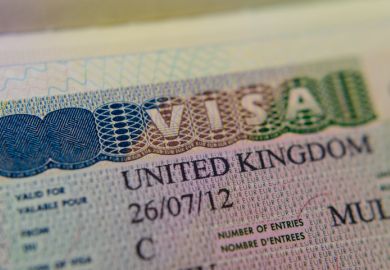
The Home Office has been urged to hold a review into “unfair” visa refusals after it emerged that international students have been denied UK entry because they did not know the foundation year of a university or the name of its vice-chancellor.
After universities faced a “late surge” in student visa refusals over the summer, leaders are questioning the quality, fairness and unpredictable nature of “credibility interviews” used to weed out bogus applicants.
According to some vice-chancellors who have spoken to Times Higher Education, “very strong applicants”, whose academic record would have previously met UK Visa and Immigration (UKVI) requirements, have been rejected on credibility grounds for reasons described as “absurd” and “unfair.” In some cases, decision-making was described as “increasingly erratic and unpredictable”, with students expected to know about the course, campus and history of their intended universities in extraordinary detail.
One vice-chancellor said an applicant had been rejected for a visa because they gave the wrong year when asked when the university was founded. They had mistakenly cited the year when it received its royal charter (in the 1960s) rather than its 19th-century origins.
Another prospective student at one of the UK’s oldest universities was also rejected for giving the wrong founding year, according to a refusal letter that claimed that the individual was not a genuine student. In fact, the Russell Group university later confirmed that the applicant had provided the correct year and that the UKVI caseworker was incorrect.
THE heard from another institution leader that an applicant had been turned down because they did not know the name of the vice-chancellor, while others had been rejected because they did not know the identities of their likely course tutors.
One applicant who had been offered a place to study a PhD in biomedical engineering was asked to describe some of the taught modules on their degree. After explaining that the doctorate was entirely research-based, the individual’s visa request was rejected on their basis that their answers were “vague and generic”.
The rejection of another applicant was based on their saying that they had chosen to study in the UK over Canada partly because of the milder weather. In the refusal letter, the UKVI official explained that Canada’s cities were well adapted to the winter conditions and that not all of its provinces experienced severe winters.
With institutions fearing refusals of this kind – particularly for applicants from Pakistan, Nigeria, Iran, Ghana and Sri Lanka – many have suspended recruitment completely from these nations.
According to the most recent Home Office data, one in 10 applicants from Nigeria was refused a student visa in the year up to June 2026, three times as many as were refused in the same 12-month period to June 2025. Some 17 per cent of Pakistani applicants were rejected in the same period, representing a 137 per cent rise compared with the year to June 2025. Overall visa refusal rates are up by 40 per cent in the year to June, while applications were down by 9 per cent. New figures are due to be released on 26 November.
With reports of higher-than-expected refusals now reaching key international recruitment markets, some vice-chancellors fear that would-be students are pre-emptively withdrawing their applications over concerns that they could be wrongly labelled bogus students, which might affect their ability to travel elsewhere at a later date. Home Office data for the first half of 2026 show that 10.5 per cent of applicants pulled their applications, compared with 2.3 per cent in the same period in 2025.
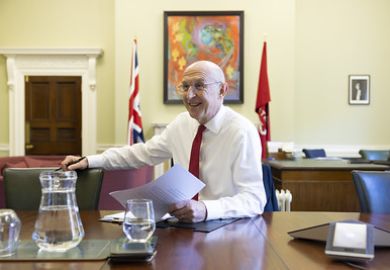
Andy Long, vice-chancellor and chief executive of Northumbria University, said he and other vice-chancellors had recently seen “international students refused visas on the grounds of ‘credibility’, based on interviews that expect a level of detail we have never seen asked of any applicant before”.
At Northumbria, some of the reasons for refusal included “not being able to quote university rankings for institutions considered in other countries; not having carried out detailed labour market research on their chosen career; and basing their comparison of universities on tuition fees, course duration and affordability, rather than demonstrating a detailed understanding of programme content, learning outcomes, teaching methods or academic benefits,” he said.
“The level of detail now expected is demanding and unprecedented. Nobody would dream of asking a domestic 18-year-old to produce a comparative analysis of different universities and the labour market before taking up their place. So we must ask the question: ‘Why are we now asking this of international students?’” said Long.
James Miller, principal and vice-chancellor at the University of the West of Scotland, said the “widely reported increase in delays to visa decisions, coupled with a concerning number of refusals that are based on very questionable grounds, is causing significant anxiety and uncertainty for applicants”.
“Beyond the very real human impact on students and their families, these decisions carry substantial financial consequences for individuals, universities and the wider economy,” he said. “There is now a compelling case for a robust quality assurance mechanism to review visa decision-making, ensuring greater consistency, accountability and confidence in the system.”
Vivienne Stern, chief executive of Universities UK, said a review of UKVI decision-making was essential given the number of incorrect refusals that had been revealed at appeal stage.
“We don’t mind tough decision-making, but it must be fair,” said Stern. “This is not just one or two incidents – it does seem like something has changed at UKVI with these refusals, many of which have been made in a very subjective way,” she added.
The handling of visa applications was particularly important because universities risk losing their licence to sponsor students altogether if more than 5 per cent of applicants are turned down under new rules that came into force in June, explained Stern.
“Universities have not changed anything about how they recruit but have gone from being comfortably inside the 5 per cent threshold to exceeding it thanks to higher refusals. If something has changed, then universities need to know about this,” she said.
Register to continue
Why register?
- Registration is free and only takes a moment
- Once registered, you can read 3 articles a month
- Sign up for our newsletter
Subscribe
Or subscribe for unlimited access to:
- Unlimited access to news, views, insights & reviews
- Digital editions
- Digital access to THE’s university and college rankings analysis
Already registered or a current subscriber?