The UK and European Union have agreed to find ways to “increase opportunities for students to study in each other’s territories” after crunch Brexit reset talks but a decision on lowering tuition fees has been pushed back another six months.
With Brussels threatening not to implement other aspects of the agreement unless the UK agrees to cut costs for EU students, a joint statement released after the two sides met on 20 November was typically vague.
It commits the EU and UK to “work towards a supplementing agreement to the Trade and Cooperation Agreement on tuition fees for EU students in the UK and for UK students in the EU”.
This “will apply to all students from the other party irrespective of the immigration pathway”.
“The aim is to increase opportunities for students to study in each other’s territories. We will conclude the negotiations within six months from the date of the summit.”
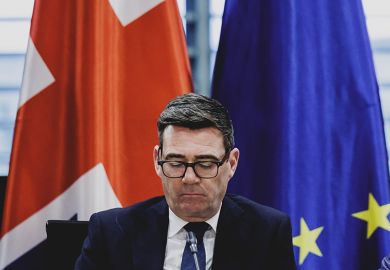
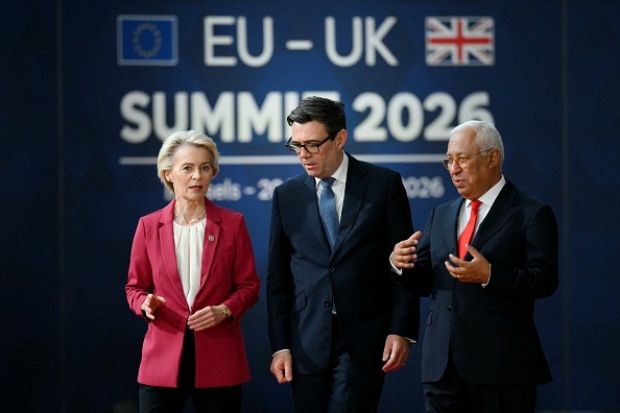
Prime minister Andy Burnham and a delegation of UK ministers met with European Commission president Ursula von der Leyen and European Council president António Costa in Brussels to try to finalise a scheme to revive youth mobility between the UK and the bloc.
EU officials briefed journalists that they had told UK counterparts at the summit that they want students from their 27 member states to pay the same amount for higher education as British students do, and implementing the rest of the deal would be contingent on an agreement.
The UK side contested this, stressing that other agreements covering food exports, youth mobility and carbon emissions were separate from the fees issue.
Asked at the summit if she was confident a deal on fees could be reached, von der Leyen said: “We will be working on that in the next few months and as we have a track record of finding solutions, I’m confident we’re going to find a solution.”
Before Brexit, EU students paid the same tuition fees as home students, an amount that now reaches up to £9,790 per year. But after the UK’s departure from the EU in January 2020, they have been subject to international fees in line with those arriving from countries further afield – up to £38,000 in annual tuition costs.
The fear for the UK sector is that losing out on this additional boost to income could be disastrous at a time when analysis earlier this year suggested that four in 10 higher education institutions are likely to enter financial deficit.
However, the National Union of Students (NUS) said it would welcome lowering fees, with England vice-president Lewis Wilson saying it “would be an investment in all young people, UK and EU, and we can’t wait to study alongside them”.
“We want to see a world where we can all truly access education across the globe, where our international friends have access to public funds, and no student suffers from hardship and the cost of living,” Wilson added. “We learn as much from our peers in our lecture halls; a more accessible education system is always better for everyone.”
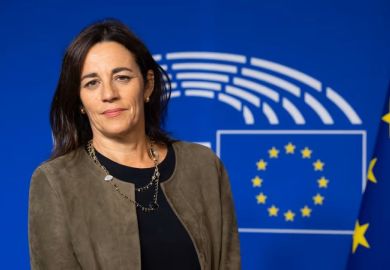
French MEP Laurence Farreng – former rapporteur for the European Parliament’s culture and education committee on post-Brexit UK-EU relations – has argued that the UK has become inaccessible to thousands of eager potential students.
“It’s impossible for most European students to come and study in the UK,” Farreng told Times Higher Education, in the days leading up to the summit. “It’s just too expensive.”
But universities already grappling with a downturn in international student numbers and the threat of the incoming international student levy will be watching what happens next in the course of the talks in Brussels with some anxiety.
Hollie Chandler, director of strategic policy at the Russell Group, said “any reduction in EU student fees would put pressure on UK student places and take more money out of UK higher education”.
“It is clear from the statement today that the UK government and the EU are aware of these risks and have agreed to take the time to fully consider the unintended consequences before taking any final decisions,” Chandler added.
“It is crucial that any final package fully protects opportunities for UK students and the financial sustainability of our institutions so that universities can continue to drive growth in their communities and play their full part in helping build a closer relationship with the EU.”
Besides youth mobility and trade, the summit also confirmed that the EU and UK will look to work more closely together on defence and artificial intelligence.
“In today’s geopolitical context, Europe needs unity, and the European Union will always seek to work closely with the United Kingdom,” Costa said.
Von der Leyen thanked Burnham for his personal commitment to a Brexit reset deal, while the prime minister said he was committed to lifting levels of growth in both Britain and the EU.
Register to continue
Why register?
- Registration is free and only takes a moment
- Once registered, you can read 3 articles a month
- Sign up for our newsletter
Subscribe
Or subscribe for unlimited access to:
- Unlimited access to news, views, insights & reviews
- Digital editions
- Digital access to THE’s university and college rankings analysis
Already registered or a current subscriber?