Campaigners have urged stronger research protections to be enshrined in law after charting how the level of political interference in the US has undermined the system – despite universities’ high-profile court victories.
The recommendation to legislate appears in a report mapping the impact of US government intervention on public health research, authored by Research Consulting and coordinated by a campaign group called #DefendResearch.
Led by the firm’s managing director Rob Johnson, researchers used an AI-assisted thematic coding tool to categorise 244 sources including academic documents and news articles into key areas. The data used is from January 2025 to June 2026.
“US federal action led to the alteration of records, reductions in data collection, weakened institutional capacity and the removal of expertise from decision-making, and used funding to exert pressure,” the report says. The authors found that capacity loss in the US includes researchers leaving in droves and shrinking PhD intakes.
However, court victories have managed to block, reverse or partly restore data sets and measures implanted by the federal government, the report notes. One such high-profile case cited in the study involved US federal courts ruling to restore 100 US Department of Health and Human Services data sets.
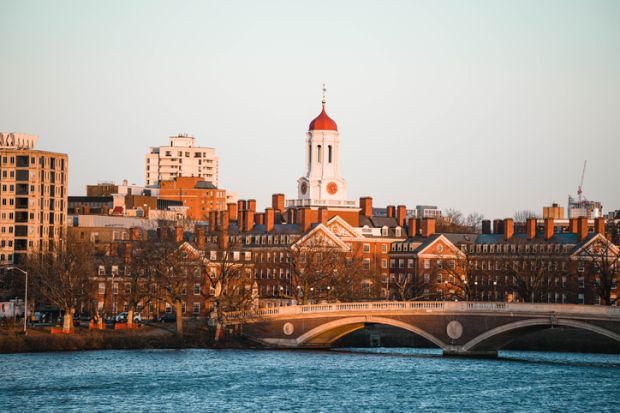
Another case highlighted is that of Harvard University, which the report says resisted political demands at “substantial cost”. Last year a federal court ruled to overturn $2 billion (£1.5 billion) in lost research grants after deciding that the federal government had violated its free speech rights. The institution’s legal fees rose from $80 million in 2024 to $127 million in 2025.
Johnson told Times Higher Education: “One of the most striking findings was that almost none of the disruption we documented requires changes to the law.”
The report stresses that all the scientific defence strategies employed by universities and their supporters focused on a specific harm and did not seek to change the “concentration of executive control over federal data, grants and agencies”.
It urges Congress to “put scientific integrity protections into law, so that they no longer depend on executive policy” and “establish a statutory duty to maintain public access to federal health data”.
Johnson said that the report has wider implications beyond the US, citing a UCL Policy Lab study last year which showed that the UK’s top scientific institutions are just as vulnerable to politicisation.
“So, the primary need is to put protections that currently depend on the goodwill of the executive on to a statutory footing,” he said. Johnson added that the most urgent area needing legislation is the integrity of public data, which will give courts “something concrete to enforce”.
On how to get legislators’ attention, Johnson said campaigners need to “make it local and personal”, highlighting matters such as a defunded clinic. He also said they should “turn anecdote into evidence, as we’ve sought to do”.
The report draws on records such as testimonials from researchers affected by censorship, he explained. The aggregated records “provide numbers [which] campaigners can cite: terminated grants, halted trials, discontinued surveys.”
Register to continue
Why register?
- Registration is free and only takes a moment
- Once registered, you can read 3 articles a month
- Sign up for our newsletter
Subscribe
Or subscribe for unlimited access to:
- Unlimited access to news, views, insights & reviews
- Digital editions
- Digital access to THE’s university and college rankings analysis
Already registered or a current subscriber?