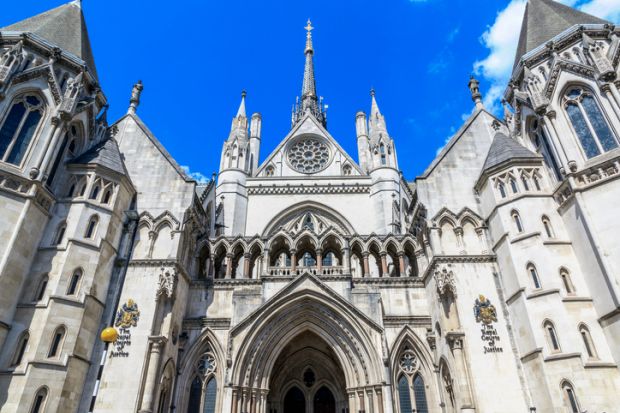
The Office for Students (OfS) must cover the full costs incurred by the University of Sussex when they clashed over free speech at the High Court.
A judge has quashed the regulator’s appeal to take 10 per cent off the money it must pay to the institution after it lost the case.
The OfS had argued that it was due the discount because it won on some grounds.
But Court of Appeal judge Nathalie Lieven has ruled the OfS must cover the full costs given the “overall success” of the university in the case.
The amount the OfS must pay has not been revealed but the regulator’s accounts published earlier this year showed it had set aside £660,000 for the case.
Sussex challenged the £585,000 fine imposed on it by the regulator over alleged breaches of its duties relating to academic freedom and freedom of speech.
A three-year investigation was begun after the departure of Sussex’s professor, Kathleen Stock, who was targeted by protesters because of her gender-critical views.
The OfS raised concerns about the university’s Trans and Non-Binary Equality Policy Statement and its potential to quash lawful speech.
Lieven found in favour of the university on five counts, including that the regulator had acted beyond its powers.
The OfS was successful on the second ground which concerned whether it was able to interpret a university’s statutes and regulations even if this infringed on the role of the university “visitor”, the traditional mechanism used to deal with complaints.
In her latest judgment Lieven said: “Although I found against the university on the issue, I do not think there was anything unreasonable about them raising the issue, or in the way they conducted the argument.”
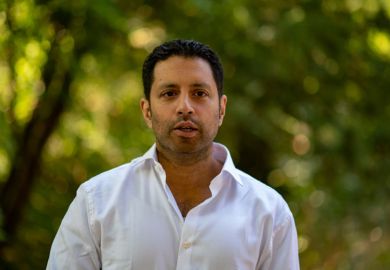
Sasha Roseneil, the vice-chancellor of Sussex, said the decision by the judge on costs “brings a further measure of resolution to a deeply regrettable and unnecessary episode”.
“The OfS’s original decision, which was resoundingly quashed by the High Court in April, has consumed an extraordinary amount of time and resource, both for the university and the regulator. More importantly, it has caused lasting and unjustified damage to the university’s reputation.
“Sussex has always taken our responsibilities to uphold freedom of speech and academic freedom extremely seriously. It is regrettable that we were compelled to pursue legal proceedings to challenge the regulator’s decision, diverting attention and resources from our core mission of education and research.
“Whilst we welcome the Court’s decision on costs, this is not an occasion for celebration. Our hope is that the OfS continues to reflect carefully on the many lessons of this case, and never again so fundamentally misunderstands both the law and its own powers, and never again prosecutes an investigation in the way it acted against Sussex: in the words of the judge, with ‘bias’, ‘predetermination’ and ‘a closed mind’. Universities need fair, proportionate and effective regulation, and I look forward to working constructively with the new leadership as they seek to change the culture and practices of the OfS.”
The university also appealed to the judge to order the campaign group the Free Speech Union to cover costs incurred by the institution in relation to its interventions in the case.
The group made a submission around how the OfS was defining “freedom of speech within the law” but Sussex had claimed that this was not of “significant assistance” to the court and had asked for its costs to be covered in relation to this matter.
Lieven said given the case was of “considerable wider interest to the higher education sector both in terms of the scope of the OfS’s powers to regulate, and the meaning of freedom of speech”, it “was important that the court could hear a range of submissions so that it could fully and properly consider both the specific arguments, but also the broad context”.
She therefore declined to make a cost order against the group.
Register to continue
Why register?
- Registration is free and only takes a moment
- Once registered, you can read 3 articles a month
- Sign up for our newsletter
Subscribe
Or subscribe for unlimited access to:
- Unlimited access to news, views, insights & reviews
- Digital editions
- Digital access to THE’s university and college rankings analysis
Already registered or a current subscriber?