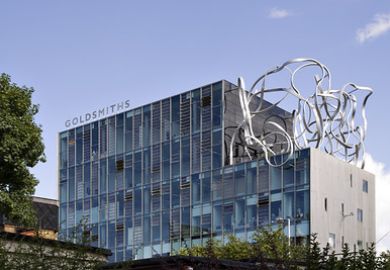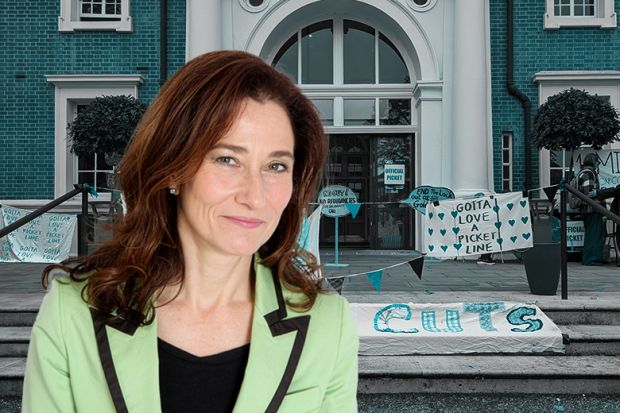
Not many vice-chancellors can expect much of a honeymoon period when starting a new role, but few can have experienced such a baptism of fire as Joanna Newman, the new vice-chancellor at Goldsmiths, University of London.
The former provost at SOAS University of London walked through the door of the famed Camberwell arts institution in September with the previous leader warning deep cuts are needed or they may not be able to keep the lights on.
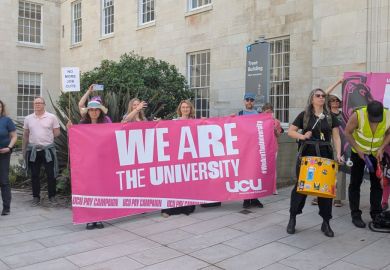
Staff have responded with fury to plans to cut £22 million from the budget, the third academic restructure at the university in five years, and on 16 October the institution’s University and College Union (UCU) branch will have been on continuous strike for 130 days.
This is the longest period of university industrial action that anyone can remember in recent history, surpassing the 129 days of walkouts carried out by union members at the University of Brighton in 2023.
Staff involved have had 100 per cent of their pay deducted for their involvement; exam papers remain unmarked following a summer marking and assessment boycott; and students have had their modules cancelled and courses upended as temporary lecturers have been hired last minute to fill staff shortages.
Speaking on the picket line this week, Des Freeman, head of department and co-director of the Goldsmiths Leverhulme Media Research Centre, said that with each restructure, the “soul” of Goldsmiths “gets destroyed a little bit more each time round”.
Did Newman realise what she was getting herself into? “I was aware that I was going to walk into an institution where there was a real weariness about changes that had to happen,” she told Times Higher Education.
Newman, who helped oversee a turnaround in finances at her previous institution, said she was “aware of the fact that staff probably felt quite demoralised”, but believes that immediate action is needed to address its financial challenges.
Since 2021-22, Newman said Goldsmiths’ total income has decreased by 16 per cent, despite the rise in tuition fees, and since the end of the pandemic student numbers have fallen by a third, by about 3,300 students – a symptom of the declining popularity of arts degrees nationwide.
While she insists that “things have to change”, Newman said it has been equally important to “reset the relationship” with staff, adding that one of the first things she did in the role was set up meetings with the UCU branch to try to re-establish relationships.
So far, these efforts have not resulted in the dispute coming to an end.
The union has said that it “accepts” that the university faces serious financial pressures but rejects the claim that further redundancies are “either necessary or inevitable” and has called for the financial evidence behind the proposals to be made available for scrutiny. As part of their strike action, union members have been calling on the university to “open the books”.
Since Newman started her role, Goldsmiths has made two offers to end the strike action, both of which have been rejected by union members. She said that the most recent offer, which included a commitment to not make any redundancies for the remainder of this calendar year and to mitigate the need for compulsory redundancies in the new year by offering a voluntary severance package on enhanced terms as “the strongest package the university could responsibly make”.
“Resolving disputes requires compromise from both sides. We’ve made significant efforts to reach an agreement and remain ready to talk,” she said, adding her “door is always open” and that she “remains committed to dialogue and ending the strike as soon as we can so we can focus on the future of this great university”.
What sets the restructure, known as “Future Goldsmiths”, apart from others taking place in the sector was that it was conceived by academic heads of school, deans and the university leadership, Newman said. The programme is designed “to protect new areas, as well as making sure that where an area is not working, we have other means of being able to teach those subjects”.
However, she warned, “it would not be responsible” to rule out any further restructures in the coming years, “but I do hope that this puts us on a really good footing for growth and stability”.
Going forward, she believes that the university can increase its research income, as well as considering “different ways of delivering higher education” and establishing opportunities for lifelong learning for Goldsmiths students.
She wants to create an institution where “people can come in and go out and come back to Goldsmiths throughout their lives”. Another goal, she said, was to see Goldsmiths’ Teaching Excellence Framework rating rise from bronze to silver.
Newman said that she “doesn't have the answers yet” on how to protect niche courses after the university was criticised for axing its degrees in queer history and black British history. But she said understands the importance of such courses, having come from SOAS. Talking hypothetically, she said: “There are ways in which you can embed disciplines into other programmes so that you keep it there for people to be able to access it in different ways”.
“There are subjects such as migration that are taught in every single discipline, so it’s not as if the disciplines disappear. King’s [College London] closed chemistry years ago, but they kept chemists in its other departments, so there are ways that universities can be adaptable and flexible.”
Despite the reassurances, staff remain unconvinced, tired and untrusting of the university following successive restructures.
Freeman said: “Even the most creative and militant and idiosyncratic souls start to get weary after a while...It just weakens the whole fabric of the place.”
Another staff member told Times Higher Education: “Restructures and cutting don’t solve the issue, and they have not solved anything. In fact, they’ve just exacerbated some of our issues.”
Newman said Goldsmiths is a “beacon of progressive, creative critical education”, which has international appeal while also being an “anchor institution for the people of Lewisham”. “It's about making sure that where we have academic strength in teaching and research, we protect and grow areas. Art, design, theatre, music, English, computer studies, communication, film, media are all really strong points for Goldsmiths and I want to make sure that we continue to teach and explore those areas.”
“But there are two ways of looking at this. We can have change done to us, or we can be the agents of change, and that’s why I still stand behind this Future Goldsmiths programme, because it is about the future of the university being financially sustainable and not going from crisis to crisis, which I think it might have felt like it was doing for many years. And I think there has been an instability, across the sector, but also at Goldsmiths.”
Register to continue
Why register?
- Registration is free and only takes a moment
- Once registered, you can read 3 articles a month
- Sign up for our newsletter
Subscribe
Or subscribe for unlimited access to:
- Unlimited access to news, views, insights & reviews
- Digital editions
- Digital access to THE’s university and college rankings analysis
Already registered or a current subscriber?