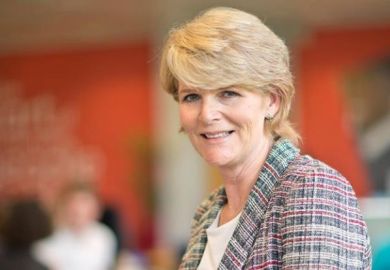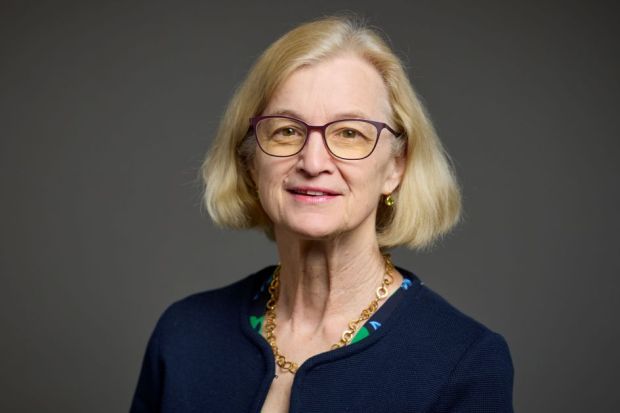
Many degree programmes do no more than “eat three years” of students’ lives, according to the shadow minister for work and pensions.
Amanda Spielman, who previously led education watchdog Ofsted from 2017 to 2023, warned too many people are being misled by the allure of university courses that fail to result in improved economic and life outcomes.
“[It’s] something like a third of university courses that provide no economic return for the young people taking them,” Spielman told attendees at a fringe event organised by the Policy Institute at King’s College London at the Conservative Party conference.
“I don’t want to get into arguments about the precise proportion, but it’s clear that too big a slice of degree courses essentially eat three years of a young person’s productive life for no real benefits. So we’re actually short-changing them by encouraging them to do those [degrees].”
Spielman, who also previously served as chair of exams inspector Ofqual, compared accumulating student debt to an “enormous, threatening sword over young people’s heads”, and suggested many were “underoccupied” at university.
“It’s blindingly clear that especially in the humanities, a lot of students basically spend three years, to far too great an extent, kicking their heels, going to a few hours of lectures and classes a week, writing one essay every few weeks, but really just not doing enough and having far too much time to get bored and lonely,” she said.
Combined with a poor labour market, and its impact on the number of available part-time jobs, Spielman argued many had been left with little to do as they ostensibly worked towards a qualification – and proposed that policymakers must “think quite fundamentally about the design of mass higher education”.
The ex-Ofsted leader was taking part in a debate on the future of tertiary education, particularly in the face of unemployment and future changes to work wrought by developing technology like artificial intelligence.
According to the latest labour market statistics, 9.12 million people aged 16 to 64 were economically inactive between May and July 2026, with those inactivity levels up by 12,000 in the past year.
Former universities minister and visiting professor at King’s, David Willetts, rebuffed Spielman’s comments, telling his Conservative Party colleagues he did not believe “the evidence bears out” her assertions.
Willetts, who devised increases to the tuition fee cap under the coalition government in 2012, acknowledged the need to “keep on scrutinising the performance of HE”, but said the “raw figures” continue to show the value of studying a degree in terms of the so-called graduate premium.
Figures released by the Department for Education (DfE) in June revealed graduates go on to earn higher average salaries than those who received similar GCSE results but did not obtain a degree.
“The vast majority…of young people who are going to university do not regret it,” Willetts said, adding: “The regret is far greater amongst the non-graduates who didn’t go than the graduates who did…I would be very wary of any intervention that stands in the way of informed choices made by young people about their own futures.”
Alison Wolf, crossbench peer in the UK House of Lords and a former prime ministerial adviser on skills and the workforce, said her “number one priority” when it came to the tertiary education system was not “massive restructuring” within the universities sector, but “serious apprenticeship reform”.
She also accused the current government, led by Andy Burnham, of an “obsession with qualifications”.
“GCSEs in plumbing?” Wolf said. “I don’t think so.” The economist argued in favour of less centralised control over skills-focused training and proposed more industry-developed teaching.
Register to continue
Why register?
- Registration is free and only takes a moment
- Once registered, you can read 3 articles a month
- Sign up for our newsletter
Subscribe
Or subscribe for unlimited access to:
- Unlimited access to news, views, insights & reviews
- Digital editions
- Digital access to THE’s university and college rankings analysis
Already registered or a current subscriber?