The strong economic impact of international students is not enough to dissuade the public from backing further recruitment curbs being pushed by the likes of Reform UK, a former universities minister has warned.
Conservative life peer David Willetts, who served as minister for universities and science from 2010 until July 2014, said anti-immigration rhetoric was still gaining traction in areas that had clearly benefited from hosting foreign students – primarily because of “frustrations” for voters caused by the housing crisis.
University of Manchester vice-chancellor Duncan Ivison, appearing alongside Willetts at the Conservative Party conference in Birmingham, agreed, suggesting housing shortages were “exactly what’s driving” recent policy changes in countries like Australia and Canada – the latter of which in 2024 introduced strict caps on international student enrolments.
Willetts said the issue was connected to the rising popularity of the anti-immigration party Reform UK. YouGov data show the party share of British public voting intention is up, reaching 25 per cent.
“If you look at voting behaviour, even in towns and places where it’s clear that the international students are a significant part of the local economy and help to make that town or city more prosperous, you’ll still find lots of Reform voters, and lots of leading local councillors who are against [greater international recruitment],” Willetts said.
“They’re against, above all, housing pressures. And the housing issue will not go away.”
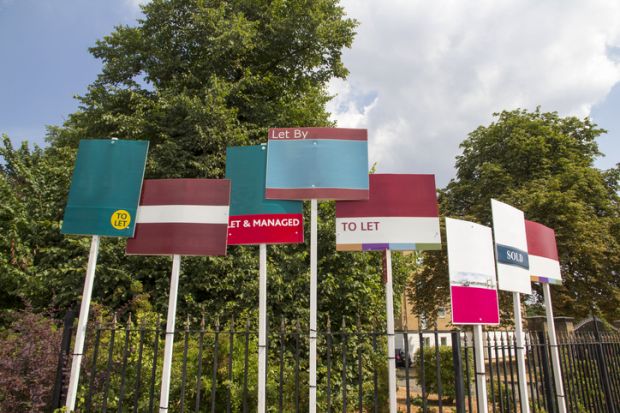
Willetts suggested the issue had only become more apparent following the introduction of the Renters’ Rights Act, which came into force earlier this year.
Some believe the legislation will over time reduce the student housing supply by potentially making it less attractive to landlords to rent to them, as a result of its emphasis on “periodic” tenancies – those running continuously, with no end date.
There are exemptions designed to protect more flexibility in the student market, but experts have nonetheless predicted there will be those “who will no longer be able to offer fixed-term, academic year-aligned accommodation”.
Willetts called on the sector to “look…at the housing offer” to ensure councils are “comfortable”.
“It can be anything from building more purpose-built accommodation or whatever,” he said, adding: “Sometimes, local political support for international students at the local university is not as strong as people think, and housing is the reason.”
Speaking at the fringe event, organised by the Higher Education Policy Institute (Hepi), Manchester’s Ivison criticised the country for not “rising to the occasion” when it comes to attracting top international talent.
Ivison, formerly deputy vice-chancellor at the University of Sydney, said Canadian prime minister Mark Carney was “strangling the higher education system” in his country thanks to its hard caps on international student recruitment – and said the same was happening in Australia and the US.
“It should be the UK’s moment,” he said, adding: “We are not rising to that occasion. It’s incredibly frustrating…I do think it’s a question we need to ask of both the opposition, but also the government in the coming months and weeks.”
Register to continue
Why register?
- Registration is free and only takes a moment
- Once registered, you can read 3 articles a month
- Sign up for our newsletter
Subscribe
Or subscribe for unlimited access to:
- Unlimited access to news, views, insights & reviews
- Digital editions
- Digital access to THE’s university and college rankings analysis
Already registered or a current subscriber?