Australian university chancellors are set to come under the auspices of the representative body for university executives, as the sector strives to satisfy “heightened expectations” around its governance, accountability and performance.
The University Chancellors Council (UCC), which represents the heads of the governing bodies of 39 institutions, is to disband at the end of October. Its duties will be absorbed by Universities Australia (UA), which says the “expanded mandate” will strengthen its role in lifting governance capability.
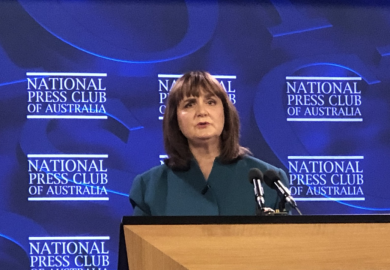
UA chair Carolyn Evans said that as publicly funded institutions, universities had a responsibility to maintain high standards. “This change reflects our shared commitment to ensuring they are well governed, well represented and well placed to meet the expectations of the communities we serve,” she said.
“Bringing chancellors and vice-chancellors together gives us a stronger platform for collaboration and a more unified national voice.”
Under a new constitution, the UA Board will continue to be chaired by a vice-chancellor. The board will also comprise the CEO and 10 other directors, including seven vice-chancellors and three chancellors. The board’s new University Governance Committee will be chaired by one of the three chancellor directors.
These three roles will be filled in an interim capacity by John Hood, Sandra McPhee and Diane Smith-Gander – respectively the chancellors of Flinders, Western Australia and Southern Cross universities – pending ratification of a board election early next year.
UCC convenor John Pollaers said the two bodies had worked closely together to shape the new arrangements. “Bringing chancellors and vice-chancellors together strengthens our collective leadership of the sector,” he said.
“It carries forward the work of the UCC while building our capacity to strengthen governance, anticipate emerging issues and maintain public confidence in Australian universities.”
While Pollaers has courted criticism of his personal style, he has been a staunch internal advocate for governance reform. He supported proposals from the academic union and postgraduate students’ representative body to increase the number of elected positions on Victorian universities’ councils.
Pollaers has counselled chancellors to engage more with their critics and to deal more proactively with “systemic” issues – such as wage underpayment – that fuel acute resentment. He has also pressed governing bodies to assert their role more assiduously by demanding accountability from management without crossing the line into “doing management’s job”.
Governance expert Hilary Winchester said a merger of the representative arrangements for chancellors and vice-chancellors had been “discussed for a while”, although vice-chancellors had resisted it. “The executive and the governance are pretty different,” said Winchester, a higher education quality consultant who has held senior posts at five universities.
“They have shared concerns about finance and buildings and risk and so on, but they do such different things.”
She said functioning as a common representative body could present difficulties if UA found itself required to advocate on issues over which chancellors and vice-chancellors were at loggerheads. But this was not so much a conflict as an added complexity for UA, which already represents disparate interest groups. “It’s really hard to speak with one voice, and now you’ve got another potential axis of division,” she said.
The body’s CEO, Luke Sheehy, said the new arrangements would strengthen its ability to support universities. “UA’s job is to help universities deliver for Australia," he said. “This change broadens the expertise and capability we can bring to that task.”
Register to continue
Why register?
- Registration is free and only takes a moment
- Once registered, you can read 3 articles a month
- Sign up for our newsletter
Subscribe
Or subscribe for unlimited access to:
- Unlimited access to news, views, insights & reviews
- Digital editions
- Digital access to THE’s university and college rankings analysis
Already registered or a current subscriber?