Universities in democracies such as Georgia, India and the US have seen their autonomy “violated” by government interference in the past year, according to the latest annual update from international academic rights organisation Scholars at Risk (SAR).
Free to Think 2026 documents 382 attacks on scholars, students and institutions in 59 countries and territories between 1 July 2025 and 30 June 2026.
The figure is marginally down on last year’s tally of 395 such attacks despite an increase in the number of countries and territories evaluated, from 49 last year to 59 this year. But the differences are not merely numerical.
Last year’s report noted attacks by police forces on protesting students in Bangladesh, which led to thousands of injuries and the deaths of up to 1,400 people. It also flagged cuts to international aid and collaboration, such as the US government’s cuts to research funding, which affected research projects and educational opportunities abroad, in countries from Afghanistan and Malawi to Australia and Portugal.
This year’s findings point to the “direct repression and overt violence” seen in the form of wrongful imprisonment of academics in China and Russia, and even the “targeted assassinations” of university leaders in Guatemala and Pakistan.
But even countries better associated with academic freedom have undergone legislative and administrative shifts “to restrict higher education systems”.
In the US, for instance, the report points out how full or partial immigration bans on nationals from 39 countries, brought in by presidential proclamation, put international students and scholars in a “precarious” position.
And in India, the report highlights that Banaras Hindu University was one of a number of institutions to cancel a speaking engagement on account of external influence, axeing a lecture by scholar Kedar Mishra “because the government opposed his participation”.
But public pressure also played a part in reducing academic liberty in 2025-26, the report says. Examples include the suspension or firing of several faculty members in the US and Canada because of their public statements in the wake of the killing of political commentator Charlie Kirk last September.
And in January this year, the University of Arkansas announced that it had rescinded its offer to legal scholar Emily Suski to serve as the dean of its law school, stating that its decision was influenced by feedback from elected officials about Suski’s signing of an amicus brief filed with the US Supreme Court, which supported transgender students’ right to play on sports teams aligned with their gender identity.
Nonetheless, the report also expresses “cautious optimism” about how new political administrations in Bangladesh and Hungary might reverse some of the more worrying developments for academic freedom.
Under Hungary’s new leader, Péter Magyar, who defeated far-right prime minister Viktor Orbán in April 2026, there is an opportunity to start “restoring university autonomy”, the report finds.
Under Orbán, public universities had been put under political control by transferring their ownership to foundations headed by political appointees – in retaliation for which Hungary was suspended from the Erasmus student exchange scheme, as well as Horizon Europe. But “by the end of May, less than a month after Magyar took office, Hungary had indicated it would phase out the private foundation university model and rejoin the Erasmus student exchange programme,” the report notes.
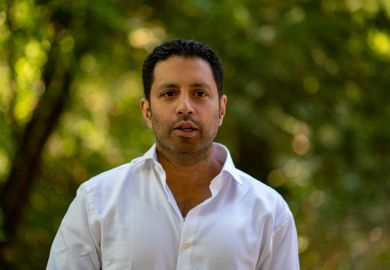
Still, Robert Quinn, founding executive director of SAR, told Times Higher Education that the cases of freedom violations documented in the report were “just the tip of the iceberg”.
Speaking at the European Association for International Education conference in Glasgow last week, he said that efforts to defend academic freedom had never been stronger – but that the “bad news is that threats are growing faster than the efforts to protect”.
Quinn described ambitions to create a “global academic freedom agenda” to “change the tide” on intellectual and research liberty. The agenda must be “concrete and practical”, he said, and not simply “flowery language”, with an emphasis on creating clear parameters for how to protect and encourage academic freedom and intellectual debate.
He also thought that it was important in this regard to enlist the help of the general public by emphasising the ways in which universities help them.
“The university that is in service to the public needs to [deliver a] message that it is in service to the public,” he said. “I think that’s the part we haven’t been doing. [Universities are] just not talking about it to the public in a way that the public understands.
“I believe if we spend the next 25 years really messaging that properly and absorbing those messages ourselves – that the public is our primary purpose – then the public will also be our primary defender.”
Register to continue
Why register?
- Registration is free and only takes a moment
- Once registered, you can read 3 articles a month
- Sign up for our newsletter
Subscribe
Or subscribe for unlimited access to:
- Unlimited access to news, views, insights & reviews
- Digital editions
- Digital access to THE’s university and college rankings analysis
Already registered or a current subscriber?