Russell Group universities “dominate” a new ranking of institutions that “under-enrol” disadvantaged students.
According to the Social Mobility Commission, nearly a third (29 per cent) of English universities admit more young people from well-off backgrounds than might be expected.
The Who gets in? report published on 10 August compares the socio-economic background of each university’s student intake with the number of 18- to 19-year-olds in England who achieved the required admissions grades for that institution.
It finds “notable gaps” where disadvantaged students are under-represented at some universities “relative to the qualified pool of prospective students”.
The body has developed “social mobility coefficient scores” for 94 universities, which measure how universities are performing on recruiting disadvantaged students once attainment is taken into account.
A negative social mobility score means a “substantial number” of qualified disadvantaged young people could attend the university but they are not applying or being filtered out during the admissions process.
Although Oxford Brookes University has the lowest score, the rest of the bottom 10 is dominated by Russell Group institutions including the universities of Exeter, Oxford, York, Leeds and Durham University.
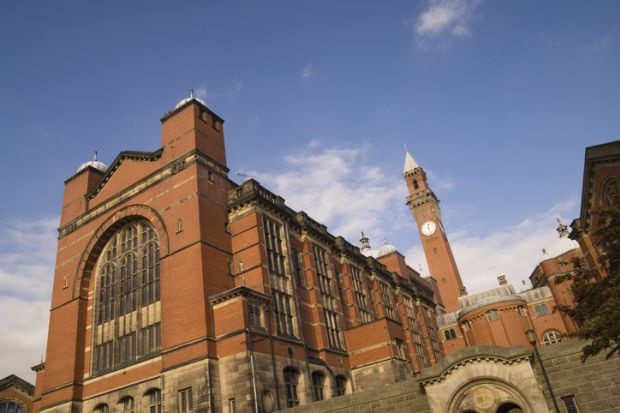
When adjusted for location, reflecting that many disadvantaged students choose to study locally, the institution with the most negative score is the University of Birmingham.
Some 33 per cent of 18- to 19-year-old candidates who met the university’s entry requirements came from the least advantaged parts of the population – but comprised just 27 per cent of the actual student intake.
Oxford Brookes again features lowly on this list, alongside the universities of Liverpool and Leeds.
Institutions doing well on recruiting the most disadvantaged students, meanwhile, include a number based in the UK capital.
Among the six London universities to feature in the top 10 in the ranking are the universities of East London, Westminster and Brunel, with Middlesex in the top spot.
Shân Wareing, vice-chancellor of Middlesex University, said she was “delighted” to be recognised for its work recruiting students from disadvantaged backgrounds.
“Creating opportunity through education is at the heart of everything we do. This recognition reflects years of working alongside schools, colleges and communities across North London to ensure that talent and ambition, not background or circumstance, determine who can benefit from higher education.”
The Universities of Bradford and Wolverhampton also made the top 10, with Bradford topping the list when location is factored in.
The analysis focuses on students who took their GCSE exams in the 2015-16 academic year, tracking their progression to university by age 19 in 2019-20. Some universities were excluded if they had fewer than 25 students in one of the analysed socio-economic groups.
Alun Francis, chair of the Social Mobility Commission, said: “This research focuses on a simple question: from the pool of students who meet their entry requirements, do universities recruit equally across all socio-economic backgrounds? The evidence suggests that many do, but not all.
“Where disparities exist, there may be good explanations, but we would encourage all universities to examine every stage of the student journey, from outreach and applications through to admissions and affordability, and any other relevant factors, to ensure talented students are not missing out because of their background.”
Libby Hackett, chief executive of the Russell Group, said that the “barriers to access can be complex, with multi-layered economic, social and cultural factors” but its “invest significantly in widening participation and outreach efforts, and they are creating change”.
She highlighted how the report was based on pre-Covid data and, since 2019, the number of 18-year-olds from the most disadvantaged backgrounds accepted into Russell Group universities has increased by almost 75 per cent – spending more than £250 million spent per year collectively.
“That said, we know there is more to do to make sure talented students from all backgrounds can benefit from the opportunities our universities offer. It will take a joined-up, concerted effort from across the education system and wider government to help transform life chances.”
A Durham University spokesperson said: “We encourage all students with the potential to succeed at Durham, irrespective of background, to apply here. We invest in targeted programmes and student support to expand opportunities for students from lower income households to study and succeed at Durham. We are making progress.”
Register to continue
Why register?
- Registration is free and only takes a moment
- Once registered, you can read 3 articles a month
- Sign up for our newsletter
Subscribe
Or subscribe for unlimited access to:
- Unlimited access to news, views, insights & reviews
- Digital editions
- Digital access to THE’s university and college rankings analysis
Already registered or a current subscriber?