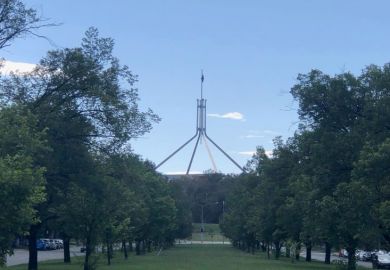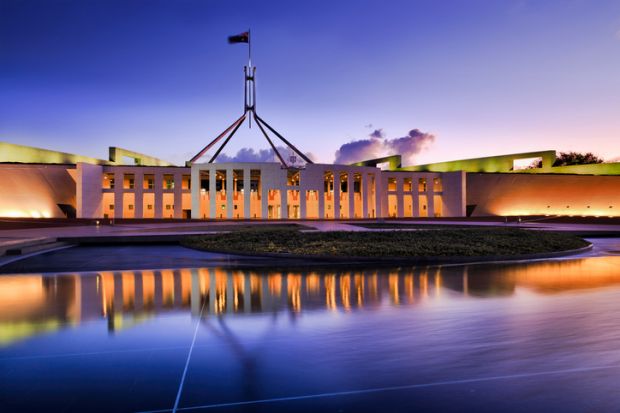
Australia’s government says an increase in the number of subsidised university places is a down payment on the ambitions of its higher education review, and a demonstration of intent to expand the system through the newly legislated “managed growth” regime.
Critics say the extra places will not be enough to accommodate demand, and the government’s claim of record allocations is hard to verify because of a lack of data.
The government says its “total allocation pool” of 624,590 funded places next year will enable more Australians to attend university than ever before. The places are being doled out to individual institutions by the Australian Tertiary Education Commission, with the results of that exercise to be revealed in November.
Education minister Jason Clare said the allocation represented a new baseline for the sector, because the legislation does not allow the pool to be reduced from one year to the next. Clare said the figure represented an increase of 23,000 places, or 3.7 per cent, compared to 2026.
The managed growth system was a key recommendation of the Universities Accord, which predicted that 80 per cent of Australia’s workforce would need tertiary qualifications by 2050. “More jobs require more skills,” Clare said.
“That means we have to open the doors of our universities wider in our big cities, in the suburbs and in the bush. This will mean we have more teachers, more nurses, more scientists, more engineers – more of the skills Australia needs.”
A major criticism of the legislation, the “Opening the Doors of Opportunity” Act, was that its provisions do not oblige the government to expand university places. But Clare said the legislation would usher an extra A$3.6 billion (£1.85 billion) in funding over the next decade, creating places for an additional 230,000 commencing students during that period.
Monash University higher education policy expert Andrew Norton said this year’s increase would fall short of domestic needs. “It’s pretty clear that the number of fully funded places for domestic students is going to be lower than demand,” Norton told the Australian International Education Conference. “There’s going to have to be various over-enrolment workarounds to deal with [this].”
A source said Clare’s claim of an additional 23,000 places this year was difficult to confirm, because the government had not yet published comprehensive domestic enrolment data from 2025, let alone 2026.
Register to continue
Why register?
- Registration is free and only takes a moment
- Once registered, you can read 3 articles a month
- Sign up for our newsletter
Subscribe
Or subscribe for unlimited access to:
- Unlimited access to news, views, insights & reviews
- Digital editions
- Digital access to THE’s university and college rankings analysis
Already registered or a current subscriber?