ADVERTISEMENT
The world’s top universities remain engines of elite reproduction
Despite decades of commitments to meritocracy and social justice, students – and academics – from advantaged backgrounds continue to be vastly over-represented at the highest-tariff institutions. Lee Elliot Major and Anne-Marie Sim explain why this matters and how it can finally be redressed
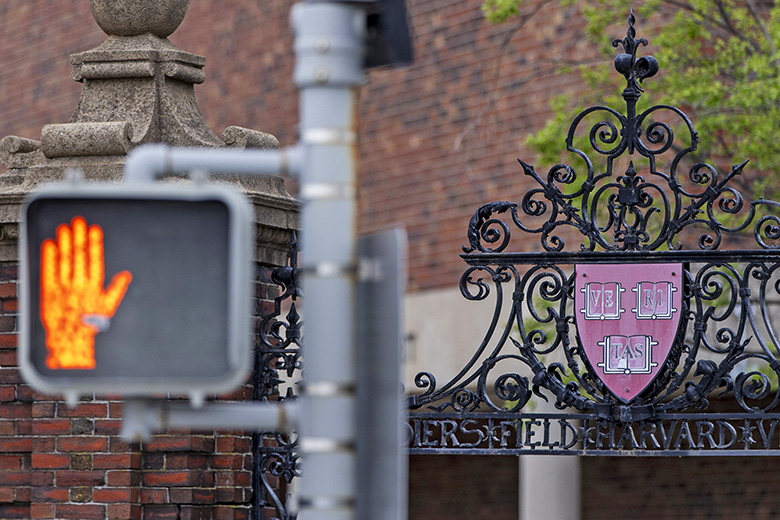
Source: Christian Kantosky/The Boston Globe via Getty Images
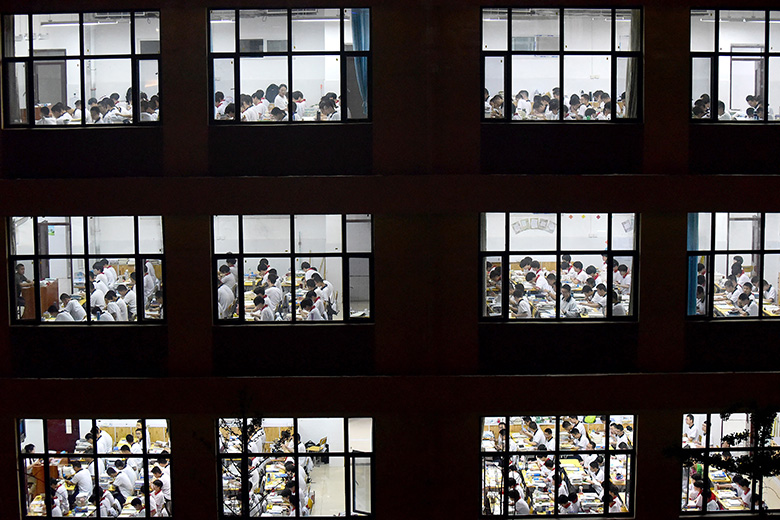
Each summer, more than 13 million Chinese students file into classrooms to take the gaokao, the test that will determine whether, and where, they go to university. For China’s leaders, it is the embodiment of fairness: a single, standardised exam that decides who enters the nation’s most prestigious institutions.
For millions of ordinary Chinese families, it presents a once-in-a-lifetime chance to change their lives. “Glory boards” mounted in small villages display photographs of students who have won coveted degree places. At elite high schools, students undergo an extraordinary regime of preparation for the test. Lessons, drills and self-study sessions fill 14-hour days. Mothers quit their jobs to support their children’s study schedules.
Yet beneath the gaokao’s veneer of meritocracy lies an uncomfortable truth. Gaining a prestigious university place is not simply the result of two days of testing, but the culmination of years of costly preparation. This rewards those with parents who can afford private tutoring – but the students who suffer the heartbreak of missing out on university places rarely question the system itself. Instead, they blame themselves.
Defining failure as personal rather than structural is a defining hallmark of modern meritocracies, as we set out in our new book, Cracking the Class Code. Those facing the greatest disadvantages are too often left carrying the blame for inequalities that they did not create.
Despite the promise that education and hard work offer a fair chance to get ahead, there is a growing crisis of opportunity across many of the world’s most advanced economies. And at the heart of this stunted progress sit elite universities, which confer the credentials and connections that open doors to the best-paid and most influential jobs.
ADVERTISEMENT
Over the past half-century, the gates of higher education have been opened to unprecedented numbers of students. But this has not led to significant gains in access at the top of the academic pyramid. In France, almost 80 per cent of students at the most selective grandes écoles come from advantaged backgrounds, a proportion that has remained unchanged for decades. In the UK, the social class gap at Russell Group universities has widened over the past three decades, with the proportion of people from the most advantaged backgrounds who are graduates of those universities rising at a faster rate than the proportions from poorer backgrounds. And in the US, more students at Ivy League-Plus colleges still come from the richest 1 per cent of incomes than from the entire bottom half of the distribution.
Scott Galloway, a marketing professor at New York University, has delivered one of the most biting critiques of elite universities in the US, labelling them “the enablers of a caste system”, using “the illusion of meritocracy to launder privilege”. Despite preaching inclusion and fair admissions, higher education “is a bouncer at the entrance to an exclusive club,” writes Galloway, “where wealthy kids and a cadre of freakishly remarkable 18-year-olds build lasting relationships and lucrative networks with elite peers, while obtaining certification that gives them access to the greatest wealth-generating vehicles in history”.
Similar charges can be made about elite institutions across the world, from the UK’s Oxford and Cambridge to France’s grandes écoles, China’s Peking and Tsinghua universities and India’s network of Institutes of Technology. Albeit often unwittingly, they reproduce advantage even when entry depends on an apparently meritocratic exam.
The global explosion in private tutoring sparked by the scramble to enter such institutions is nowhere more apparent than in Kota, India’s coaching capital. More than 150,000 students arrive each year in that Rajasthan city to prepare for entrance exams to the IITs and other prestigious Indian institutions. Behind this booming industry lies a darker reality: student suicides have become a recurring tragedy, with about 20 deaths reported annually in recent years. Indeed, more than 20 suicides among school-leavers were reportedly sparked earlier this year by the postponement of the country’s highly competitive national medical college entrance exam – prolonging the enormous associated pressure – after some of the questions of the scheduled exam were leaked.

Elite universities’ advantage-recycling mechanism is likely to be even more efficient when entry depends on interviews, essays, recommendations and other forms of human judgement. In these cases, success becomes as much about how knowledge is displayed as about what an applicant knows. In the UK, studies show how private schools explicitly train pupils to perform in ways that mirror the cultural expectations of Oxbridge admissions tutors. Tutorials are rehearsed as theatre: students learn to think aloud, project confidence through gesture and tone, and appear unflustered under pressure.
ADVERTISEMENT
Former Guardian editor Alan Rusbridger offered a rare behind-the-scenes account of Oxford admissions during his time as principal of Lady Margaret Hall. Rusbridger’s account, written in 2015, exposes how much human judgement is involved. It’s not that academic tutors don’t try to be fair. But the combination of coachable tests, performative interviews and inter-college horse-trading advantages those already fluent in the elite cultural codes of academia. To outsiders, at least, the Oxbridge interview seems a perfect habitat for what the French sociologist Pierre Bourdieu would see as powerful mechanisms of elite reproduction, whereby polished ease, the right accent and shared cultural references are likely to be mistaken for raw ability.
Sometimes the unfairness is entirely deliberate and blatant. In the US, the 2019 Varsity Blues scandal exposed how wealthy American parents bribed and cheated their children’s way into prestigious universities. But as Harvard philosopher Michael Sandel argued, they were merely buying their way through a “side door” into institutions where the advantaged already enjoyed a “back door” through donations and connections. Even the supposedly meritocratic “front door” is shaped by advantage, with Ivy League universities long relying on subjective assessments of character and “fit”.
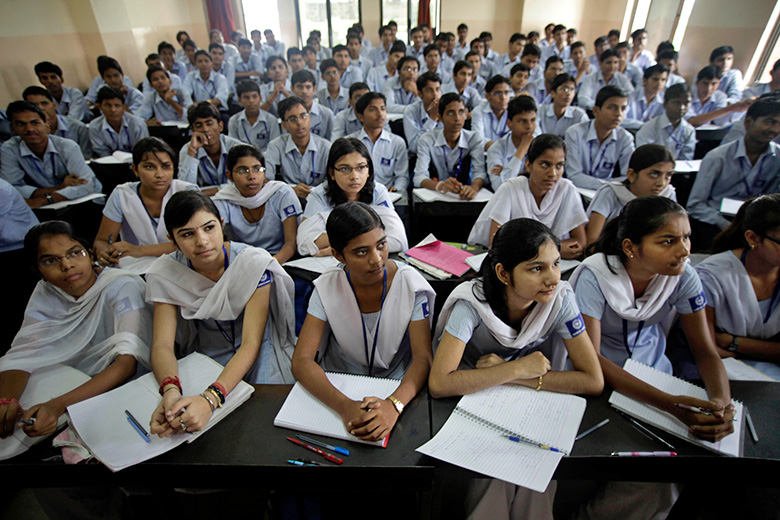
Moreover, for many students, entering university is only the beginning of deeper existential struggles. India’s “reservation” system of quotas is among the world’s most ambitious attempts to open elite higher education to historically marginalised groups, with more than half of places at IITs reserved for such demographics. Yet even here, access has become contested terrain. Students admitted through reserved places are disparaged as “reservation wale”, their achievements dismissed as the product of preferential treatment rather than academic merit. As a result, some students conceal their caste identities, withdraw from university life or abandon their studies altogether.
Cultural clashes are a common characteristic of life on modern elite campuses. In the UK, these can take the form of judgements about the way students speak. At the University of Edinburgh, for instance, Scottish students reported being mocked or dismissed because of their accents. Edinburgh, like many universities across the UK, has introduced accent bias training for staff, and issued frank guidance for its students: “Don’t be a snob!”
Similar dynamics are seen at the staff level, too. Academics are drawn disproportionately from affluent, highly educated families – and about half of working-class academics in the UK reported in a 2022 survey that their backgrounds have damaged their career progression.
These remarkably similar patterns across the world’s most prestigious universities suggest that we need to rethink how we recognise and nurture academic promise.
Social class must become central to universities’ diversity efforts at staff level, where it is too often overlooked. There are lessons here from the leading global firms, with which we and others are developing more forensic approaches to recognising talent: examining how conventional assessments can favour the already advantaged, identifying hidden barriers to progression and making the cultural codes of the workplace explicit. Universities should be subjecting their own practices to similar scrutiny.
ADVERTISEMENT
In practice, this means looking beyond student admissions to the wider culture of university life, where middle-class norms and expectations can shape everything from academic recruitment and promotion to informal networks and opportunities for career progression. Universities need to make these processes more transparent, while questioning whose experiences and perspectives shape what is taught and researched. Different social backgrounds should be recognised as a source of intellectual strength rather than something to be overcome.

On the student admissions question, universities face the difficult task of identifying those from every background who can flourish in demanding academic environments. But perhaps we should be more modest about our ability to predict future academic success.
We need to reflect more deeply on how we distinguish genuine academic promise from the polish, confidence and preparation that advantage can buy. Contextual admissions are a welcome step. Alternatively, universities could consider establishing demanding but fair academic thresholds that take account of applicants’ circumstances. Among those meeting the threshold, greater weight could be given to widening opportunity, rather than ever finer distinctions in exam scores or interview performances.
Furthermore, since fairer admissions cannot compensate for inequalities accumulated throughout childhood, universities must help to build fairer foundations, working with schools to widen educational opportunities long before students reach their gates. At the University of Exeter, we have developed a “win-win-win” tutoring scheme, in which undergraduates earn degree credits by helping local school pupils improve their literacy. Pupils make academic gains, undergraduates gain valuable experience for their CVs, and many begin to consider teaching as a career. Such initiatives should be integral to universities’ wider social mission.
The challenge is not simply to help more students from less advantaged backgrounds win places in an unequal race. It is to change the rules of the game itself. Unless we open up the pathways through our most prestigious universities to society’s most influential careers, we risk deepening the frustration and disillusionment of those who feel the system is stacked against them.
Ultimately, this is about more than who gets into our elite universities. It is about who gets ahead in society – and who gets to make the decisions, shape the institutions and influence the rules that determine opportunities for everyone else.
Lee Elliot Major is professor of social mobility and Anne-Marie Sim is lead of the South-West Social Mobility Commission at the University of Exeter. Cracking the Class Code is published by Bristol University Press.