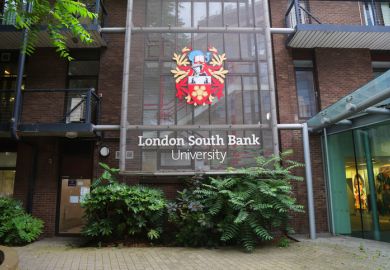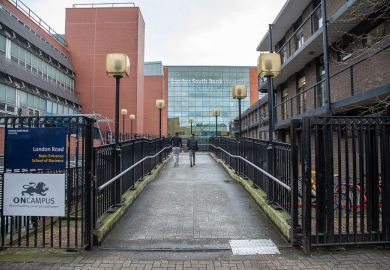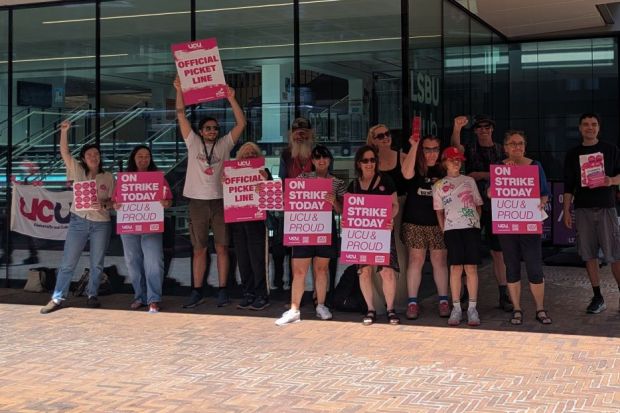
A restructure at London South Bank University that is dividing staff into teaching and research tracks could become a “test bed” for the wider sector, staff claim.
In March, the university announced plans to move many of its existing academics into new “teaching and scholarship” roles, with a limited number of staff members eligible to apply for “teaching and research” positions.
The University and College Union (UCU) has held strikes against the proposals this week and is also carrying out a marking and assessment boycott that could delay student graduations.
It claims staff are being made to compete against each other in a redundancy selection process.
New starters will also be employed through a subsidiary firm and denied access to the Teachers’ Pension Scheme (TPS).
The university has said that the changes are in response to financial pressures and will allow it to protect academic roles, strengthen teaching capability and focus research on areas where it can have the greatest impact.
But speaking to Times Higher Education on the picket line, Elisa Carrus, a UCU officer at LSBU, called the university’s approach a “nuclear strategy” because of the scale of changes being pushed through.
“It’s quite complex, because they’re doing everything at once. They’re changing the contracts, they’re making redundancies, they’re changing the job descriptors that completely remove the academic framework for promotions. It’s a real reset.”
Carrus said she believed that what sets the restructure at LSBU apart from others occurring in the sector is the depth and complexity of the changes.
“We’re getting a lot of support from other branches because they really see the national significance of our dispute. We’ve seen bits and pieces of what they’re doing at other universities but not really everything at once. So I feel like it’s a bit of a test bed.”
Earlier this month, concern over the impact of the planned restructure prompted several politicians to write to the Office for Students, urging the regulator to intervene.
Rory Summerley, course leader for games design and development, said he was at risk of redundancy and was waiting to hear if he had been successful in applying for one of the teaching-only roles.
However, he has been told he is not eligible for a research position. “Even though I do a lot of research, I have PhD students that I supervise and I do some good conferences and publish research, I am told I’m not good enough to do research…it’s quite insulting.”
He described the situation as “very stressful”, and said the process left him unable to plan for the next year. “Not only do I teach and do research but I also organise and plan courses for delivery for the next academic year. I was, until this was announced, timetabling the course that we’re delivering in October but because of various changes in this process, I cannot actually continue my job.”
He described the changes as “incompetent”, noting that he was applying for research funding, and if he were to be successful the university would not see any of the money. “You’re cutting off your major income sources.”
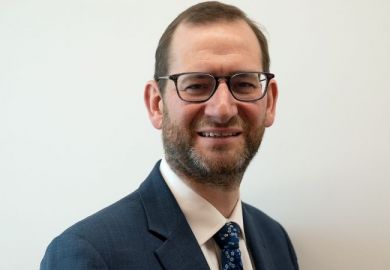
UCU branch chair Geoff Goss said he had seen staff members in “tears” and in “desperate situations” because of the restructure. “I’ve never known morale to be so bad, and I’ve been here 30 years or so.”
He said he believed the restructure at LSBU is “more severe” than elsewhere, and is “existential” for the university.
Sheffield Hallam University, which had announced similar plans to hire research and teaching staff on different contracts, recently announced that it was dropping its proposals following news that TPS contribution rates are falling 11 percentage points from next April.
Goss questioned why the restructure at LSBU was still going ahead when TPS pension contribution rates are going to drop. He noted that employer contribution rates are falling to under 18 per cent, “which is actually what they were in 2019, and there was no problem then”.
The university’s provost, Tara Dean, said in a statement that “despite the regrettable industrial action, the programme is progressing well”.
She said staff have already been selected for the new roles, and will be in post by October. The reorganisation is “far from novel” in the sector, she added.
“Academic transformation will make the financial savings LSBU needs to survive and prosper in the future. It also protects academic jobs and – crucially – enables us to increase the student teaching and contact time that is critical for a successful teaching-intensive university.”
Dean said that although the reduction in TPS costs was welcome it “highlights its volatility” and the savings on their own “will not be sufficient to address the financial challenges facing LSBU”.
Register to continue
Why register?
- Registration is free and only takes a moment
- Once registered, you can read 3 articles a month
- Sign up for our newsletter
Subscribe
Or subscribe for unlimited access to:
- Unlimited access to news, views, insights & reviews
- Digital editions
- Digital access to THE’s university and college rankings analysis
Already registered or a current subscriber?