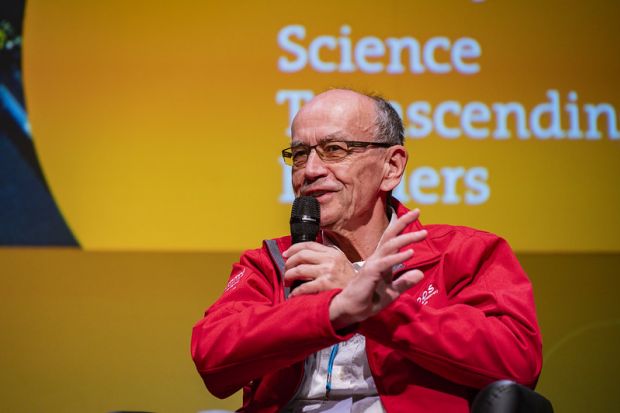
Tough new standards on what constitutes a peer-reviewed journal should be enforced by governmental agencies, according to a Nobel prizewinning biochemist who claims that a “broken journal system” is destroying trust in science.
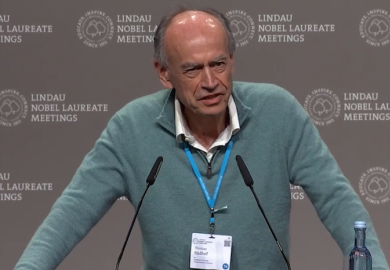
In an outspoken attack on the “incredibly profitable” but “completely unregulated” scientific publishing industry, Thomas Südhof, a professor of neuroscience at Stanford University, said he wanted to see US or European Union agencies establish minimum standards for journals that wish to describe themselves as “peer reviewed”.
Such guidelines should include journals having to publish reviewer comments alongside articles and to publicly list all the peer reviewers used every year “so the public can see the people they use are experts”, said Südhof, a German-born scientist who shared the Nobel Prize in Physiology or Medicine in 2013 with Randy Schekman and James Rothman for discoveries on how brain cells transmit information.
“You cannot sell a drug without facing regulation, but publishers can sell journals as ‘peer reviewed’ without any accountability or regulation,” Südhof told Times Higher Education at the July 2026 Lindau Nobel Laureate Meeting.
“I see this the same way as drugs, which are regulated by the FDA [Food and Drug Administration] in America. We need an FDA for journals; so we need the European Union or the US government to provide regulatory framework for scientific publishing,” argued Südhof, who has been based at US universities since the mid-1980s.
Describing publishing as the “largest non-regulated industry in the world”, Südhof told THE that he had no confidence in the publishing industry’s efforts to uphold standards itself, primarily through the Committee on Publication Ethics (Cope), where complaints about journals can be raised.
“That is a very self-serving organisation which is mainly there to protect publishers,” said Südhof, who also explained that he was also “not a fan” of volunteer research integrity sleuths who used the PubPeer website to advance concerns about published papers.
During a panel at Lindau, Südhof criticised sleuths for fuelling “anti-science” sentiment by using anonymous comments on PubPeer to “prosecute scientists for minor mistakes to an extent that has destroyed careers and destroyed valuable data to an enormous degree”. Such attacks, he argued, had echoes of the persecution of Galileo and other scientists accused of heresy 400 years ago.
Südhof has previously criticised research integrity sleuths whose work led to the retraction of two of his articles, claiming that the errors spotted in work by his lab were relatively trivial and made no difference to the evidence presented.
Those PubPeer criticisms of scientists were, however, compounded by the current “broken journal system”, in which “any journal can claim to be peer reviewed” even though most people would not know the difference between a high-quality journal or a low-quality one, explained Südhof.
“The public doesn’t know any more what to trust,” he said, arguing that the “public sees all sorts of things that are published without any accountability”.
“It is impossible, if you are not a scientist, to tell what is going on because, in some journals, you cannot believe a word of what is being published. But you are supposed to trust everything you read in other journals,” said Südhof.
“If you [accept] what is published in so-called peer reviewed journals, you can find anything you want – you can basically pick and choose what you want. As a result, you do not know what is right or wrong,” he said.
Regulatory oversight would help to uphold “standards we can all agree on”, said Südhof.
“Anybody who claims to do peer review should have evidence of peer review so that journals can be held to account,” he said, claiming that journal editors are often torn between their responsibilities to their employers and to science.
“Editors are often well meaning, but they are stuck between a rock and a hard place. They are serving companies whose primary goal is to make money, but they are somehow also trying to do good but they are being attacked on social media,” said Südhof.
“We need some framework to enable transparent processes – there must be due process for everyone involved so the public actually knows what is peer reviewed and what isn’t,” he said.
Register to continue
Why register?
- Registration is free and only takes a moment
- Once registered, you can read 3 articles a month
- Sign up for our newsletter
Subscribe
Or subscribe for unlimited access to:
- Unlimited access to news, views, insights & reviews
- Digital editions
- Digital access to THE’s university and college rankings analysis
Already registered or a current subscriber?