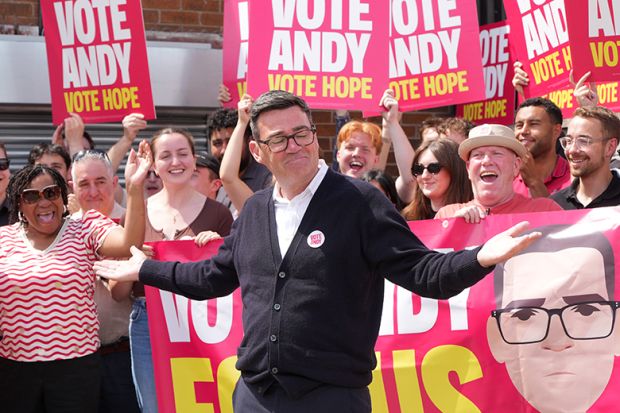
Andy Burnham’s interest in driving devolution and rethinking the way the government works could give universities the opportunity to help reshape the tertiary system if he becomes prime minister, according to two Manchester vice-chancellors.
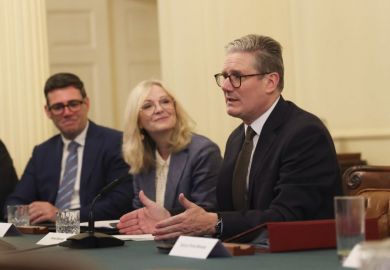
Burnham, former mayor of Greater Manchester, looks likely to become the next UK prime minister, following Keir Starmer’s resignation.
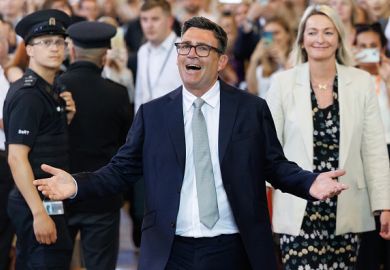
While Burnham has been vocal about the need to build a post-16 education system that isn’t dominated by universities – even referencing this in his victory speech after winning the Makerfield by-election – Manchester-based higher education leaders say they don’t believe the University of Cambridge graduate is anti-university.
Malcolm Press, vice-chancellor of Manchester Metropolitan University, said Burnham was “very engaged” with the university sector during his time as mayor. As well as consulting with university leaders, he would regularly meet with students’ unions and other student groups.
Burnham also has a “good grasp” on the challenges universities are facing. “He won’t always agree, but he’ll listen,” Press said.
Burnham looks set to appoint former University of the Arts London vice-chancellor James Purnell as his chief of staff, raising hopes that his team may be sympathetic to the struggling university sector.
An architect of Tony Blair’s 50 per cent higher education participation target when he was last in government, Purnell has been sceptical of the view that too many people now go to university, using his time at UAL to push for more enrolments, particularly via online education.
Duncan Ivison, vice-chancellor of the University of Manchester, said he believed Burnham will be keen to “reimagine the British state” – an objective that could bring both opportunities and challenges for universities.
“I think he’s going to really lean into the devolution agenda and he’s going to want to see universities working closely with local combined authorities, the FE system [and] the private sector to create opportunities for people in those communities,” he said.
Ivison said Burnham had challenged him to think about the 60 per cent of young people in Manchester who don’t go to university and how they are supported.
“He will challenge us to do better,” Ivison continued. “I think the opportunity is for us to really be part of that rethinking of how the British state works” as well as to work with the government to “reimagine…the tertiary system in the UK”.
While Burnham is yet to set out his policy agenda if he becomes prime minister, debates around immigration are likely to be a defining feature of his government.
With Keir Starmer’s administration having reduced the length of the graduate visa, tightened immigration compliance rules for higher education providers and announced the introduction of an international student levy, the university sector will be watching closely for any further changes under Burnham.
“My sense is that Andy recognises the value that international students bring,” Press said. “The challenge is how do you ensure that you have safe and secure borders at the same time as you can be outward facing and internationally engaged?
“I would like to think he’s going to focus on illegal immigration and ensure that legal migration delivers benefits to the country,” he said.
On the international student levy, due to come into force in 2028, Ivison said there is an “ongoing conversation” between universities and government about whether there are “ways of achieving some of the goals the government has” – such as increasing maintenance support for more students – without the “challenge that the levy will create”.
Among the sector more widely, there is little optimism that universities will begin receiving more money from the public purse under a Burnham government.
“To the extent that there is any spare money available, it’s all going to go into defence,” said Jonathan Simons, head of education at consultancy Public First.
However, there are warnings that the demise of universities, particularly in more disadvantaged areas, could undermine Burnham’s place-based ethos.
Diana Beech, director of the Finsbury Institute at City St George’s, University of London, said Burnham had “built his political career around addressing geographic inequalities in investment and opportunity”.
“He won’t want to create cold spots; he won’t want to see universities struggling,” said Press. “If he wants to convert Manchesterism into something where every part of the country can have an ‘ism’ after it, then he’s going to need universities to do that and universities to work in partnership with other bits of the education ecosystem.”
If he becomes prime minister, Burnham will also have to face ongoing debates about the fairness of the student loan system, particularly Plan 2 loans, which have sparked a national conversation since the Starmer government’s last budget.
Purnell has previously advocated for a graduate tax or stepped repayment model to replace the current system.
Simons said given the cost of reforming student loans, for anything to change “the politics would need to be increasingly clear that the way in which Labour gets re-elected is back to its base and back to its young voters”.
“If you’re looking for something to do, a Plan 2 change is probably close to the top of that list because it’s very visible, so I would say it is possible, but…it’s still difficult because it’s still expensive.”
Register to continue
Why register?
- Registration is free and only takes a moment
- Once registered, you can read 3 articles a month
- Sign up for our newsletter
Subscribe
Or subscribe for unlimited access to:
- Unlimited access to news, views, insights & reviews
- Digital editions
- Digital access to THE’s university and college rankings analysis
Already registered or a current subscriber?