Turkey’s president Recep Tayyip Erdoğan has reversed a controversial decision to close a private university in Istanbul just three days after the announcement sparked protests by hundreds of students and staff.
In a presidential decree published in the Official Gazette on 25 May, authorities announced that they would revoke their initial decision to remove Istanbul Bilgi University’s licence.
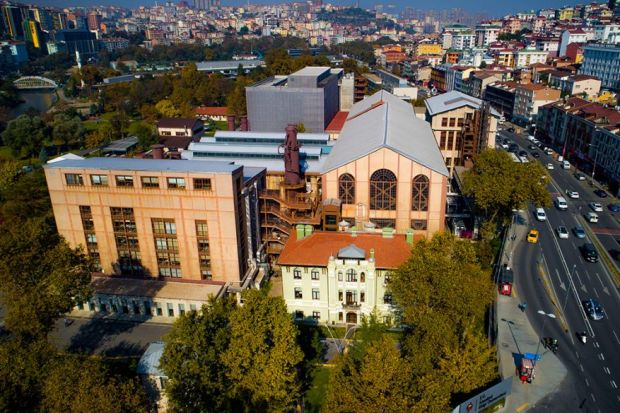
Bilgi, founded in 1996, is a private university with liberal values. It has about 20,000 students from Turkey and around the world.
The decision to close the university came eight months after it was seized by the state following a criminal investigation into its parent company. Can Holding, a Turkish conglomerate that acquired the institution in 2019 for $90 million (£67 million), was accused of money laundering, tax evasion and involvement in organised crime.
The university, along with companies owned by the conglomerate, was placed under the management of the Savings Deposit Insurance Fund of Turkey.
The edict ordering its closure cited a law allowing the closure of the school if “the expected level of education and training...is insufficient”.
The move to permanently shut down the institution was met with a swift backlash from the academic community. Hundreds of students and staff attended protests and staged sit-ins, demanding it remain open.
Riot police and water cannon vehicles were deployed outside the university. Students accused authorities of attempting to silence the academic community.
The university acknowledged the government’s move to reverse its decision in a notice addressed to students and staff on its website.
“This decision has been taken with a view to safeguarding our students’ right to education, preventing any hardship for our academic and administrative staff, meeting the expectations of our students and their families, and upholding the broader public interest,” it says.
“In line with this decision, the educational activities of İstanbul Bilgi University will continue within the framework of the current academic calendar without interruption.”
Yaman Akdeniz, professor of law at Bilgi, said in a post on X that he hoped the move was permanent. “Let’s see if we can ever learn the background of these opaque decision-making processes that affect thousands of students and staff,” he said.
The head of Turkey’s Council of Higher Education, Erol Özvar, said on X that the president had “carefully reassessed” the initial move to ensure students’ education was not disrupted.
“The decision has been updated in line with the strong commitment to preventing any hardship for our students, families, and university staff,” he said, adding that the initial move to revoke Bilgi’s licence was a “mandatory legal procedure”.
“However, based on the reports submitted afterward and evaluations of the current situation, our esteemed President, as always, has meticulously taken into account the expectations of our students, families, and university staff,” he said.
Register to continue
Why register?
- Registration is free and only takes a moment
- Once registered, you can read 3 articles a month
- Sign up for our newsletter
Subscribe
Or subscribe for unlimited access to:
- Unlimited access to news, views, insights & reviews
- Digital editions
- Digital access to THE’s university and college rankings analysis
Already registered or a current subscriber?