“Drastic” cuts to UK humanities departments risk the loss of a new generation of academic talent similar to the brain drain seen in the 1980s, according to the new winner of the Holberg Prize.
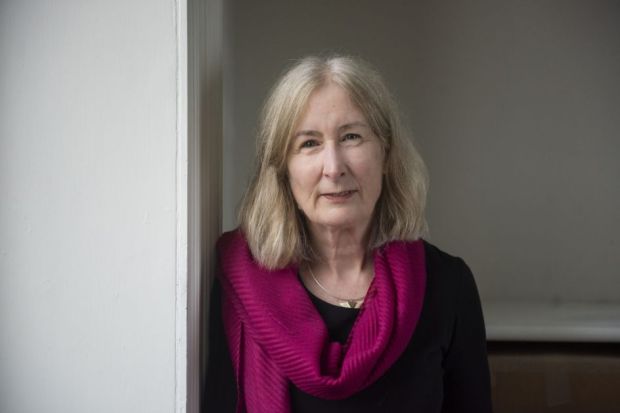
The warning from Lyndal Roper, Regius chair of history at the University of Oxford until retiring in September, comes as the Australian academic was announced as the winner of the 2026 prize, which is awarded annually by Norway’s government to an outstanding scholar in the humanities, social sciences, law or theology.
With prize money of 6 million Norwegian krone (£466,000 or $618,000), the award is often described as the “Nobel of the humanities”.
The award follows acclaim for Roper’s recent book Summer of Fire and Blood: the German Peasants’ War, focused on the greatest popular uprising in western Europe before the French Revolution that led to the death of more than 100,000 people in 1525. Last year the book won the $75,000 Cundill History Prize awarded by McGill University in Canada.
Speaking to Times Higher Education, the medievalist said she was “overwhelmed” by the honour, adding: “It’s hard to take in.”
The first UK-based Holberg Prize winner since art historian Griselda Pollock in 2020, Roper moved to Germany in 1978 after graduating from the University of Melbourne before completing her PhD at King’s College London. After temporary posts at Oxford and King’s, she moved to Royal Holloway, University of London in 1987 where she co-founded the Bedford Centre for Women and Gender. She moved to Oxford in 2002 and was appointed Regius professor in 2011.
Recalling her move from Australia, Roper said: “I got on the plane on 26 January, Australia Day – in the middle of summer – and arrived in Stuttgart in the middle of snow. It was a complete shock, and if I realised that I wasn’t ever going back, I probably would never have boarded the plane,” she said.
As a historian, Roper explained she was drawn to Germany because research must be “rooted in deep knowledge of particular places, and Germany has always been that place for me”.
“When I started out there were two Germanys and no one ever thought that they would reunite – it has been so absolutely amazing for me, because over the course of time that I’ve been a scholar, it has changed so profoundly,” Roper continued, noting, however, that “a generation on from reunification, there are still two very different cultures” in east and west Germany.
Roper said she was also drawn to the UK’s “fantastic universities” that “weren’t bound by hierarchies in the way that some other countries’ universities sometimes are”.
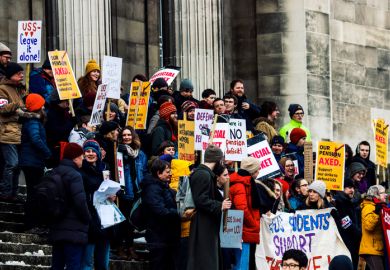
“It was a wonderful environment to grow as a scholar, so to see this being harmed by cuts – with no clear sense of how this process might end, I’m very worried about this,” said Roper on the current financial crisis that has led to more than 10,000 academic job cuts in the past year alone, often affecting arts and humanities departments.
“I don’t get a sense of a clear national policy here, and I’m very worried about what is being destroyed,” continued Roper, adding: “We’re all extremely worried, because what we’re seeing is the ad hoc closure and drastic cutting of many, many departments across the country.
“Many of my former students are finding that they no longer have secure jobs and the prospects for people looking for jobs at the moment are very, very grim indeed,” she said.
Roper likened the current crisis to the “Thatcher years after those cuts had begun and when I was looking for a job”.
“Many of my generation only came back into universities much later, or else never did,” she said. “It’s a very gloomy time, and what makes me so upset is that Britain has always been an intellectual leader” for the world.
Humanities will be “really important” to help society deal with the rise of artificial intelligence, which presents both dangers and possibilities for academic research, said Roper.
“History is fundamentally about the relationship between evidence and argument – what we need are the skills to assess evidence and to be able to test and look at and examine whether it supports the argument or not. And those simple skills are the building blocks out of which you then can build a whole host of intellectual skills and creativity. So if we’re going to be able to use AI creatively, we need history and the skills it builds to maximise its potential,” she said.
“AI opens up so many intellectual possibilities but unfortunately we’re living in a time in which the humanities are not being valued – or not being valued as much as they were.”
The unexpectedly effusive reaction to Roper’s latest book and the flood of invitations to speak about it in Germany showed how scholarship could still reach a mass audience, she said.
“Over the past year, I’ve done 111 events so I’ve now stopped counting,” she said.
“I’ve been very keen to talk to as many audiences as I can and people who grew up in East Germany tell me it’s very much part of their own understanding of their history. It is the fundamental beginning, if you like, of the East German state which can see itself as having a revolutionary lineage. It’s a tradition of another Germany – which does not have responsibility for the Third Reich and the Holocaust. And of course, that isn’t true, so it’s a historical myth and an alibi.
“But sadly it represents this feeling that they are not listened to, and having lived through two dictatorships, they’re feeling that they don’t have a voice.
“Meanwhile the West sees the former East as needing to learn democracy and blames them for the rise of the right.
“Something about the German Peasants’ War touched a nerve, and it is about the difference between the former East and the former West, which is still a very deep division and is pretty fundamental in German politics at the moment,” she said.
Register to continue
Why register?
- Registration is free and only takes a moment
- Once registered, you can read 3 articles a month
- Sign up for our newsletter
Subscribe
Or subscribe for unlimited access to:
- Unlimited access to news, views, insights & reviews
- Digital editions
- Digital access to THE’s university and college rankings analysis
Already registered or a current subscriber?