Growing calls to remove student loan eligibility from those without A levels risk dragging universities into an unhelpful “binary debate” that narrowly frames higher education in terms of three-year degrees, experts have warned.
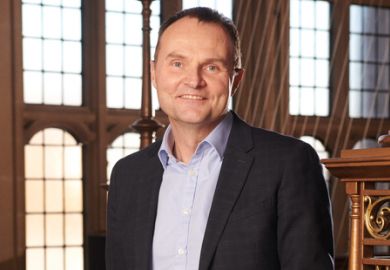
The heated discussion follows polarising comments by Adam Tickell, vice-chancellor of the University of Birmingham, who told a recent British Academy event that any review of higher education finance should consider whether those without a “single A level or equivalent” should gain access to student loans.
His comments drew condemnation from academics at his own university and further afield, yet he was also praised for challenging a booming area of university expansion, with more than 50,000 students now entering higher education each year without a single level 3 qualification.
Representing almost 6 per cent of all starters, that is three times higher than the 14,770 students who enrolled a decade ago without an A level or equivalent, Higher Education Statistics Agency (Hesa) figures show.
In addition, nearly 25,000 students began a university course in 2024-25 without a GCSE or similar level 2 qualification.
Reviewing minimum qualifications for loan access was needed because the country is “investing so much money in people who…we are not really capable of graduating”, said Tickell on what he called “difficult questions” that the sector must answer.
Criticism of extending loans to “no-tariff” starters from university leaders, politicians and the media reflected how attitudes towards higher education expansion had transformed over the past decade, said Jess Lister, associate director of education practice at consultancy firm Public First, whose polls indicate growing scepticism among parents about their children starting a degree.
“Most of the political arguments still used for higher education expansion and widening university participation belong to a different age when it was very easy to make the case for going to university,” explained Lister, who notes the Office for Students was founded in 2018 “with access policies to drive expansion of student numbers”.
“Going to university was, in this context, foregrounded as a good thing and the government gave the sector a blank cheque by lifting student number controls,” she explained.
This dynamic has shifted as “people are now questioning the first principles that university is automatically the right choice in light of lower returns for graduates”, said Lister. Meanwhile, the government is scrutinising this assumption as a “decade of expansion has not led to a big increase in productivity”, she added.
Universities responding persuasively to these criticisms was vital, said Lister, because the vocational alternative seemingly offered by apprenticeships did not represent a viable option for most young people.
“Dropout rates for apprenticeships are very high and those high-skill, strong-outcome training opportunities are often just not available,” said Lister on the reality of non-university skills training. “It feels like we are letting ourselves believe things that are not true [about apprenticeship opportunities] and, if we drive resources elsewhere, then we risk losing a decade of progress on widening participation,” she added.
Restricting student loan access “feels like the wrong debate to have when we’re talking about more lifelong learning, vocational training and upskilling adults who lose their jobs to AI”.
“Reducing it to a binary debate about whether someone with two Es at A level should get a loan feels like a third- or fourth-order question on what we should be discussing,” she added.
Andy Westwood, professor of public policy, business and government at the University of Manchester, said it was important that the focus on entrants without qualifications – mostly confined to private providers operating under franchise agreements – did not define the wider higher education system.
“There is some evidence that these courses are not high quality and labour market outcomes are not good either,” he said.
“But we mustn’t throw the baby out with the bathwater – if you look for high-quality apprenticeships for 18- and 19-year-olds, they are often not there, particularly in some parts of the country. Are these training courses going to do the heavy lifting on skills that universities have done for so long?” he asked.
“Graduate outcomes aren’t as strong as they might be so public opinion is being shaped by this and politicians are asking whether untrammelled growth in student numbers is going to be transformative for the economy,” reflected Westwood.
“But there is still strong support for university expansion from Keir Starmer who has set out a participation rate of two-thirds, although this includes different types of courses beyond degrees,” he said.
Register to continue
Why register?
- Registration is free and only takes a moment
- Once registered, you can read 3 articles a month
- Sign up for our newsletter
Subscribe
Or subscribe for unlimited access to:
- Unlimited access to news, views, insights & reviews
- Digital editions
- Digital access to THE’s university and college rankings analysis
Already registered or a current subscriber?