A government-dominated Senate committee has brushed aside objections to the proposed operating model for Australia’s tertiary education steward, recommending that legislation to establish the body be passed unchanged.
However, some 30 pages of dissenting reports from opposition and crossbench senators highlight the challenges facing the government in ushering the bill through parliament.
The report from the Education and Employment Committee, published late on 27 February, shrugs off concerns that the Australian Tertiary Education Commission (Atec) will lack independence, expertise and advisory clout. Safeguards in the bill allow for “operational independence”, “public accountability” and “significant procedural fairness”, the majority report insists.
“These arrangements provide an appropriate framework for the Atec to build institutional knowledge and access specialist expertise as needed,” it says. “If required, the bill includes mechanisms for the Atec to expand the number of commissioners in the future.
“There is scope for the model to evolve through implementation and review, but further delay in creating a steward would leave the sector without the guidance it urgently requires.”
Opposition senators recommended the bill’s rejection, saying a plethora of problems – including regulatory overreach, “structural and drafting deficiencies” and the A$54 million (£29 million) cost of getting the body up and running – had fuelled “the unusual breadth and consistency of concern” expressed by stakeholders, including many who supported Atec in principle.
“These concerns are not peripheral matters capable of resolution through minor amendment,” warned Liberal senator Maria Kovacic.
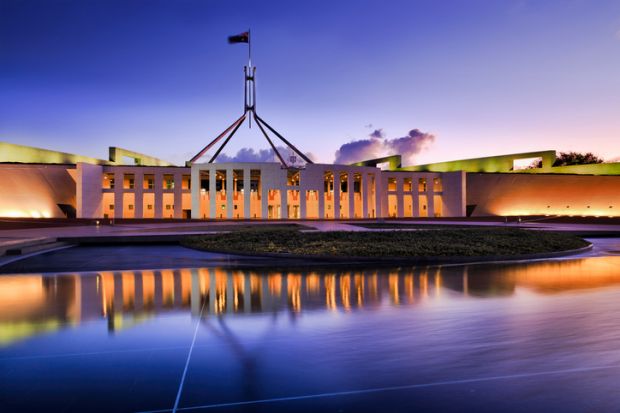
While the bill has passed the House of Representatives, its fate rests in the Senate. The government holds 29 of the 76 upper house seats and needs at least 10 more votes to get the legislation over the line.
The Australian Greens, who control 10 of the 20 crossbench seats, have recommended eight amendments to the bill. They include giving Atec an “explicit focus on research” and guaranteeing its independence by allowing it to research, publish and advise on topics of its choosing – including student fees and racism.
Other demands include clarifying “potential overlap” with the roles of the higher education regulator, Teqsa, and ensuring that Atec has “adequate expertise and capability” to perform its functions – including ongoing advice from the Higher Education Standards Panel.
Independent senator David Pocock recommended 11 changes, including safeguards around appointments of commissioners and negotiations of mission-based compacts. Pocock also called for the number of commissioners to be expanded to at least five, and – like the Greens – he demanded an urgent overhaul of the Job-ready Graduates scheme.
Independent MPs advocated similar changes when the bill was debated in the House of Representatives. Education minister Jason Clare rejected them at the time but promised to consider them alongside the Senate committee report.
Insiders expect the bill to pass parliament with some changes. Senate sittings resume on 2 March.
Register to continue
Why register?
- Registration is free and only takes a moment
- Once registered, you can read 3 articles a month
- Sign up for our newsletter
Subscribe
Or subscribe for unlimited access to:
- Unlimited access to news, views, insights & reviews
- Digital editions
- Digital access to THE’s university and college rankings analysis
Already registered or a current subscriber?