Independent film has given the UK the opportunity to daringly tell the stories that matter most to us – from This Is England and I, Daniel Blake to My Beautiful Laundrette and Rocks. But British film-makers are finding it harder than ever to get new work made. Domestic funding is flat as an influx of American and international productions drive up UK production costs – and major studios invest in remakes and sequels, rather than new ideas.
The UK risks losing one of the few spaces where the stories of working-class and minority communities are told at scale. British film would be dominated by major global IP and lose the vibrant, innovative, local storytelling that pushes UK culture forward.
Indie film is also the primary route through which new talent emerges, often going on to drive major global successes in British film and TV. Visionary directors like Danny Boyle broke through with groundbreaking independent films that become globally iconic, such as Trainspotting.
In this challenging context, however, universities are stepping in.
In 2019, Falmouth University professor of film practice Mark Jenkin won a Bafta award for his film Bait, about a struggling fisherman in Cornwall. The university was involved in the production, such as by providing student trainees and post-production support.
Meanwhile, at the University of Birmingham, we just raised £150,000 from commercial film investors to produce our own horror feature film.
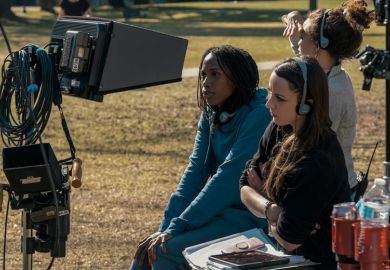
Last year, Channel 4 reported that just one in 12 creatives in TV and film is from a working-class background, and most are based in London. That is unsurprising: the cost of accessing industry-quality film equipment and studios makes careers in film and TV even more exclusionary to those from low-income households than other creative disciplines. Universities are one of the only routes available for those without industry connections. Involving students in the making of real films gives them hands-on commercial experience to build careers from.
Universities can give the UK film industry the sustainability and freedom to take risks on new talent. In return, higher education institutions can become producers on commercially viable projects. Jenkins’ 2022 follow-up to Bait, the psychological horror film Enys Men, set on a Cornish island, was produced at Falmouth University and took more than £500,000 at the box office – while creating life-changing opportunities for students and staff. It also strengthened the UK’s soft power by bringing two of its leading industries together.
My own journey in hybrid film-making started when I worked with Justin Hardy at the University of Greenwich. Justin’s dad, Robin Hardy, directed The Wicker Man, the folk horror masterpiece. Justin had some development money from the BBC to make a documentary, but when the corporation didn’t commit to a full budget, he asked me: “Could we produce it at one of our institutions?” By this time, I was at Birmingham, and my department stepped in to make it happen.
The Wicker Man is praised as one of the greatest British films of all time, but Justin had a different view: “The film messed up my family.” Justin was nine years old when it premiered in 1973. By then, his father had spent so much of his mother Caroline’s money making the film that she was forced to sell their family home. And when the film initially flopped, the director abandoned her and Justin for a new life and wife in the US.
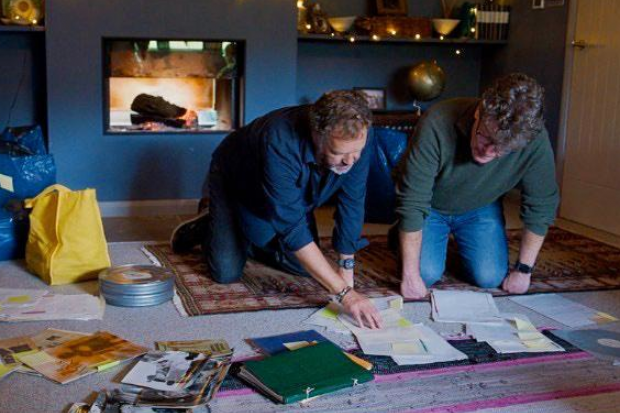
Five decades on, in 2021, Justin was contacted by the owner of his mother’s former home, who had found six sacks of documents from the making of The Wicker Man hidden in the attic. Legal letters, storyboards, contracts and memos revealed Caroline as the secret producer behind British horror’s greatest film. But she had died in 1984, suffering from alcoholism, aged just 51 – never knowing her film had become a global success.
We immediately knew we had to tell this story in a way that went beyond academic research and gave Caroline the mainstream credit she deserved. So we made a documentary and book, Children of The Wicker Man, following Justin and his half-brother Dominic as they uncovered the truth behind their father’s film. The documentary was edited by University of Birmingham PhD student Ella Wright – this gave Ella her first industry credit as an editor. And after a successful festival run, the film is expected to go on general release this year.
Inspired by this reaction and the success of films produced by Falmouth, our university team turned to commercial film investors and raised £150,000 to make an original folk horror feature film with a crew made up almost entirely of students, staff and recent alumni from Birmingham, Greenwich and UCL. The money was topped up with some of Birmingham’s quality-related (QR) research funding, and the film is expected to premiere later this year.
Produced by me and Greenwich’s Alison Palmer, Wrath of the Gods stars an international TV actor best known for his role in Game of Thrones. And it was directed by Justin Hardy, who won four Royal Television Society Awards and was nominated for Baftas and Emmys for his independent films in the 2000s. He also sees universities as the way forward for independent film, commenting: “Unis are the new indies!”
Even at this early stage, departments like ours have proved that university-made films can command mainstream attention – and, crucially, mainstream investment.
Above everything else, higher education should be a leveller. When we work and co-create with industry, we unlock opportunity for students from all backgrounds and regions. With this approach, universities can be engines of social mobility in an industry that otherwise risks screening out all but the privileged.
Chris Nunn is assistant professor of film at University of Birmingham. From 2010 to 2014 he was festival director of Screentest: The UK’s National Student Film Festival, of which he remains a trustee. Children of The Wicker Man by Justin and Dominic Hardy, edited by Chris Nunn, is published by History Press.
Register to continue
Why register?
- Registration is free and only takes a moment
- Once registered, you can read 3 articles a month
- Sign up for our newsletter
Subscribe
Or subscribe for unlimited access to:
- Unlimited access to news, views, insights & reviews
- Digital editions
- Digital access to THE’s university and college rankings analysis
Already registered or a current subscriber?