Big scientific discoveries are often portrayed on film in typical Hollywood-style – scientists running hurriedly into the White House, laboratories becoming overrun with infection in seconds, or by archaeologists fighting off Nazis.
But in a new independent film released on 5 December, a pair of British academics deal with a potentially earth-shattering discovery on a much smaller scale.
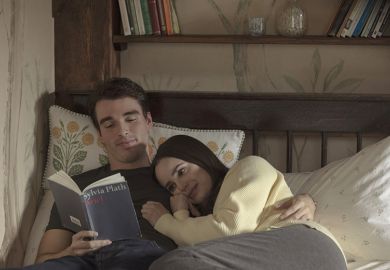
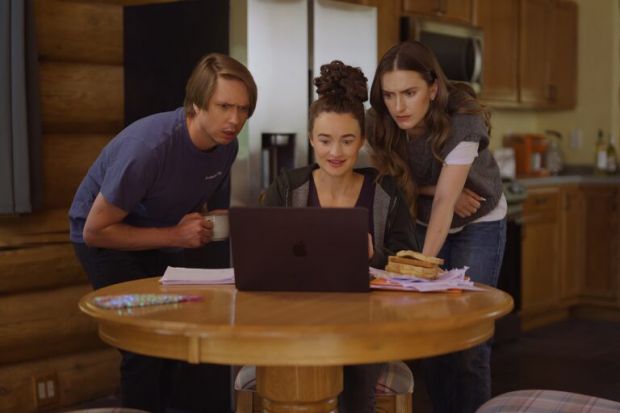
In Universal, genetic research scientist Leo and his anthropologist partner Naomi are enjoying a romantic weekend in a remote log cabin in the US away from the pressures of academia when they are interrupted by a hobbyist who claims to have uncovered a hidden code in junk DNA.
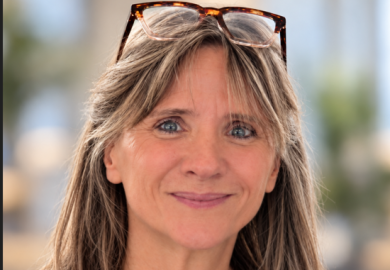
Director Stephen Portland, who also created the 2018 film Something, said he was drawn to the idea by his love of science and from his study of psychology and cognitive behaviour at university.
“I’m fascinated by the thought that there are still things in science that you could wake up in the morning and read about in the press that would completely change society or the way we view society,” he told Times Higher Education.
“I wanted to think of something so seismic that the world would never be the same again once you’ve learned this.”
While underpinned by some reality, the science shown is largely fictional. But Portland said the film is more accurate about the scientific process itself – with the characters continually trying to disprove each other’s theories and “putting the brakes on”.
“I tried to keep it grounded in that respect, which is that you don’t just pile on and assume that you’ve got the answer. It’s an iterative process. Behind everything there’s always a discussion and there are multiple points of view that will be checking and pulling in different directions.”
The film also deals with some well-known modern-day issues in academia, such as tenure, plagiarism, groupthink and concerns around corporate research partnerships.
“The quest for knowledge has become secondary to the quest for profits, and I think all the characters allude to that and I wanted to make these unsung scientists be the heroes of the story,” added Portland.
“Ultimately, when you think about human progress, it’s the thinkers behind the scenes that are pushing us forward, and they take quite a silent role in it. They’re not the ones that you see on TV…they’re just diligently getting on with it.”
The three roles are played by Joe Thomas (The Inbetweeners, Fresh Meat), Kelley Mack (The Walking Dead, Broadcast Signal Intrusion) and Rosa Robson (Buffering, Black Mountain Poets). Mack, who also served as executive producer, died shortly after shooting the film after suffering from a rare form of cancer.
The film takes place entirely in the cabin, which Portland, who also wrote the feature-length movie, said was a financial necessity for such a small-budget production.
“But also, part of the appeal to me of the story is that it’s the genesis of something that’s potentially large that is always small when you boil it down.”
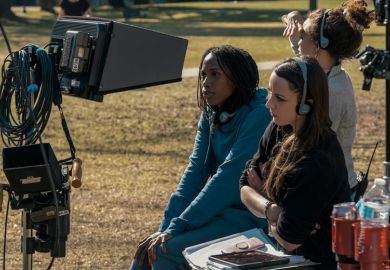
Alongside the cast of three, the film was made by a team of just six crew, with principal photography taking place across just eight days.
In a statement, Thomas said: “The film is genuinely, and thrillingly, about scientific discovery, and about three characters connected by their interest in ideas, who come to enjoy each other’s company in a way that is unashamedly intellectual, losing themselves in the pursuit of insight and answers.
“I believe it’s a brave and unusual thing to base a film around that – but as an independent film, it can be unusual, and it can break rules.”
Like the lead characters, Portland is British but based in the US. He said he wanted Universal to be a response to some of the “undercurrent of anti-intellectualism” of the past decade or so, and he did not want his film to be “second-screened” as is increasingly the norm.
“I hope that people in the scientific community would enjoy it and see it as it’s intended, which is a celebration of this way of thinking and of people who are intellectually curious and unashamed of that.
“I do hope they would appreciate it, because it’s kind of a love letter to people using their intellect to benefit the world.”
patrick.jack@timeshighereducation.com
Universal is available to rent or buy now.
Register to continue
Why register?
- Registration is free and only takes a moment
- Once registered, you can read 3 articles a month
- Sign up for our newsletter
Subscribe
Or subscribe for unlimited access to:
- Unlimited access to news, views, insights & reviews
- Digital editions
- Digital access to THE’s university and college rankings analysis
Already registered or a current subscriber?