A Belgian scholar has won the physics Nobel prize for the discovery of high-energy neutrinos made at a giant ice cube site at the South Pole.
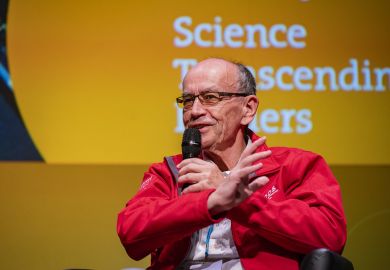
The Royal Swedish Academy of Sciences honoured Francis Halzen, a professor at the University of Wisconsin, for his contributions to the IceCube Neutrino Observatory, the cubic-kilometre neutrino detector.
Halzen was the first to realise that ice at the South Pole could be used to track particles – such as neutrinos – and he is credited with being the driving force behind the observatory. Researchers use IceCube, a facility completed in 2011, to “capture neutrinos from extremely energy-rich processes in the distant universe”, the academy said.
Mark Pearce, chair of the Nobel Committee for Physics, said: “Francis Halzen has led an international team of researchers and engineers who have provided us with a fantastic instrument. His tenacity and scientific vision has paved the way for a new kind of astronomy.”
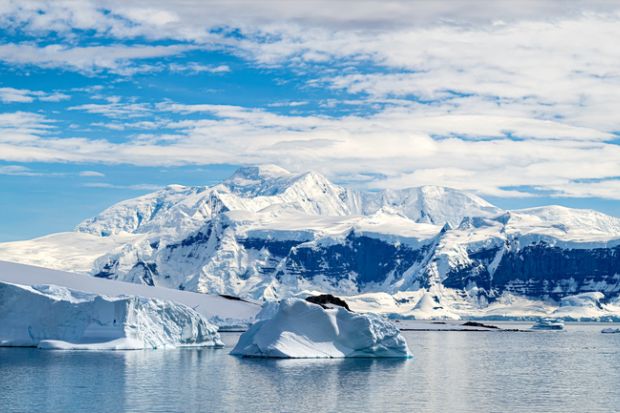
When Halzen first presented his vision for capturing neutrinos at the South Pole in 1988, he managed to secure preliminary testing just a few years later. The neutrino produces a flash of light when it collides with an atomic nucleus, which can be tracked by the seniors in the South Pole’s clear glacial ice.
“The neutrino interactions that are continuously collected by IceCube will provide researchers with novel knowledge about the violent settings in which high-energy neutrinos can be created – and could even reveal previously unknown cosmic phenomena,” the academy said, when announcing the Nobel.
As cosmic neutrinos with extremely high energies are “very rare”, a huge volume of ice is needed to observe an adequate number of collisions.
Before the announcement, Alexey Petrov, chair of physics and astronomy at the University of South Carolina, posted on X that he had asked several AI models including Claude and ChatGPT who would win the prize. Each model made three predictions, he recorded, and none of them were correct.
The first Nobel Prize in Physics was awarded in 1901, and the announcement marks the second of six Nobel awards to be handed out this week.
Register to continue
Why register?
- Registration is free and only takes a moment
- Once registered, you can read 3 articles a month
- Sign up for our newsletter
Subscribe
Or subscribe for unlimited access to:
- Unlimited access to news, views, insights & reviews
- Digital editions
- Digital access to THE’s university and college rankings analysis
Already registered or a current subscriber?