Scotland’s universities are facing a £200 million annual funding shortfall and a £1 billion repairs backlog, says a new study by an expert group convened as part of a review to tackle the sector’s “unsustainable” financial position.
With Scottish institutions announcing thousands of job cuts over the past 12 months amid growing university deficits, the future of the nation’s student funding arrangements have faced renewed political attention, including the ruling Scottish National Party’s continued opposition to tuition fees for domestic undergraduates.
A hard-hitting analysis published by Universities Scotland on 28 August has, however, laid bare for the first time the dire financial problems faced by higher education institutions.
According to the report compiled by the Future Framework Funding Gap Analysis Project Group, a project backed by Scotland’s devolved administration, universities and research funders, the cumulative shortfall for the nation’s universities was £200 million in 2023-24, up from £110 million in 2022-23.
That financial position is likely to have worsened in recent years because the surplus raised from teaching international students – approximately £445 million in 2023-24 – will have fallen as overseas admissions have contracted.
The shortfall in university research is also considerable and growing, the report explains. In 2023-24, Scotland’s universities generated research income of £1.5 billion but spent some £2.08 billion on research activity, with a resulting funding gap of £580 million with 72 per cent of costs recovered.
In addition, Scotland’s universities are facing a mounting backlog of repairs likely to cost £1.1 billion to fix, according to a 2023-24 estimate. This includes £77 million of RAAC-related remediations while efforts to decarbonise estates over the next decade are likely to run to billions of pounds. Three universities alone have identified £645 million of carbon reduction costs required in coming years, the report says.
These shortfalls could be even larger because “uncosted” academic work related to innovation, entrepreneurship, public services and community well-being is not included in the analysis, which used official Transparent Approach to Costing (TRAC) data collected by UK universities, the report adds.
“Overall it is clear that the status quo is unsustainable,” write Andrea Nolan, vice-chancellor of Edinburgh Napier University and Neil Rennick, director general for education and justice at the Scottish government, who co-chair the Future Framework for the Success and Sustainability of Scotland’s Universities Steering Group, in the report’s foreword.
Scotland’s funding model is “increasingly fragile” given the loss of income from international students that has historically cross-subsidised teaching and research, resulting in a “persistent structural funding challenge”, the report explains.
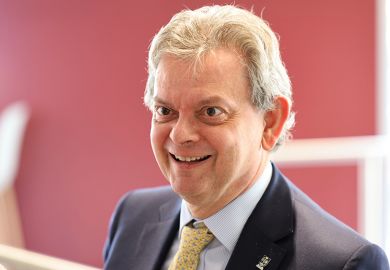
Anton Muscatelli, former principal of the University of Glasgow who now chairs the expert group examining funding issues in Scotland, said its report was vital because it was the “first systematic attempt for many years to quantify and narrate the difference between sustainable income and expenditure across Scottish universities”.
“The picture it paints is bleak. Collectively, Scotland’s universities face an acute and growing financial crisis,” he says in the report’s preface.
“Unless the sector can secure additional, reliable income streams – be that from public or private sources – it is not sustainable in its current shape and size," he adds.
Muscatelli, who is also president of the Royal Society of Edinburgh, told Times Higher Education that “persistent year-on-year funding gaps” meant that even a reset to 100 per cent cost recovery would not be enough to fix the sector’s problems.
“In the early 2010s cross-subsidies from non-publicly funded teaching were broadly sufficient to offset deficits on research and other activities but large funding gaps have emerged in recent years,” said Muscatelli.
“When maintenance backlogs aren’t addressed or IT systems aren’t updated over the course of several years, this has an impact at some point so returning to a previous funding arrangement may not be enough,” he said.
The landmark report, jointly sponsored by both the Scottish government and universities, was an important step in tackling the funding shortfall, with further stages of the process set to identify potential fixes, Muscatelli insisted.
“This isn’t just a group of universities, a research funder or a political party highlighting this challenge,” he said.
“It’s a broad coalition of institutions working together to consider these issues. That is something that other parts of the UK do not have.”
Register to continue
Why register?
- Registration is free and only takes a moment
- Once registered, you can read 3 articles a month
- Sign up for our newsletter
Subscribe
Or subscribe for unlimited access to:
- Unlimited access to news, views, insights & reviews
- Digital editions
- Digital access to THE’s university and college rankings analysis
Already registered or a current subscriber?