Students who enter university without any A levels are over four times more likely to drop out than those with three C grades, with one in four “no tariff” entrants failing to finish their studies, official figures show.
With the number of university freshers without a single A level more than doubling to 75,000 in 2024-25 – almost one in 10 UK students – attention has increasingly focused not just on institutional admission policies but also whether students without recognised qualifications can successfully complete their courses.
Students who drop out of university are still likely to accrue large amounts of debt.
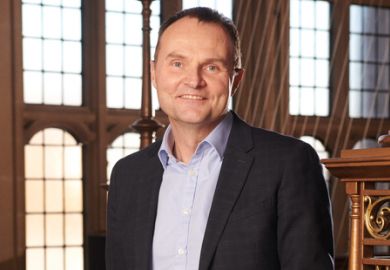
The debate follows polarising comments by Adam Tickell, vice-chancellor of the University of Birmingham, who argued any review of the student finance system should consider whether students “without a single A level or equivalent” should be entitled to access tuition fee loans.
Tickell, an economic geographer, drew criticism from some quarters for arguing the higher education system was “investing so much money in people who…we are not really capable of graduating”.
However, the latest data on student completion rates published by the Office for Students shows 25.2 per cent of those without a Level 3 qualification – equivalent to A levels – do not finish their studies. This is twice the 12.7 per cent average among all students and just over four times the 7.1 per cent dropout rate for those holding three Cs at A level.
For those with ABB grades, the dropout rate is just 3.4 per cent, according to the data for 2019-20 entrants.
More recent statistics for 2022-23 entrants show 21.1 per cent of students without a single Level 3 qualification – about 16,000 out of 76,500 starters – failed to progress to their second year of study.
That was almost three times the 7.9 per cent of starters with CCC at A level who did not progress, while the non-continuation rate for those with ABB at A level was about 5 per cent.
But the data suggests less marked differences for those who do complete their studies. Some 63.3 per cent of “no tariff” graduates in 2022-23 progressed into “managerial or professional employment, further study or other positive outcomes” – not far off the 71.8 per cent of graduates that year who entered university with three C grades at A level, or the 71.6 per cent sector average.
Graeme Atherton, vice-principal of Ruskin College Oxford and head of the Ruskin Institute for Social Equity, said higher dropout rates among students with no A levels should not be used to argue for removing loan access for this cohort.
“If the majority of students weren’t completing that would be a problem, but these results show most get a degree, which is a great achievement,” he said.
“The debate shouldn’t be about stopping these students from learning – it should be about supporting students to stop them dropping out,” continued Atherton, who noted vocational courses and apprenticeships that were often framed as preferable alternatives for these students commonly had dropout rates of 50 per cent or above.
Lee Elliot Major, professor of social mobility at the University of Exeter, agreed the debate should focus on improving help for students, including better preparation prior to admission, not restricting opportunities.
“It’s right that we don’t set students up to fail if they are not yet prepared for higher education, but nor should we confuse polished performance with underlying ability,” said Elliot Major, a former chief executive of the Sutton Trust.
“Universities have a dual responsibility: to ensure students are ready to succeed, and to do the harder work of nurturing talent that may not yet be fully formed,” he added.
That said, universities need to be aware of a “generational shift in how young people view higher education”, continued Elliot Major.
“With greater uncertainty around graduate jobs and the value of degrees, many are questioning whether university still guarantees a better life,” he said.
“We need a fundamental appraisal of what our university offer is – the specific skills, experiences and pathways that will equip people to thrive in a more uncertain world.”
Register to continue
Why register?
- Registration is free and only takes a moment
- Once registered, you can read 3 articles a month
- Sign up for our newsletter
Subscribe
Or subscribe for unlimited access to:
- Unlimited access to news, views, insights & reviews
- Digital editions
- Digital access to THE’s university and college rankings analysis
Already registered or a current subscriber?