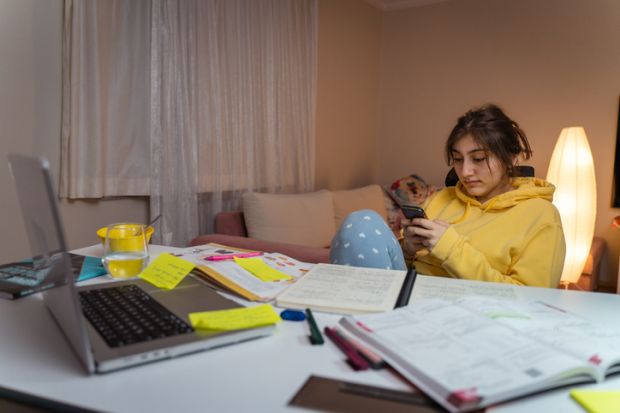
Procrastination is the biggest issue holding back students’ academic performance ahead of other problems like anxiety and depression, a major study has concluded.
In a paper published by the journal PLOS One, a University of Cambridge researcher compared procrastination with 35 other life and health issues facing students.
A survey of 65,950 students across 97 US colleges and universities asked participants whether they had been impacted by “life” challenges (issues like financial pressures, personal appearance, caring responsibilities) as well as health challenges (including stress, depression, anxiety and ADHD). They were then asked whether these impacted their academic performance, and whether it caused them distress.
Some 72.3 per cent of students said they had experienced problems with procrastination in the past year, while stress was cited by 73.8 per cent, ahead of issues like anxiety (65 per cent), sleep difficulties (48.3 per cent) and depression (36.4 per cent).
When asked what issue had most impacted their academic performance, procrastination came out on top, at 45.4 per cent. This was 1.5 times as often as anxiety (30.4 per cent), 2.3 times as often as depression (20 per cent), 2.8 times as often as finances (16.1 per cent) and 3.5 times as often as ADHD (12.9 per cent).
When the figures were broken down by the students impacted by the issue, ADHD was the issue that caused the most academic harm among those suffering from it (64.1 per cent), with procrastination in second place (62.7 per cent).
Three-quarters (74.8 per cent) of undergraduates struggled with procrastination, compared with two-thirds (66.2 per cent) of postgraduates.
The study adds that procrastination can cause a “feedback loop” whereby a student procrastinates on a task, which causes stress, which interferes with their sleep, which then causes them to procrastinate further.
Itamar Shatz, affiliated lecturer at Cambridge and author of the report, told Times Higher Education that the results were “crucial”, and that it was “pretty staggering” seeing how much students were being affected by the issue.
He said students are particularly vulnerable to procrastination as there can be “significant consequences” on their job prospects, “but they don't necessarily know how to deal with that yet”.
“It’s a huge issue. It’s here to stay, and it’s going to get worse. The solution is not just better time management, because problems with time management are a symptom of procrastination, they’re not the cause,” he said.
“This research is on students, but it is going to affect them afterwards as well. So, it’s a crucial problem to deal with in the context of their studies, but it’s also not going to magically disappear once they graduate and again I think the issues that are making it hard to deal with now, also apply to the future as well, so that’s what makes it so important to deal with now.”
He said that universities and academics can help address students’ procrastination challenges by encouraging them to “break down” tasks into manageable chunks, assuring them it is “OK to make mistakes”, and introducing smaller and more frequent deadlines for tasks, as “deadlines are a strong motivator for procrastinators”.
Being “overly critical” doesn’t help because it “makes [students] feel ashamed”, so the challenge for universities is balancing “accountability” and “compassion”, Shatz added.
“We need to help them learn how to overcome procrastination, both in the short term and long term. We want to do this in a compassionate way that acknowledges the challenges, but we also at the same time want to hold them accountable to give them structure and say, ‘this is the deadline and if you don’t make this deadline, then there are going to be consequences’ because otherwise, you’re making things worse for them, not better.”
Register to continue
Why register?
- Registration is free and only takes a moment
- Once registered, you can read 3 articles a month
- Sign up for our newsletter
Subscribe
Or subscribe for unlimited access to:
- Unlimited access to news, views, insights & reviews
- Digital editions
- Digital access to THE’s university and college rankings analysis
Already registered or a current subscriber?